🔓 Remix Reality Insider: The Rise of Purpose-Built Robots

Your premium drop on the systems, machines, and forces reshaping reality.
🛰️ The Signal
This week’s defining shift.
The next generation of robots is being designed for purpose, not performance art.
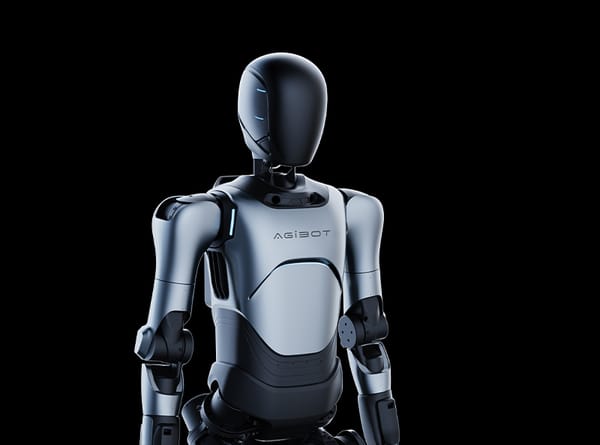
Across industries, engineers are focusing on machines built for the environments they serve. These robots aren’t chasing the humanoid ideal. They’re built for the job itself, optimizing for the task rather than trying to mimic the human form. Especially as in many cases our human form isn’t the most practical design for the work being done.
This week’s news surfaced signals like these:
- Ati Motors unveiled Sherpa Mecha, a wheeled, humanoid-inspired worker built for manufacturing. With modular AI, precision actuation, and an industrial-grade build, the system is made to fit into existing factory workflows and handle demanding jobs.
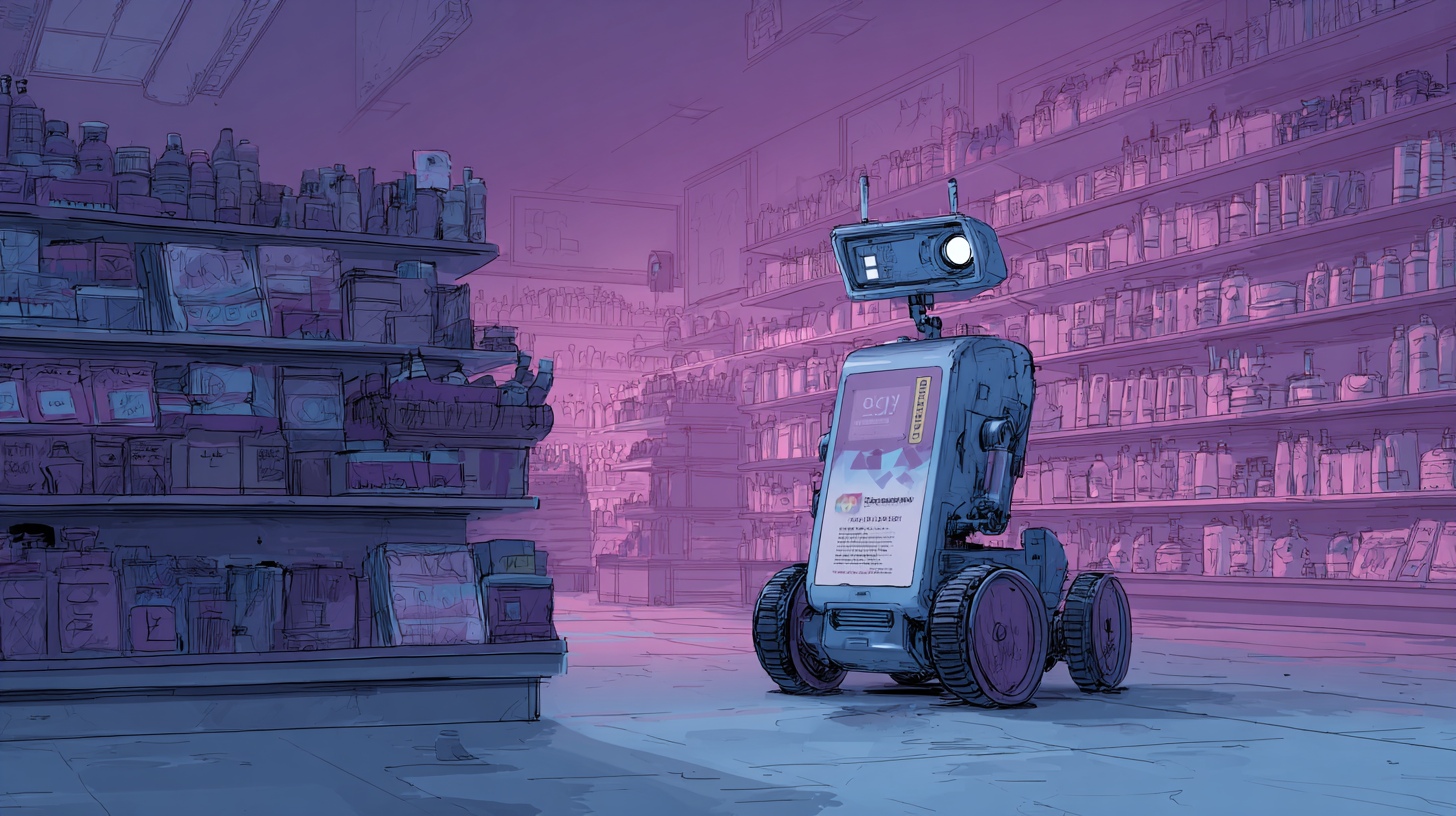
- Brain Corp and Driveline Retail launched ShelfOptix, a managed shelf-intelligence service powered by autonomous robots. The robots scan store shelves to capture high-resolution images, track inventory in real time, and turn that data into actionable insights for retailers.
- EndoQuest Robotics completed the first fully robotic gastrointestinal procedure performed by a gastroenterologist. Designed for natural orifice procedures, it offers a flexible robotic platform that makes complex endoscopic techniques more precise and accessible.
Why this matters: Purpose-built robots are gaining real traction because they’re designed for the work, not the look. Focusing on the job makes them more practical, scalable, and useful in the industry they are designed for.
🧠 Reality Decoded
Your premium deep dive.
This week on Remix Reality, I shared my first impressions of the Meta Ray-Ban Display, Meta’s first pair of AI glasses with a built-in screen. You can read the full review on the site, but here are the key points that stood out.
- Frames: The glasses are bold, stylish, and comfortable, but they felt huge. The size makes them better sunglasses than everyday eyewear. The classic Ray-Ban Wayfarer style highlights Meta’s lucrative partnership with EssilorLuxottica, making the device the most stylish monocular display we have seen yet.
- Display: The right-eye screen felt extremely bright and was crisp and legible enough for reading text, with the color screen quality standing out when the camera feed was activated. But even with just 45 minutes of use, some eye fatigue set in.
- Neural Band: The EMG wristband is a novel control system that reads muscle signals for gesture input. It works well and feels magical, but it adds one more device to charge and wear daily, and isn't as fashionable as its glasses counterpart.
- Apps: Visual interfaces for captions, translations, and navigation make the experience more accessible and context-aware. These are definitely killer apps on the device. The apps still live mostly inside Meta’s ecosystem and limit the glasses' ability to replace more of your phone.
- Price: At $799, the price feels aimed at early adopters who love getting the latest tech or AI glasses wearers who are ready for an upgrade. The price gets even higher when you want these glasses to double as your everyday specs using your prescription.
Key Takeaway:
I left my demo impressed but without a purchase. The Meta Ray-Ban Display shows meaningful progress for smartglasses with its fashionable design, credible tech, and real utility, but the display did not feel essential enough to cause me to upgrade. The price, prescription limits, and extra hardware were other factors that stopped me from walking out the store with a pair.
📡 Weekly Radar
Your weekly scan across the spatial computing stack.
🤖 Figure 03 Debuts as a Scalable Humanoid Robot for Home and Commercial Use
- Figure’s third-generation robot is built around Helix, a vision-language-action AI, with redesigned hardware and sensory systems.
- Why this matters: Big move from Figure, and a real milestone for humanoid robots. By building for scale from the start, Figure 03 actually has a shot at showing up in homes and commercial spaces in the next few years.
🎨 Lucid Bots Launches Robotic Painting Capability for Commercial Construction
- Lucid Bots introduced painting and coating functionality for its Sherpa Drone, marking the first large-scale robotic system for commercial painting.
- Why this matters: The Sherpa Drone’s modular design shows how one robot can handle different jobs with simple add-ons. Turning a cleaning drone into a painting drone makes automation more flexible, affordable, and useful for industries struggling with labor shortages and safety risks.
🔁 DigiLens Launches ARGO Next to Migrate HoloLens Users to ARGO Smartglasses
- DigiLens and Altoura launched ARGO Next to help companies move from HoloLens to ARGO smartglasses while keeping their Microsoft cloud infrastructure.
- Why this matters: With HoloLens heading toward end-of-life, ARGO Next gives enterprises an opportunity to protect past XR investments while laying a clear foundation for what’s next.
⚕️GE HealthCare and Mayo Clinic Back MediView’s $24M Series A for AR Surgical Platform
- MediView closed a $24 million Series A round led by GE HealthCare, with participation from Mayo Clinic and Cleveland Clinic.
- Why this matters: Support from GE and Mayo sends a clear signal that major players see AR-guided surgery as ready to scale globally.
🌐 Meta Launches Immersive Web SDK for Building Spatial Experiences in the Browser
- Meta’s new Immersive Web SDK (IWSDK) is now in early access, enabling WebXR developers to create immersive, cross-device browser experiences.
- Why this matters: The browser is still the widest door into spatial computing, and Meta’s IWSDK, paired with the Spatial Editor, is a clear bet on making that door easier to walk through. It gives developers speed and lowers the barrier to entry.
👩💻 Moonlake AI Debuts with $28M to Vibe Code Interactive Worlds
- Moonlake's platform utilizes AI to generate editable 2D and 3D worlds from natural language in real-time.
- Why this matters: Moonlake AI represents a sea change in 3D creation, one where AI meaningfully lowers the barrier to building and editing interactive worlds, especially for teams looking to move faster with fewer resources.
👁️ Smart Eye and Sony Advance Vehicle Safety with In-Cabin Sensing and Authentication
- Smart Eye’s software integrates with Sony’s new RGB-IR sensor to enhance driver monitoring and occupant detection.
- Why this matters: As more sensors become standard in vehicles, the car is emerging as a dense, real-time environment for AI-driven perception systems, which can unlock new safety, convenience, and identity features.
🧠 Cognixion Launches Brain-Computer Interface Study Using Apple Vision Pro
- Cognixion is testing its EEG brain interface with Apple Vision Pro in a new clinical study.
- Why this matters: Accessibility is the killer app of wearable tech made possible by placing sensors on our bodies. This trial could show that non-invasive tech can deliver real independence without the need for surgery.
🌀 Tom's Take
Unfiltered POV from the editor-in-chief.
Much of today’s innovation in tech is focused on mastering 3D by teaching machines to understand space. From digital twins to AR interfaces to spatially aware agents, we’re in a moment defined by geometry. Vision models are giving AI the ability to see and make sense of the world. Robots turn that perception into action. And companies are racing to build the shared spatial layer that will let machines understand and interact with physical spaces as easily as we do.
But once spatial intelligence becomes table stakes, another dimension is waiting. The next leap is 4D or time. True intelligence requires not only seeing and labeling the world but understanding how it changes, what it remembers, and what it expects next. That shift from spatial to temporal intelligence could be as transformative as the leap from 2D screens to immersive computing.
At a spatial intelligence event during SF Tech Week, I was introduced to Memories.ai, which is one of the startups exploring this frontier. Its Large Visual Memory Model (LVMM) and Multimodal Data Lake are designed to give AI agents long-term visual memory by enabling them to recall past events, interpret the present, and anticipate what comes next. By linking video, audio, and sensor data through temporal context, the company is building a foundation for machines to understand continuity and act with a greater awareness over time.
4D will also make robots smarter by giving them a sense of time. When that unlocks, our relationship with machines will shift again. Temporal intelligence will help AI understand context, remember what came before, and anticipate what’s next. Beyond robots, immersive interfaces, like virtual reality, could one day let us replay or step back into moments from our own lives. In a sense, we’re teaching machines to time travel first so that one day, we might do it ourselves.
🔮 What’s Next
3 signals pointing to what’s coming next.
- Partnerships are powering the digital twin economy
Ducati is deepening its work with Siemens to link racing, design, and simulation through a unified digital twin that feeds real-world data back into development. Fujitsu and NVIDIA are collaborating on an AI agent platform that connects robotics and digital twins to create self-evolving industrial systems. Across sectors, alliances like these are turning digital twins into shared platforms that accelerate industrial automation and innovation. - AR is transforming patient care
GE HealthCare and Mayo Clinic are backing MediView’s $24M Series A to scale AR-guided surgery that overlays 3D anatomy in real time, while Cognixion is pairing Apple Vision Pro with a brain interface to restore communication for patients with limited mobility. These breakthroughs show how augmented reality is becoming a clinical tool, turning spatial computing into a new layer of medical care. - Serve Robotics is scaling autonomous delivery
Serve has deployed its 1,000th sidewalk robot, including 380 units added in September alone. The company recently launched in Chicago with Uber Eats and plans to reach 2,000 deployed robots by the end of 2025. A multi-year partnership with DoorDash, already active in Los Angeles, is helping expand autonomous delivery across major U.S. cities as Serve pushes to lead the next wave of last-mile logistics.
🔓 You’ve unlocked this drop as a Remix Reality Insider. Thanks for helping us decode what’s next and why it matters.
📬 Make sure you never miss an issue! If you’re using Gmail, drag this email into your Primary tab so Remix Reality doesn’t get lost in Promotions. On mobile, tap the three dots and hit “Move to > Primary.” That’s it!
Disclosure: Tom Emrich has previously worked with or holds interests in companies mentioned. His commentary is based solely on public information and reflects his personal views.