News
Baidu and Uber Expand Autonomous Ride-Hailing to Dubai
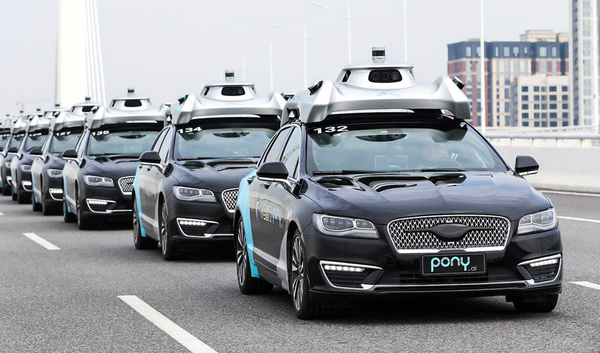
Baidu and Uber, in partnership with Dubai’s Roads and Transport Authority, announced the next phase of their global agreement by bringing Apollo Go autonomous ride-hailing to Dubai.
News
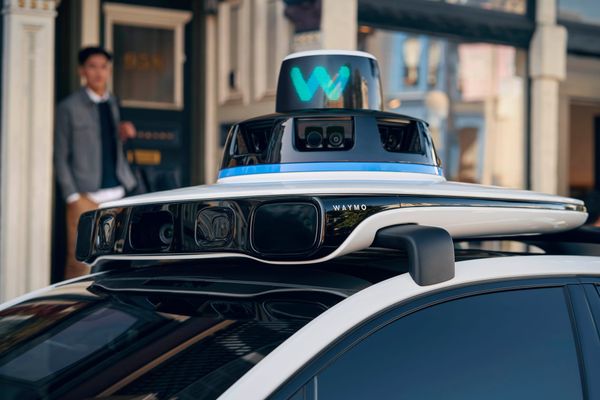
Waymo is beginning fully autonomous operations with its 6th-generation Driver. The company says the system serves as the primary engine for its next era of expansion. Waymo's latest Driver builds on nearly 200 million fully autonomous miles driven across more than 10 major cities and freeways.
News
Odyssey announced new funding from NVentures, NVIDIA’s venture capital arm, and Samsung Next to accelerate its research toward a general-purpose world simulator.
News
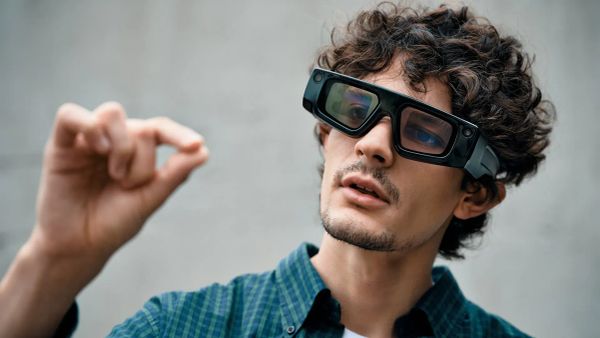
EssilorLuxottica’s AI-glasses business scaled fast in 2025. In its full-year 2025 financial report, the company said it sold more than 7 million units during the year, with momentum across North America, EMEA, and Asia-Pacific. Every region and brand contributed.
Camera traps capture rare wildlife moments, but millions of images need sorting. Computer vision tools like MegaDetector and SpeciesNet turn chaos into data, helping scientists track species, find rare animals, and speed conservation work worldwide.
Onassis ONX, the Onassis Foundation’s global platform for art and technology, is one of the more prominent platforms for that talent and those applications and experiences.
Humanoid robots could become a $5T market by 2050. As China scales manufacturing and the US bets on software, this analysis explores who is winning the race to build the humanoid economy.
XR futurist, AR filter maker, immersive prototyper, spatial creator Piper ZY defies labels. She's not using AI to create these new worlds and concepts, but she wishes she could.
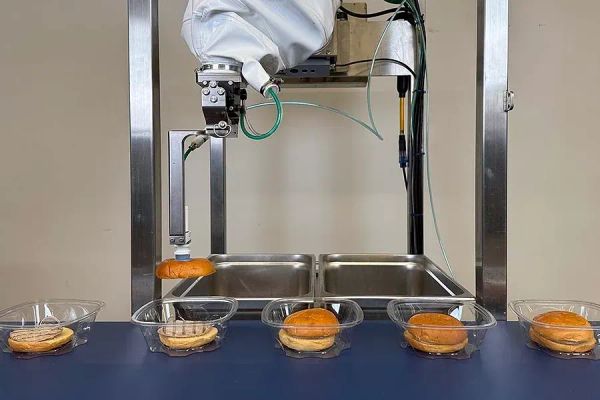
Chef Robotics CEO Rajat Bhageria on physical AI, labor shortages, and why food manufacturing is a proving ground for adaptive robotics. How real production data, flexible systems, and new business models are changing automation.
Cirque du Soleil expands its reach in The Sandbox with immersive experiences, digital collectibles, and social gameplay that connect younger audiences to its artistry while boosting engagement and extending its brand into daily digital life.
News and insights on spatial computing—from AR/VR and robotics, to digital twins and autonomous vehicles.
Comau has introduced MATE-XT GO, a new wearable exoskeleton built to support workers’ arms and shoulders during repetitive and overhead tasks. The device is designed to reduce physical strain on the job, helping improve comfort and endurance across a full shift.
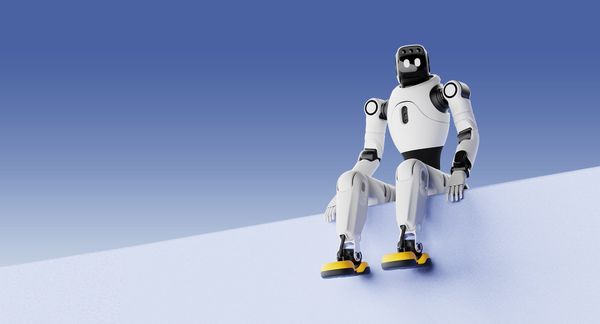
Apptronik announced a $520 million Series A-X extension backed by returning investors B Capital, Google, Mercedes-Benz, and PEAK6, along with new investors including AT&T Ventures, John Deere, and Qatar Investment Authority.
Propeller, a 3D mapping and data platform used by mining, aggregates, and civil industries, has acquired Spacesium, a company specializing in spatial data science. Propeller is known for tools that help teams map, measure, and manage worksites using aerial imagery and real-time data.
Yokogawa, a Japanese automation company, and ANYbotics, a Swiss robotics firm, have announced a partnership to combine plant operations software with autonomous robotic inspection.
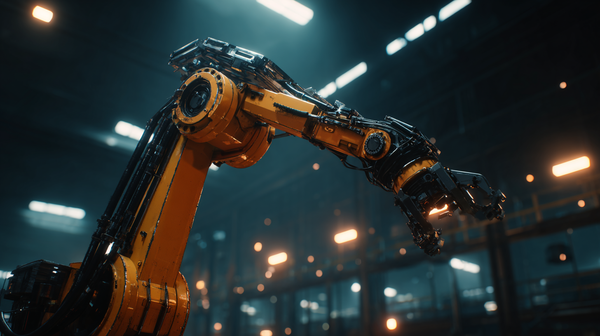
Vention has introduced GRIIP (Generalized Robotic Industrial Intelligence Pipeline), a new end-to-end physical AI system for manufacturing automation. The system aims to help manufacturers move from task-specific robotics toward a single pipeline that can scale across different factory applications.
Ouster said it has completed its acquisition of StereoLabs. Ouster sells digital lidar products. StereoLabs develops stereo cameras and 3D perception software and has been operating since 2010.
Camera traps capture rare wildlife moments, but millions of images need sorting. Computer vision tools like MegaDetector and SpeciesNet turn chaos into data, helping scientists track species, find rare animals, and speed conservation work worldwide.
Trener Robotics announced a $32 million Series A financing round, bringing its total funding to over $38 million. The round was co-led by Engine Ventures and IAG Capital Partners, with participation from Cadence and Geodesic Capital through Nikon’s NFocus Fund.
In this drop, we explore how motion becomes control, why glTF brings Gaussian splats into the 3D mainstream, and what it feels like to stand next to real humanoid robots. PLUS: Waymo’s $16B raise, Apeiron’s ocean drones, Bedrock’s fleets, Faraday’s robots.
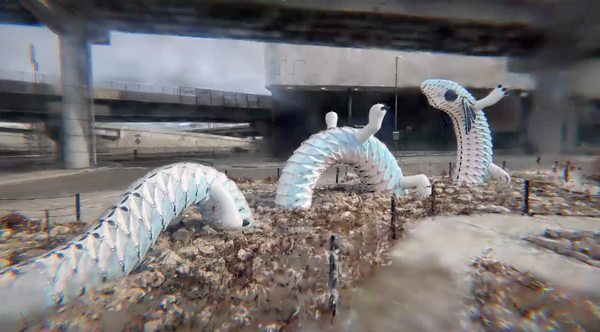
Apeiron Labs has raised $9.5 million in Series A funding to expand its network of autonomous underwater vehicles (AUVs) for real-time ocean intelligence. The round was co-led by S2G Investments, RA Capital’s Planetary Health Fund, and DYNE Ventures, with participation from Assembly Ventures
Khronos Group released a draft update to glTF that adds support for 3D Gaussian splat data. The group said the rapid growth of Gaussian splatting could lead to fragmentation without standardization. The draft is open for industry feedback ahead of final approval.
Humanoid introduced KinetIQ, its proprietary AI framework for end-to-end orchestration of humanoid robot fleets. Humanoid says KinetIQ is a single system that controls robots with different physical designs and coordinates how they work together.
Loading more posts...
No more posts to load.
Unable to load more posts.