🔓 Remix Reality Insider: Style Takes the Lead, Screens Step Back


Your premium drop on the systems, machines, and forces reshaping reality.
🛰️ The Signal
This week’s defining shift.
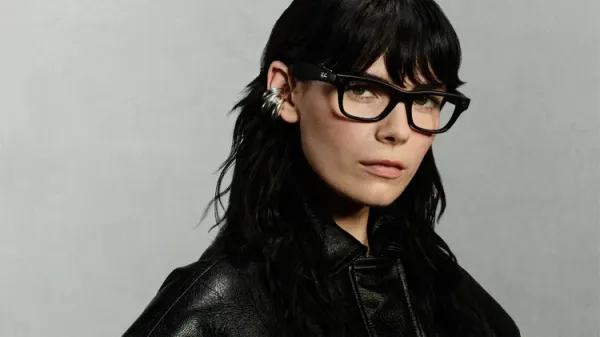
Fashion is becoming the front door for smartglasses.
This month alone, Solos dropped modular AI glasses with swappable fronts. Meta debuted its Oakley collab and is reportedly teaming up with Prada. Google has reportedly signed an agreement to invest $100M in Gentle Monster’s parent company. And let's not forget that Warby Parker will be entering the race for your face with Android XR.
This isn’t a tech accessories play; it’s a platform shift. Eyewear companies are transforming into the new OEMs in this next wave of computing, where frames become form factors for AI, media, and ambient interaction.
But for some brands, this is not new territory. Oakley, for example, has been integrating tech with its performance products as early as 2004. Oakley took its first real swing back in 2012 with Airwave, a pair of GPS- and HUD-equipped ski goggles that brought real-time data to the slopes. It was an early, bold move, and a preview of where the category was headed. With HSTN, that vision is finally landing in a world ready for it. AI is the new interface, and the cultural appetite for smart, stylish eyewear has caught up.
A new battleground is emerging, one that’s not just about functionality, but cultural alignment. Who you are, what you wear, and how you compute are becoming critical success factors in headworn tech.
The fashion layer is now the distribution layer for physical AI wearables. This time, it’s not just about making glasses smart, it’s about making them matter. And brand equity is what sells.
🧠 Reality Decoded
Your premium deep dive.
Spatial computing isn’t one thing. It’s the convergence of many. It’s what happens when perception systems, immersive devices, intelligent agents, and the underlying infrastructure combine to create machines that understand and interact with the physical world.
But to understand how it all works, we need to break it down.
Consider spatial computing as a five-layer framework, each layer building on the one below it, creating a system where digital and physical seamlessly blend together:
- 🦾 Physical AI: Embodied agents like robots, drones, and spatial wearables that can sense, decide, and act in the world.
- 🕶️ Immersive Interfaces: Devices that shape how we perceive and interact, such as smartglasses and spatial computers.
- 🌍 Simulated Worlds: Digital environments used to train AI and give us brand new destinations to explore.
- 👁️ Perception Systems: Sensors, cameras, and AI systems that give machines the ability to understand and navigate space.
- 🛠️ Infrastructure: The edge compute, connectivity, and trust layers that make it all possible.
Most importantly, at the core of this system is you. Spatial computing isn’t just about machines, it’s about people. With you and the space around you, there is no spatial computing. You’re no longer a passive user. You are the input. You are the interface. You are the command. You are the agent.
Key Takeaway:
Spatial computing isn’t a new device or single technology, it’s a paradigm shift. It rewires how machines understand the world and repositions you at the center. As interfaces fade into the environment, you become the input, the interface, and the intelligence driving the system.
📡 Weekly Radar
Your weekly scan across the spatial computing stack.
🕶️ Solo doubles down on AI smartglasses in latest product lineup
- AirGo V2 features a slim 16MP camera, live video streaming, visual AI, and support for AI models like ChatGPT, Claude, and Gemini.
- Why this matters: Solos, a 2019 spin-off from Kopin, has evolved its smart glasses into a full AI platform—its latest AirGo release signals that AI is now core, not just an accessory, to smartglasses.
👷 DEEP Robotics reinvents UHV inspections with wheel-legged robot
- LYNX M20 combines wheels and legs to navigate complex, maze-like substation layouts.
- Why this matters: LYNX proves the best robots aren’t human-shaped, they’re built for the job, with sensors and design tailored for dangerous, complex environments people shouldn’t enter.
🥽 Swave Photonics gets €6M from Samsung to advance holographic display
- Swave Photonics secures €6M to develop chips that project true 3D images, eliminating the need for waveguides.
- Why this matters: Swave’s chip-based holography reshapes light into true 3D with natural focus, cutting bulky optics and fixing the depth issues that make today’s AR glasses uncomfortable.
🎮 Meta and Xbox launch limited edition Quest 3S bundle
- Quest's first limited edition bundle includes custom gear and Game Pass for just $399.99.
- Why this matters: Meta’s special edition targets gamers, utilizing design to highlight a clear use case, a strategy we’ve seen recently in AI glasses, such as its Oakley HSTN drop for fitness.
🛰️ First-ever dynamic digital twin satellite to launch in space
- The onboard software will continuously assess and predict the satellite’s power system health using real-time AI.
- Why this matters: Digital twins enable machines to self-monitor and evolve in harsh, remote settings, unlocking insights that human-led missions might never achieve.
🤖 Google introduces on-device Gemini model for real-time robot tasks
- A new on-device model enables robots to perform tasks more efficiently and adapt across various platforms, ranging from dual-arm bots to humanoids.
- Why this matters: Robots are going local, running powerful AI like Gemini entirely onboard to adapt faster, react more safely, and operate without a constant cloud connection.
👁️ TDK acquires SoftEye to speed development of complete smart glasses systems
- SoftEye develops custom chips, cameras, and algorithms that enable an end-to-end system for smart glasses, branded as "the eyes for AI."
- Why this matters: TDK’s acquisition of SoftEye adds system-level intelligence, strengthening its ability to deliver fully integrated XR and smart glasses solutions.
🌀 Tom's Take
Unfiltered POV from the editor-in-chief.
Apple Vision Pro should have launched as Apple TV Vision.
The hardware is incredible, but the magic isn’t in multitasking; it’s in entertainment. I was reminded of this during DAZN’s XR World Cup experience, which features 3D tabletop matches, 180-degree video feeds, and interactive replays for key moments. Similar experiences can be found in the PGA and NBA apps. Watching sports on a big screen is one thing, but watching it unfold as a real-time simulation in front of you, from multiple perspectives, is a game-changer.
Pair that with Apple’s massive investment in Apple TV+ content for Vision Pro, including immersive originals featuring Alicia Keys, Bono, and more, and it becomes clear that Vision Pro is a premium media device in disguise.
While I love the ambition behind a true spatial computer, I can’t help but wonder if we’d see more Vision Pros in people’s homes if Apple had positioned it as a next-gen Apple TV. A focus on immersive sports, music, and entertainment could have simplified the value prop, allowed for lower specs (and a lower price), and reached a broader market. Plus, duo or family bundles could have made it a shared, social experience that would have eliminated the need for a traditional screen completely.
Apple may not have needed to make a spatial computer right from the start. It needed to disrupt TV to win the living room before conquering every use case.
🔮 What’s Next
3 signals pointing to what’s coming next.
- VR Is Dead (At Least as a Market Driver)
IDC’s latest numbers show VR-only headsets are no longer the growth story. Mixed and Extended Reality are poised to dominate, with MR shipments projected to grow 5 times by 2029. The industry’s center of gravity is shifting from pure simulation to real-world augmentation. Expect product lines and developer investments to follow suit. - The Eyes of AI Will Define the Next Interface
From SoftEye’s eye intent and objection recognition technology to Solos’ multimodal-enabled devices and Alipay’s gaze-based payments on Rokid glasses, giving AI vision is becoming the killer app of spatial computing. It’s not enabling computers to see, it’s about giving them perception to understand. Equipping AI with eyes will make AI agents smarter and usher in a brand new wave of contextual applications. - Robots Will Be Built for the Task, Not the Fantasy
The human form factor may not be the optimal form factor for robots to perform the tasks we need them to do. From Gemini Robotics’ bi-arm generalist to DEEP Robotics’s wheel-legged UHV inspector, robots are being designed around real-world needs. These are machines designed for the job, equipped with sensors, mobility, and onboard intelligence to perform it better than people. Robots are finally being built for what they need to do, not what we imagine they should look like.
🔓 You’ve unlocked this drop as a Remix Reality Insider. Thanks for helping us decode what’s next and why it matters.
🚀 Know someone who should be reading this? Send them to remixreality.com and invite them to join the inner circle.