🔓 Remix Reality Insider: Faster 3D Pipelines


Your premium drop on the systems, machines, and forces reshaping reality.
🛰️ The Signal
This week’s defining shift.
Creating 3D data is getting much simpler.
New tools are turning everyday inputs like smartphone video, single photos, and text prompts into usable 3D environments and assets. This lowers the barrier to building the scenes, objects, and spaces that robotics, simulation, and immersive content rely on. It also shifts 3D creation from a specialized skill to something all teams can generate quickly and at the scale modern spatial systems require.
This week’s news surfaced signals like these:
- Parallax Worlds raised $4.9 million to turn standard video into digital twins for robotics testing. The platform turns basic walkthrough videos into interactive 3D spaces that teams can use to run their robot software and see how it performs before sending anything into the field.
- Meta introduced SAM 3D to reconstruct objects and people from single images, producing full-textured meshes even when subjects are partly hidden or shot from difficult angles. The models were trained using real-world data and a staged process to improve accuracy.
- Meta unveiled WorldGen, a research tool that generates full 3D worlds from text prompts. It produces complete, navigable spaces that can be used in Unity or Unreal and shows how AI can create environments without manual modeling.
Why this matters: Faster 3D pipelines expand who can build, test, and refine spatial ideas. They turn 3D creation from a bottleneck into a regular part of development, which opens the door to more experimentation and better decisions earlier in the process.
🧠 Reality Decoded
Your premium deep dive.
Cirque du Soleil is expanding its audience by bringing its shows into the virtual world of The Sandbox. Instead of using immersive tech as a marketing add-on, the company is building playable versions of its shows, Luzia and Mad Apple, that let fans explore its creative world between live performances. These experiences give Cirque’s audience something they can revisit, interact with, and share, offering a kind of ongoing connection that a single night in a theater can’t provide.
Here are a few of the key takeaways from a conversation with the Cirque du Soleil and The Sandbox teams with our latest contributor, Michael Mascioni:
- Brand extension: The Sandbox lets Cirque make its shows playable and interactive. Quests, challenges, and social spaces keep the brand present between performances and help the company see its own IP from new angles.
- Reaching new audiences: Cirque is using the metaverse to reach younger digital-first users who may not be typical attendees of its live shows. The experiences translate Cirque’s artistic style into a format that speaks to this audience while staying true to the company’s creative identity.
- Meaningful engagement: Players spend long sessions in the experiences because they are built around quests, social play, and replayable challenges. Cirque du Soleil avatars and costumes follow users through The Sandbox, keeping the brand top of mind and inviting repeat engagement.
Key Takeaway:
Cirque du Soleil’s move into The Sandbox shows how powerful it can be to give people a place they can come back to and spend time in. Immersive worlds keep the brand alive between big moments and create a steady kind of engagement that typical channels don’t always offer.
📡 Weekly Radar
Your weekly scan across the spatial computing stack.
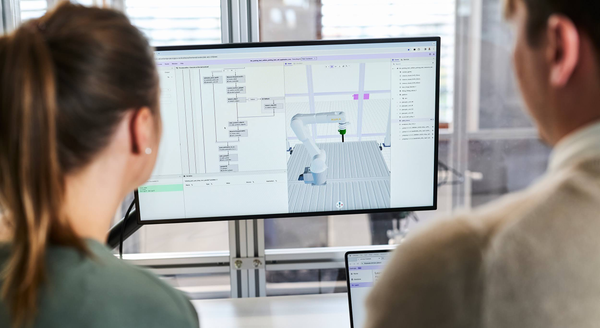
🤖 Agile Robots Acquires thyssenkrupp Automation Engineering in Major Expansion Move
- Agile Robots is acquiring thyssenkrupp Automation Engineering’s assets in Europe and North America to grow its smart automation business.
- Why this matters: Agile Robots is folding in legacy engineering depth to set itself up as an end-to-end automation player.
⚡️ Drone Volt US Unveils LineDrone to Cut Grid Inspection Costs and Prevent Wildfires
- New robotic drone inspects live power lines without shutdowns, helicopters, or manual tool changes.
- Why this matters: Cutting costs matters, but the real value is preventing the kind of failures that endanger lives. Drones and robotics are changing what’s possible in utility safety.
🥗 Wonder Acquires Spyce From Sweetgreen in $186M Deal
- Sweetgreen sold its Spyce business to Wonder for $186.4 million in cash and equity.
- Why this matters: With both Sweetgreen and Wonder now using the Infinite Kitchen, two major restaurant operators are committing to robotics, which signals broader adoption of automation in kitchen operations.
🚘 Figure’s Humanoid Robot Supports Production of 30,000 BMW Vehicles
- Figure 02 ran daily shifts at BMW’s Spartanburg plant, loading over 90,000 parts as part of a live assembly line deployment.
- Why this matters: For all the hype around humanoid robots, this report delivers hard numbers: 1,250+ hours, 90,000+ parts, 30,000+ vehicles. This is not a demo. It is a validation on the line.
⚽️ Immersive Skiing and Soccer Stories Coming to Apple Vision Pro
- Red Bull launches a new immersive video series on December 4, starting with a freeskiing experience in British Columbia.
- Why this matters: Apple’s continued rollout of immersive content shows a clear bet on spatial storytelling and entertainment as a key offering of Vision Pro.
🦵 $10M Gift Backs Development of HSS Digital Twin Platform for Joint Surgery Simulation
- Hospital for Special Surgery (HSS) will use the funding to develop a virtual modeling system for orthopedic surgical planning.
- Why this matters: By letting surgeons test procedures virtually before operating, HSS is making simulation a practical part of orthopedic care.
🚧 Buildroid AI Launches With $2M to Simulate Construction Robotics Using Digital Twins
- The company exits stealth with funding led by Tim Draper and support from U.S. general contractors.
- Why this matters: Using NVIDIA Omniverse digital twins to test robotic workflows in advance makes construction automation more predictable and easier to scale.
🗺️ Point One Raises $35M to Expand Global Footprint of Precision Location Platform
- Series C funding led by Khosla Ventures will support hiring, international growth, and product development.
- Why this matters: Point One is making precise location easier to use, giving developers a single system to add real-world positioning to robots, vehicles, and other connected devices.
🪑 Meta Introduces SAM 3D to Reconstruct Objects and Humans from a Single Image
- Meta debuts SAM 3D, introducing two new models for reconstructing 3D objects and human bodies from natural images.
- Why this matters: Fast 3D reconstruction from single images could make it easier to create and test content for practical use across spatial computing use cases.
🕶️ LSU-Led Study Uses VR To Help Students With ADHD Stay Focused
- LSU Associate Professor David Shepherd secured $675K from NIMH to expand ADHD research using virtual reality and noise-canceling headphones.
- Why this matters: Ironically, VR might be the tech that helps students escape the noise of modern tech. and actually focus.
🌀 Tom's Take
Unfiltered POV from the editor-in-chief.
Zoox is now running in San Francisco, and I’m getting ready for my first ride. It’ll be my first time in a vehicle purpose-built for autonomy, and I’m curious how different it will feel. I ride Waymo now on the regular, but the experience it offers is still a familiar car, where the steering wheel and four seats facing the windshield remain the same. Zoox flips that. No front seat, no dash, no orientation toward a driver. The space is built for the people riding, not the person who used to be in control.
That change opens up a very different design conversation for vehicles. Once you remove the driver, a car becomes more like a small room that moves. You can rethink seating, lighting, sound, displays, and how people interact with each other. You can design for comfort, quiet, conversation, or productivity instead of designing around pedals and windshield visibility. It turns mobility into a UX problem rather than a vehicle layout problem, and shifts the focus from function to feel, which is much more interesting.
This is a part of autonomous mobility that gets exciting for me. When you stop optimizing for the driver, you can start building for the rider. The whole experience becomes a blank canvas, letting us rethink something we’ve lived with for more than a century. What should a ride feel like? How do you make the space useful? What opportunities does this open for businesses and brands? Purpose-built AVs give us room to ask questions the automotive world never had the freedom to explore.
🔮 What’s Next
3 signals pointing to what’s coming next.
- Humanoids learn from real or synthetic data
Sunday is teaching its Memo robot with real household routines captured from families, grounding its skills in how chores actually get done. Flexion is taking the opposite route, using large-scale synthetic and simulated data to cover a wide range of tasks and conditions. The split shows two different paths emerging for training humanoids, each aiming to produce robots that can work with less human guidance in everyday settings. - Robotaxis gain economic and regulatory momentum
Pony.ai hitting breakeven with its newest robotaxi fleet suggests its service can hold up financially across a full city. WeRide now holds driverless permits in eight countries, a sign that more regions are opening the door to long-term autonomous services. It feels like robotaxis are moving into a stage where the business and policy sides are finally starting to meet. - Simulation as the first step in critical operations
HSS is developing patient-specific digital twins that let surgeons model procedures and test different approaches before entering the operating room. Buildroid AI is using Omniverse-powered simulations to plan multi-robot construction workflows and identify the safest and most efficient paths ahead of deployment. Both point to simulation becoming a routine starting point for work where precision, safety, and predictable outcomes matter.
🔓 You’ve unlocked this drop as a Remix Reality Insider. Thanks for helping us decode what’s next and why it matters.
📬 Make sure you never miss an issue! If you’re using Gmail, drag this email into your Primary tab so Remix Reality doesn’t get lost in Promotions. On mobile, tap the three dots and hit “Move to > Primary.” That’s it!
🛠️ This newsletter uses a human-led, AI-assisted workflow, with all final decisions made by editors.