📬 Remix Reality Insider: The End of Dumb Smart Things


Your weekly briefing on the systems, machines, and forces reshaping reality.
📣 An Update
Happy New Year!
I have some news to share. Remix Reality is now open to everyone.
All editorial, interviews, and full coverage are now available to the entire community. The Remix Reality Insider will continue as the main newsletter for all subscribers, providing deeper insights and signals from the field. Going forward, you will receive it every Monday.
I am deeply grateful for your support and excited about what we are building together.
🛰️ The Signal
This week’s defining shift.
IoT is finally doing what it was always supposed to do.
For years, the idea behind IoT was that everyday devices would understand what was happening around them and help people make better decisions. What we mostly got instead were remote controls for physical things. Buttons on apps. Automations without awareness.
That is now changing. We are now seeing new consumer hardware that can actually observe the world. When AI and vision are built directly into devices, routine activity turns into real information about how life is being lived, and this is when the smart things really become smart.
This week’s news surfaced signals like these:
- PETKIT new pet devices go beyond basic automation. Their feeders, fountains, and litter boxes track eating, drinking, and bathroom behavior, building a health picture over time that can surface problems before they are obvious.
- GE Profile's latest refrigerator has built-in scanning and an internal camera that lets it track what is in the fridge, what is running low, and what needs to be used soon. This turns the appliance into an active planning tool.
Why this matters: When devices actually understand what is happening around them, they stop being one-off products and start becoming long-term systems. They improve as they observe more of real life, they open up new services over time, and they become much harder to replace. That is the moment IoT was always supposed to reach.
🧠 Reality Decoded
Your premium deep dive.
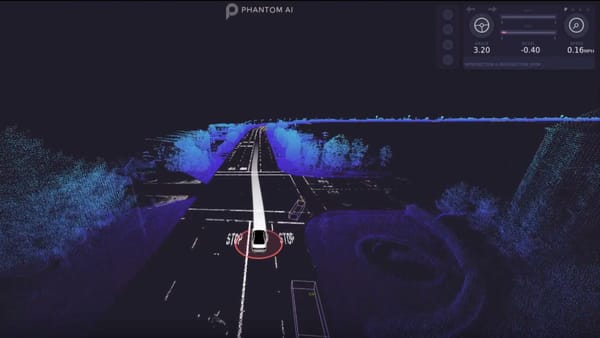
This week, we zoom in on what 2025 revealed about the state of robotaxis.
For over a decade, autonomous vehicles were framed as a future promise. In 2025, that framing finally broke. What emerged instead was an operating industry, defined by real fleets, real passengers, and real economics.
Two major players, Pony.ai and Waymo, shared their end-of-year performance, and their results offer a view into where the robotaxi space truly stands.
- Scale is no longer theoretical: Robotaxis are now operating at volumes where real problems show up in software, hardware, operations, and economics. That is a good thing. Waymo’s millions of passenger hours and Pony.ai’s four-city driverless footprint are no longer pilots. They are working systems. At this scale, every mile improves performance, every city strengthens the network, and progress accelerates.
- Economics are starting to close: Pony.ai reaching breakeven on its Gen-7 fleet in Guangzhou is an important signal for the autonomy sector. The open question has always been whether autonomous driving can sustain itself as a business. In 2025, that question began to get clearer answers.
- Autonomy is becoming global infrastructure: Waymo is expanding across North America, Europe, and Asia, while Pony.ai is building a footprint across eight countries, signaling a shift from regional experiments to global deployment.
Key Takeaway:
For years, the big question was whether autonomous driving would ever really work. By 2025, that stopped being the point. The real work now is turning it into something stable, repeatable, and worth running at scale.
📡 Weekly Radar
Your weekly scan across the spatial computing stack.
🚗 Stellantis and Bolt to Launch Driverless Mobility Pilots in Europe by 2026
- Stellantis will provide its AV-Ready Platforms for Bolt’s upcoming autonomous ride-hailing services across Europe.
- Why this matters: Ride-sharing is becoming the on-ramp for bringing autonomous vehicles to the public. Bolt joins Uber, Waymo, and others in transforming their fleets with autonomy.
🧑💼 Fujitsu and NVIDIA Advance Secure AI Agents With Future Path to Robotics
- Fujitsu launched a secure multi-agent AI system as a first step toward integrating digital workflows with real-world robotics.
- Why this matters: Fujitsu’s agent framework shows how secure, specialized AI can move from the back office to the physical world.
🚁 Ambarella Steps Beyond Imaging With AI Powering Antigravity’s 360 Drone
- Ambarella’s CV5 chip powers the Antigravity A1, enabling 8K video capture and onboard AI for real-time drone autonomy.
- Why this matters: Ambarella built its reputation on image processing, but this move signals its push into autonomy. The company has spent years helping machines capture the world, and now, with AI at the edge, it's helping them understand it. This is its way into spatial computing, from seeing to sensing to deciding.
🖥️ Samsung Debuts World’s First 6K Glasses-Free 3D Monitor
- The 32-inch Odyssey 3D uses real-time eye tracking to deliver depth-adjusted visuals without a headset.
- Why this matters: Everyone’s chasing 3D through headsets, but Odyssey is a reminder that spatial tech can show up in familiar formats, and that might be what actually helps it catch on.
🕶️ Magic Leap and Pegatron Partner to Manufacture AR Glasses Components
- Magic Leap signed an agreement with global electronics manufacturer Pegatron to produce its augmented reality components at scale.
- Why this matters: This deal signals that AR component production is finally ready to scale, a critical step toward making smartglasses viable for mass-market deployment.
🦝 Disney Demo Features LIMINAL’s Holographic Display and ILM Motion Capture
- Marvel's Rocket Raccoon was rendered live using LIMINAL's spatial LED and ILM mocap during the Disney Accelerator Demo Day on the Walt Disney Studios Lot.
- Why this matters: LIMINAL’s tech could give parks a way to deliver real-time, interactive characters without headsets or projection rooms, opening the door to immersive shows, ride scenes, or walkthroughs that feel alive and responsive.
💀 Tencent Releases HY-Motion 1.0, a Breakthrough in Text-to-3D Human Motion
- HY-Motion 1.0 scales Diffusion Transformer models to a billion parameters for the first time in 3D motion generation, with open access to code, models, and tooling.
- Why this matters: Scaling to a billion parameters isn’t just a flex. It’s what unlocks sharper prompt understanding and more lifelike motion, setting a new bar for open-source text-to-3D systems.
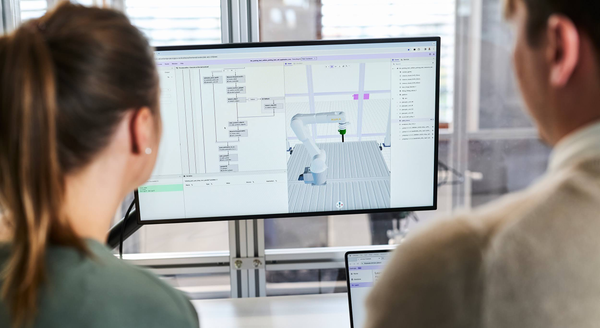
🚙 Siemens Launches Digital Twin Platform to Accelerate Autonomous Driving Development
- New cloud-based platform allows automakers to start full-system development on day one using pre-integrated digital twins.
- Why this matters: Siemens is cutting years off development by making system-level digital twins available on day one. This shift could reshape timelines in autonomous vehicle design.
🕯️ Research Finds VR Near-Death Simulation Reduces Death Anxiety and Stress
- A study published in Frontiers in Virtual Reality found that a VR near-death experience reduced death anxiety and general stress in adult participants.
- Why this matters: VR’s power lies in letting us safely experience what we usually can’t. By simulating death, it may help people demystify it and reduce the fear that comes with it.
🌀 Tom's Take
Unfiltered POV from the editor-in-chief.
I am at the Palm Springs Film Festival this week, moving between screenings, meetings, and more networking parties than I can count. Somewhere between the third handshake and the fifth introduction, I was reminded of one of the applications I am most excited about for AR glasses.
Remembering people.
Imagine walking into a room and seeing a person’s name floating above them if you have met before. Or even better, providing you with information about where you met or when you last spoke and what you talked about. You skip the panic and the awkward pause and step right back into the conversation.
It begins with remembering people but, with AI in the loop, AR lets you do something even more powerful, remembering someone you have never met.
Imagine approaching someone new and, instead of staring at a paper badge and trying to invent small talk based on crumbs of information, your glasses surface a few things you have in common. A shared interest or mutual contact serves as an ice breaker. This little helper could help ease the anxiety of the first move and give you the confidence to walk up and connect not only faster but deeper right from the get-go.
We talk about AR as this big reality-bending thing, and it can be. But it does not need dinosaurs and flying turtles to matter. Sometimes it can be much simpler, such as giving people small advantages that make everyday moments easier and more comfortable.
Those small shifts add up. Better conversations can create stronger relationships, leading to more opportunities. These types of use cases create meaningful ripple effects across our daily lives and cement new devices and technologies as staples in our everyday routines.
🔮 What’s Next
3 signals pointing to what’s coming next.
- Industrial robotics attracts serious capital
POSCO’s $3M investment in Persona AI reflects a growing pattern of manufacturers putting capital behind robotics systems they plan to deploy inside their own facilities. At the same time, the European Investment Bank’s €50M commitment to Comau shows public capital flowing into robotics as production infrastructure. These are both great examples of where the money is going in robotics, into real factories, real workflows, and real operating conditions. - 3D escapes the headset and enters everyday space
3D is becoming part of physical spaces, not just wearable tech. Samsung unveiled its 6K glasses-free 3D monitor, showing how immersive experiences are becoming available using everyday devices like desktop screens. Disney’s live demo of LIMINAL’s holographic display and ILM’s real-time motion capture shows the same shift in large venues and theme parks. - AR glasses components start to look product-ready
Magic Leap’s partnership with Pegatron shows how much attention is now on getting AR components built at scale, not just designed. Himax and AUO’s ultra-slim, high-brightness microdisplay shows the component stack reaching the level needed for everyday wear. AR glasses are starting to feel closer than ever.
Know someone who should be following the signal? Send them to remixreality.com to sign up for our free weekly newsletter.
📬 Make sure you never miss an issue! If you’re using Gmail, drag this email into your Primary tab so Remix Reality doesn’t get lost in Promotions. On mobile, tap the three dots and hit “Move to > Primary.” That’s it!
🛠️ This newsletter uses a human-led, AI-assisted workflow, with all final decisions made by editors.