Sony AI’s Ace Becomes First Robot to Beat Elite Human Table Tennis Players

- Sony AI published Nature research showing Ace as the first autonomous robot to compete successfully against elite and professional human table tennis players.
- The project marks a major step for physical AI by demonstrating expert-level perception, decision-making, and control in a fast-moving real-world sport.
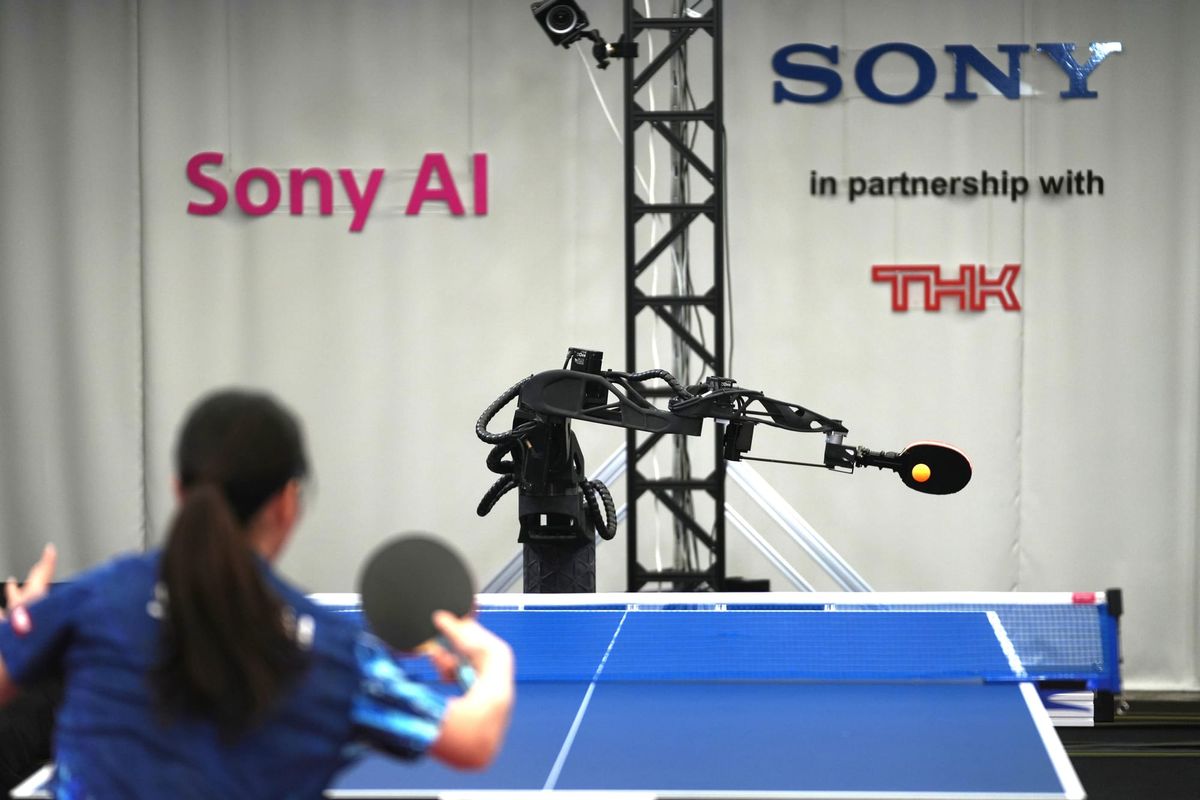
Sony AI announced a major robotics milestone with its project Ace, an autonomous table tennis robot that became the first known real-world system to compete at the level of elite and professional human players. The research, published in Nature under the title “Outplaying Elite Table Tennis Players with an Autonomous Robot,” shows a robot reaching expert-level play in a widely played competitive physical sport. The project was led by Sony AI and combines the company’s robotics, sensing, and artificial intelligence research.
Ace was designed to handle one of robotics’ most difficult real-world tests: competitive table tennis. The system uses nine APS cameras with Sony image sensors to track the ball’s precise 3D position, along with three gaze control systems using event-based vision sensors to measure angular velocity and spin in real time. A model-free reinforcement learning control system allows the robot to make fast decisions without relying on pre-programmed models, while high-speed robotic hardware enables precise and rapid physical movement during play.
In evaluation matches played under International Table Tennis Federation rules, Ace won three of five matches against elite players and showed a competitive performance against two professional players. It maintained over a 75% return rate on spins up to 450 rad/s and scored 16 direct points from serves against elite players, while they scored eight against it. Following the Nature submission, Sony AI ran additional matches in late 2025 and early 2026 where Ace defeated both elite and professional players, showing stronger shot speed and faster rallies as the system improved. Sony AI says the next step is applying this level of physical AI performance to other dynamic real-world environments that require speed, precision, and safe human interaction.
🌀 Tom’s Take:
Chess was the benchmark for digital intelligence, proof that AI could outthink humans in a closed system. Ace feels like the physical-world equivalent: a moment where AI moves from mastering strategy on a screen to mastering speed, precision, and decision-making in real space.
Source: Sony AI