XPANCEO Demonstrates Space-Compatible Smart Contact Lens

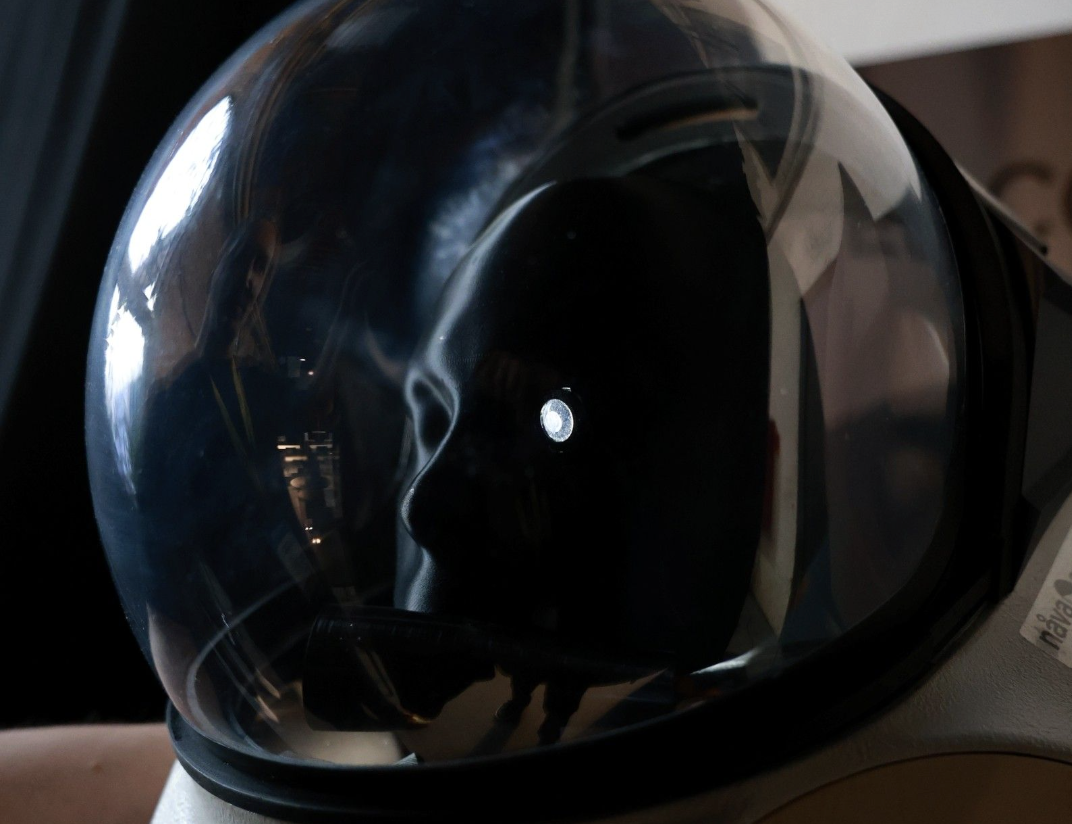
- XPANCEO has unveiled a smart contact lens prototype for space, integrated with a working space suit to provide hands-free visual data directly to the eye.
- The lens features a holographic display powered by a helmet-based image source and builds on earlier prototypes developed for use in racing helmets.
XPANCEO has introduced a new smart contact lens prototype built for space and demonstrated its integration with a working space suit. The lens addresses key challenges in space, where astronauts can’t use touchscreens with gloves, and smart glasses may pose safety risks. It displays visual information directly to the eye, giving astronauts a hands-free alternative that doesn’t interfere with movement or safety.
"Humanity is confronting two defining challenges this century — drastically expanding our capabilities and extending healthspan. We’re building smart contact lenses as a new interface for life on Earth — and one that can hold up in orbit, on the Moon, or wherever people decide to go next. These prototypes are an essential step toward that future," said Roman Axelrod, founder of XPANCEO, in an official news release.
The prototype includes a holographic display and connects to an image source inside the space helmet, which also powers the lens. The same configuration can be used with other lens types XPANCEO has developed, including versions that feature integrated microdisplays. This version builds on earlier prototypes used in racing helmets, now adapted for the conditions of outer space.
XPANCEO, founded in 2021, is developing smart contact lenses. Its portfolio includes an AR vision lens, a compact device for wireless data and power transfer, and a micro-battery version for autonomous operation. The company is also developing lenses with health monitoring and biomedical sensing.
🌀 Tom’s Take:
Smart contact lenses make sense in places where smart glasses don’t, like racetracks, spacewalks, or anywhere bulky hardware gets in the way. XPANCEO’s use case of putting AR in your eye, not on your face, aims to solve this.
Source: XPANCEO