TARS Robot Crosses 'Impossible to Automate' Threshold with Embroidery Demo

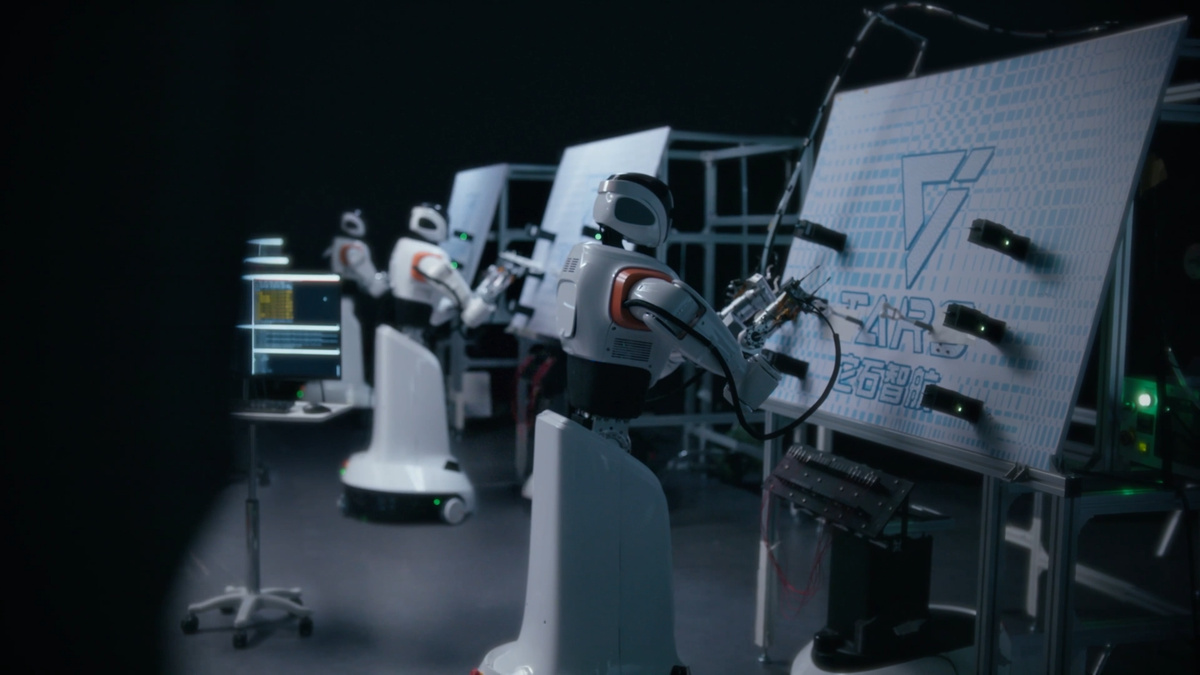
- TARS Robotics publicly demonstrated a humanoid robot completing hand embroidery with both hands in real time.
- According to the company, the event marks a major breakthrough in robotic control of flexible materials, long considered too complex to automate.
TARS Robotics has achieved what it calls a key milestone in automation by demonstrating its humanoid robot can perform hand embroidery. Threading a needle and stitching fabric with high precision demands two-handed coordination, adaptive force control, and sub-millimeter accuracy. According to the company, this type of task has been "impossible to automate" until now. The live demo has implications for industries where fine, flexible manipulation is required.
Source: TARS Robotics
The embroidery task was completed by a humanoid robot from TARS’s T- and A-Series platforms. The system combines real-world data capture, machine learning, and hardware designed to reduce the gap between software instructions and physical movement. The AI model is trained to learn physical skills that can generalize across similar tasks requiring precision and adaptability. This setup allows the robot to perform coordinated, two-handed tasks with the fine control needed for embroidery.
"Leveraging the massive data from SenseHub and guided by the AWE 2.0 model, we have seen a leap forward in task success rates across multiple scenarios. As we continue to scale our data and advance our model architecture, we foresee new breakthroughs in our robots' intelligence and generalization capabilities, with the ultimate goal of deploying them across every industry and household," said Dr. Ding Wenchao, Chief Scientist of TARS, in a press release.
According to the company, this demonstration establishes a scalable model for deploying embodied intelligence in production environments. TARS says its full-stack system, spanning data collection, AI-based decision-making, and physical output, can be extended to other complex tasks such as wire harness assembly. Since its founding in February 2025, the company has raised $242 million across two funding rounds and reports steady deployment of its technology across advanced robotic platforms.
🌀 Tom’s Take:
Beyond embroidery, this breakthrough is all about robotic control. TARS proves that when you close the loop between sensing, learning, and movement, robots can finally take on the delicate, flexible work that once seemed untouchable.
Source: PR Newswire / TARS Robotics