OMNIVISION Shrinks AR Display Tech Into Single Ultra-Efficient Chip

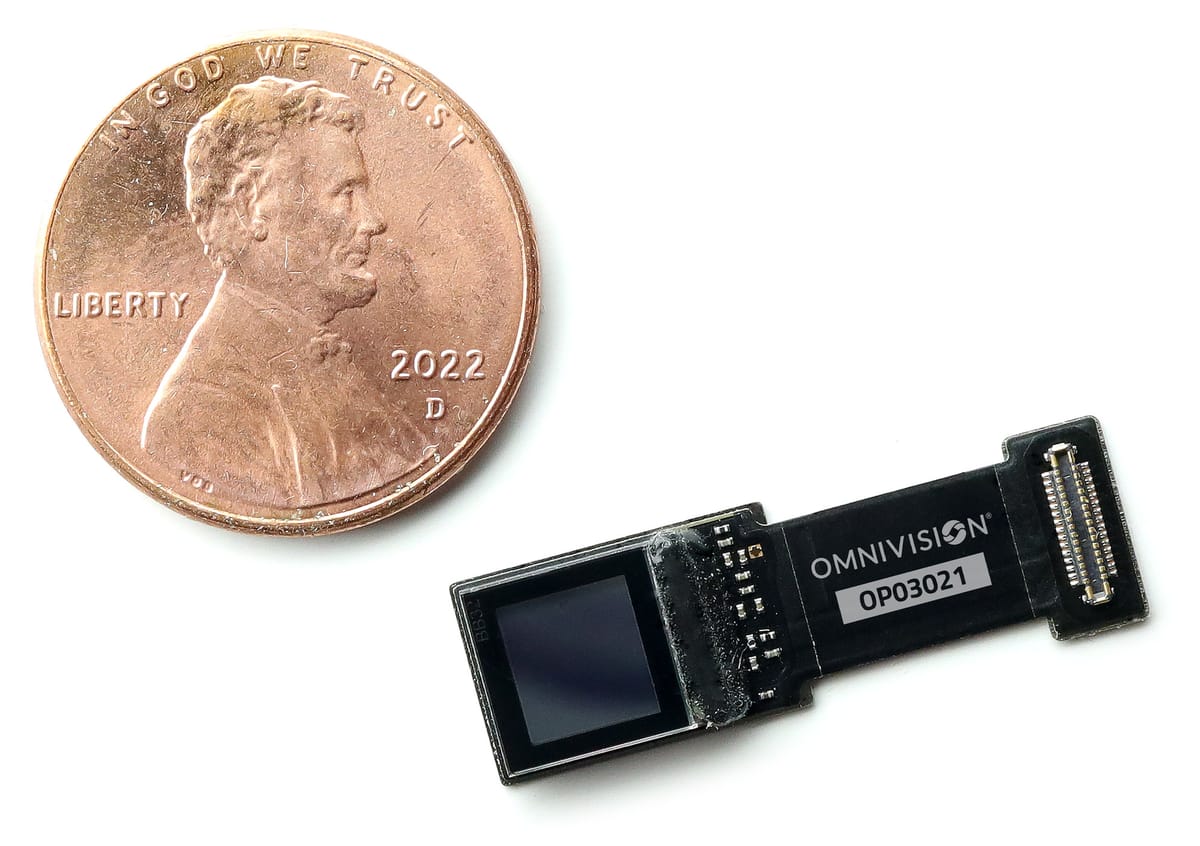
- The OP03021 integrates display, driver, and memory in a compact LCOS panel for smartglasses.
- It delivers 1632 x 1536 resolution at 90 Hz while reducing size and power consumption.
OMNIVISION, a global provider of digital imaging and display technology, has announced a new milestone in augmented reality hardware. The company introduced a full-color sequential LCOS microdisplay that integrates the array, driver, and memory into a single ultra-low-power chip, a first, according to the company. Intended for next-generation smartglasses, the display combines high resolution and a wide field of view in a compact format.
“Smart glasses are quickly becoming one of the top emerging consumer tech products, and their popularity could potentially become comparable to that of a smartphone. We are excited to be involved in this transformation, in partnership with many of the leading smart glasses designers and manufacturers, helping to make smart glasses a mainstream consumer product that people use every day,” said Devang Patel, marketing director for the IoT and emerging segment, OMNIVISION, in an official news release.
Called the OP03021, the microdisplay delivers a resolution of 1632 x 1536 at 90 Hz in a compact 0.26-inch optical format. It features a 3.0‑micron pixel and integrates control, frame buffer memory, and a MIPI receiver onto the silicon backplane. OMNIVISION states that the design helps enable more immersive, realistic, and comfortable AR experiences by supporting lightweight and fashionable smart glasses. Samples are available now, with mass production expected in the first half of 2026.
Founded in 1995, OMNIVISION develops imaging and display technologies for automotive, medical, mobile, computing, machine vision, and surveillance markets. The company collaborates with manufacturers to deliver end-to-end image system solutions. OMNIVISION operates more than 30 offices worldwide and maintains multiple ISO-certified facilities.
🌀 Tom’s Take:
For AR glasses to reach mainstream adoption, they have to be comfortable and fashionable. Advancements in critical components, where miniaturization and weight reduction are possible, are key to achieving this.
Source: OMNIVISION