Oakley's Wearable Past Hit the Slopes, So Its Present Can Take the Streets

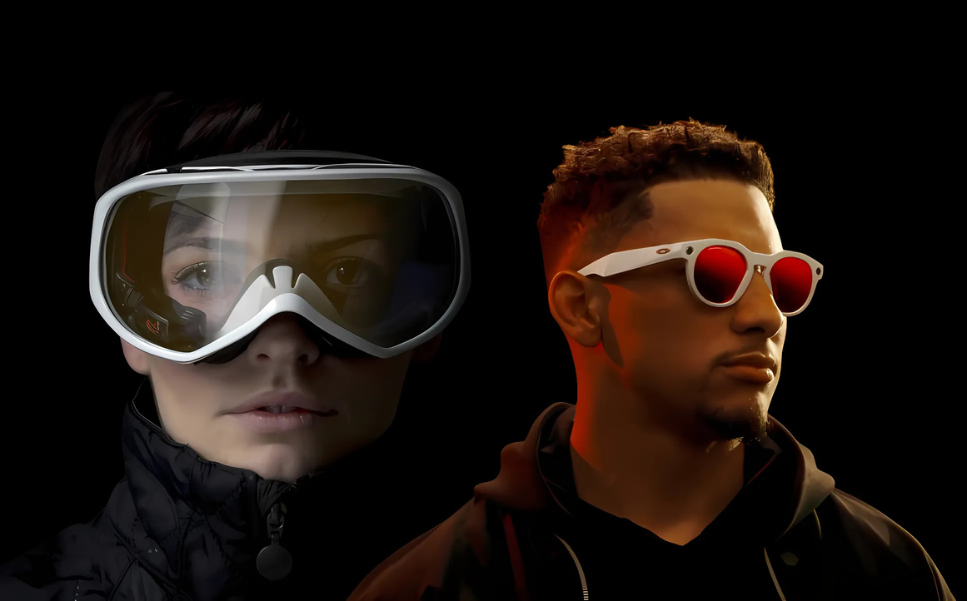
- Before Oakley HSTN, there was Airwave, a pair of connected ski goggles powered by Recon Instruments and built for the slopes.
- Oakley’s HSTN isn’t a reboot of its wearable past; it’s a remix, channeling its athletic brand DNA with AI-driven features from Meta.
Oakley and Meta made headlines last week with the debut of Oakley HSTN, a sporty pair of AI-powered glasses designed for fitness enthusiasts and the active crowd. Made for movement and built on Meta’s AI smartglasses platform, HSTN landed with some serious momentum, thanks in no small part to a celebrity-powered launch featuring the likes of Patrick Mahomes, Neymar Jr., and Kylian Mbappé. The moment flooded my social feed. Athletes, musicians, and creators were featured in Reels and Stories, posing and posting media with Oakley’s AI glasses, as if they were the next pair of Jordans. Meta and Oakley didn’t just launch a product. They kicked off a cultural moment.
But while this moment was about the future of smartglasses, my mind kept racing back to the past. And that's because this isn’t Oakley’s first lap around the track when it comes to wearable tech.
From MP3-playing sunglasses (Thump, 2004) to Bluetooth-enabled shades (O ROKR, 2006), Oakley had experimented with wearable tech before, but their first serious step into performance wearables happened on the mountain.
In 2012, Oakley launched the Oakley Airwave, a futuristic pair of snow goggles embedded with a heads-up display powered by Recon Instruments. One of its marketing campaign taglines was "technology that delivers the goods, straight to your brain." It was targeted at skiers and snowboarders who wanted real-time performance data, including speed, jump analytics, GPS navigation, and even buddy tracking, all integrated into their field of view. Paired with the Oakley Airwave mobile app, users navigated screens and launched apps using a glove-friendly, wrist-worn remote.
The Airwave was ahead of its time. It tapped into the early promise of heads-up displays, leading Oakley to release an upgraded Airwave 1.5 in 2014. The Airwave 1.5 featured Recon’s Snow2 platform, offering a brighter, higher-contrast display and smoother performance. It also improved battery life and smartphone integration while still maintaining the original HUD design and wrist-worn remote.
Source: YouTube/Oakely
The technology behind Oakley's connected goggles was developed by Recon Instruments, a Vancouver-based startup founded in 2008 by Hamid Abdollahi and Dan Eisenhardt, both engineering graduates with a background in competitive swimming.
According to Eisenhard, the team was on a mission "to deliver contextual visual information, instantly and hands-free, in the most demanding environments," a vision he outlined in a press release announcing a strategic investment from Motorola Solutions Venture Capital. Recon started with heads-up displays for ski goggles. Its Snow2 platform, introduced in 2014, not only powered Oakley's Airwave 1.5 but was also integrated into goggles from brands like Smith and Scott, using Recon’s modular HUD design. The company later expanded into smart eyewear for cycling and running in the Recon Jet, a Google Glass-style pair of sports glasses that delivered real-time data to endurance athletes. Jet was ahead of its time in more ways than one, featuring a compute module integrated into the eyewear, a 2.1-megapixel camera, and an app SDK for its Android-based ReconOS platform.
Source: YouTube/Recon Instruments
In 2015, Recon was acquired by Intel for a reported $175 million, signaling the chip maker's deeper push into wearables and AR. The acquisition brought Recon’s expertise into Intel’s New Devices Group. Shortly after, Intel partnered with Luxottica, Oakley’s parent company, to create Radar Pace, a voice-activated coaching headset released in 2016. Radar Pace integrated real-time biometric feedback, environmental sensors, and Intel’s voice-driven AI system, delivering voice-based coaching and training guidance during workouts.. While the product faced real-world limitations, it marked a major step in the evolution of smart eyewear and foreshadowed the use of what would become wearable technology’s most essential ingredient: AI.
Source: YouTube/Oakley
In 2017, Intel discontinued several Recon products, including the Recon Jet Pro and Recon Jet. Following Intel, Recon Instruments co-founder Dan Eisenhardt took his learnings from the slopes to the water with the launch of FORM, a startup focused on smart swim goggles that deliver real-time metrics to swimmers. The company officially launched its first pair of connected goggles in 2019, followed by its second-generation model in April of 2024.
So why is Oakley reentering the wearable race again now, over a decade later? In short, AI has changed the game.
Back in 2012, Oakley and Recon delivered a tech marvel, but it was a product of its time. The experience lacked real intelligence. There were no natural language interfaces, no adaptive responses, just a static overlay of data that the user had to manually interpret and navigate. Oakley’s second attempt with Radar Pace brought voice interaction into the mix, but the AI was still limited, scripted, and narrow in scope. Large language models hadn’t yet arrived.
Today’s Oakley HSTN represents a turning point. Built around Meta’s multimodal AI stack, it offers something fundamentally different: a voice-first experience that feels adaptive, assistive, and conversational. This time, the intelligence is finally real, delivering on the promise of natural, wearable AI that Radar Pace only began to explore.
Throughout its wearable journey, Oakley has stayed true to its brand DNA: sports and performance. But this time, the device isn’t tied to a single sport. It’s built for whatever you’re doing.
The Airwave was laser-focused on snow, giving skiers and snowboarders real-time telemetry and GPS baked right into their goggles. That made sense then, but it boxed in the use case. HSTN, by contrast, is made for more universal wear. It’s still built with activity in mind, such as jogging, lifting, training, but it also works just as well for everyday activities like walking your dog or commuting across the city. It’s not trying to dominate one sport. It’s designed to flex across lifestyles.

Perhaps one of the biggest changes since Oakley's Airwave is society's readiness to wear technology. The Apple Watch is over a decade old, and consumers are more comfortable with sensors, voice assistants, and AI. Ray-Ban Meta smartglasses already warmed up the market with a camera on your face, and mixed reality headsets like Vision Pro and Meta Quest 3 have made headworn computers a pretty regular occurrence.
Back in 2012, the Airwave felt like it was from the future, but maybe a little too much so. The world just wasn’t ready to wear tech on their faces. Today, with AI everywhere, ambient computing becoming the norm, and a growing appetite for new interfaces, the culture is finally in sync with the technology.
Oakley’s return to the smartglasses space isn’t a reboot, it’s a remix. A decade ago, Oakley and Recon were chasing a bold vision that was ahead of its time. The tech was ambitious, but the tech and society weren’t quite there. Fast-forward to today, and everything’s changed.
With HSTN, Oakley brings its performance roots into a new era, one shaped by voice-first AI, all-day wearability, and real utility. Backed by Meta’s ecosystem, this isn’t just a comeback. It’s a leap forward.
The slopes were the starting line. Now, Oakley’s headed everywhere.
Disclosure: Tom Emrich has previously worked with or holds interests in companies mentioned. His commentary is based solely on public information and reflects his personal views.