Moonlake Unveils Reverie, a Real-Time Generative Model Purpose-Built for Games

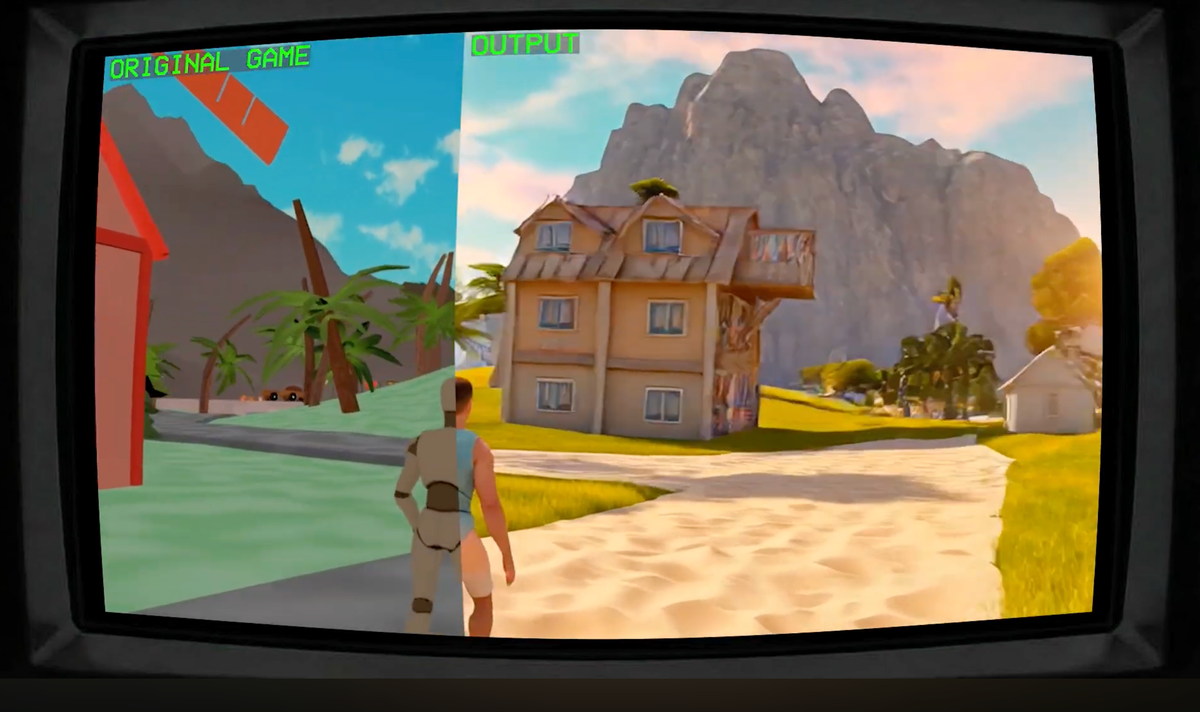
- Reverie is a diffusion model that runs inside games, generating content in real time without disrupting play.
- It keeps visuals consistent as the game evolves and gives developers direct control over generation through in-game logic.
Moonlake has introduced Reverie, a video diffusion model designed for real-time use in game environments. The company argues that most generative models were designed for cinematic output, not for operating inside systems governed by rules, persistence, and player input. Reverie is framed as a structural shift, designed to operate at frame time without interrupting play.
Source: YouTube / Moonlake
"Today, we wanted to give a sneak peek of what we’re working on: a game-native diffusion model," said Fan-Yun Sun, co-founder and CEO of Moonlake, in a LinkedIn post. "Our tagline — “vibe-coding interactive worlds” — was never just about code-generation. It’s about using AI to give creators programmatic control without needing to code. AI is only meaningful when it can help creators realize their vision 100x faster, easier, and more precise."
Reverie runs continuously during gameplay, generating content on the fly instead of using pre-rendered sequences. It keeps things visually consistent over time, even as the game world evolves. This means environments and objects remain consistent as gameplay unfolds. Developers can change how a scene looks mid-game, reskinning environments or characters, without altering their underlying behavior or role in the simulation.
Moonlake frames Reverie as a new type of game-native AI, purpose-built to operate inside gameplay rather than alongside it. Developers can link generative outputs directly to events, such as altering a scene during a boss phase or shifting visuals when a player interacts with an NPC. This approach treats generation as a programmable layer, allowing creators to drive transformations through in-game logic.
🌀 Tom’s Take:
Reverie makes generative AI part of the game engine itself, live, reactive, and fully programmable through gameplay.