HYPRLABS Ditches Maps and Labels for Real-World Robotic Learning

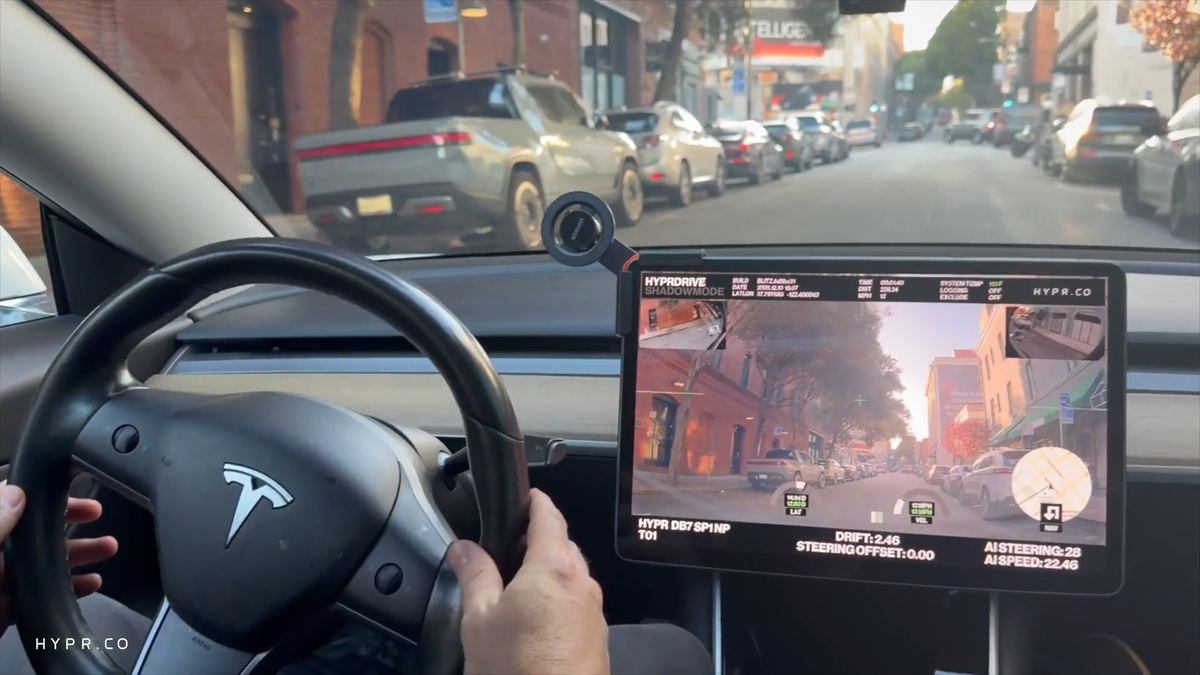
- HYPRLABS exits stealth with a new AI architecture that learns in real time from physical experience, without pretraining or simulation.
- Its system completed live urban drives using minimal hardware and power, signaling readiness for real-world deployment.
HYPRLABS has emerged from stealth, debuting HYPRDRIVE, an architecture built to accelerate “learning velocity,” or how fast robots convert real-world experience into intelligence. The HYPERLABS system is a departure from conventional approaches like labeled data, HD maps, and simulation, or what HYPERLABS refers to as "crutches." Instead, it offers more adaptive, energy-efficient autonomy by learning directly from physical interaction.
"We see continual, live robotic learning as the new frontier — a differentiator that will separate the winners from the pack because it enables what we call Learning Velocity: how fast your AI stack can turn exposure into intelligence," said Tim Kentley Klay, Co-Founder and CEO of HYPR (previously Co-Founder of Zoox), in a press release. "Our core thesis is that intelligence arises from learning relationships, and that minimizing the loss of that learning is optimal. This means robots will learn best when they learn as they move in their fundamental domain."
HYPRDRIVE learns in three steps. First, it watches a human driver and uses that experience to start building its understanding of how to drive. Then, the system begins driving on its own, but with a person still present to make real-time corrections. Finally, it sends selected driving experiences and feedback to the cloud, where the AI is improved, and updates are sent back to the entire fleet. Only small updates are shared, making the process efficient and easy to scale.
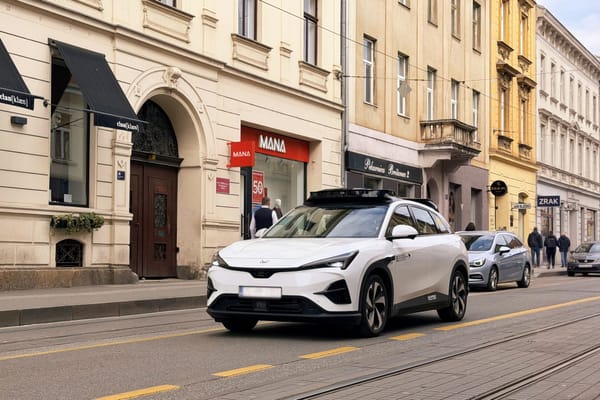
According to the company, its test vehicles completed a 20-minute downtown San Francisco route using just five vision cameras and a single NVIDIA Orin AGX, consuming only 45W of total power. HYPRLABS sees this minimal setup, using no maps, lidar, or simulation, as proof of real-world viability. The company plans to integrate HYPRDRIVE into a new generation of AI-native robots, with its first product launch slated for 2026.
🌀 Tom’s Take:
HYPRLABS is betting on a robotics system that learns less like a computer and more like a human. By learning directly from experience, it aims to cut out noise from maps and simulations and speed up how quickly robots get smarter in the real world.
Source: PR Newswire / HYPRLABS