FANUC and NVIDIA Bring Physical AI to Industrial Robotics Systems

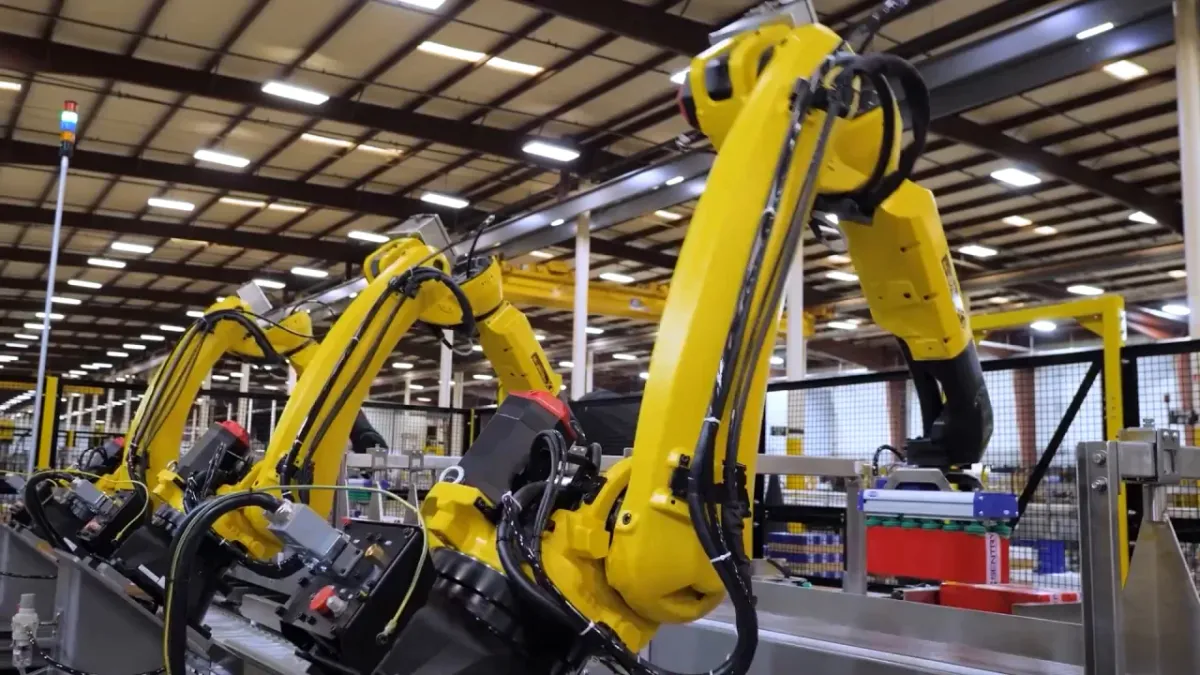
- FANUC is collaborating with NVIDIA to integrate AI computing, simulation, and edge infrastructure into its robot portfolio and software.
- The effort enables digital twin simulation, virtual training, and deployment of robots that can adapt to changing production environments.
FANUC is collaborating with NVIDIA to advance physical AI in its industrial robotics systems by combining robotics with AI computing and simulation platforms. The integration brings NVIDIA Jetson modules, cloud and edge infrastructure, Isaac Sim, and Omniverse libraries into FANUC’s robots and its ROBOGUIDE software.
“Physical AI is the next frontier in industrial automation,” said Mike Cicco, President and CEO, FANUC America, in a news release. “By collaborating with NVIDIA, we’re giving manufacturers the tools to deploy intelligent robotics faster and align virtual design with real-world production.”
The combined technologies allow manufacturers to create photorealistic digital twins of their factories by integrating FANUC’s ROBOGUIDE software with NVIDIA Isaac Sim and Omniverse. This makes it possible to simulate entire production lines and test workflows before deploying physical robots. It also allows manufacturers to optimize performance and reduce commissioning time and cost. Robots can be trained in these virtual environments and then deployed more quickly. Once deployed, NVIDIA Jetson-powered AI computing enables robots to adapt to variability, execute complex tasks, and respond in real time within changing production environments.
FANUC is also applying NVIDIA AI to change how operators interact with robots by enabling them to interpret voice commands and automatically generate Python code. This allows operators to give verbal instructions, reduce setup time, adjust processes without specialized programming skills, and support rapid reconfiguration of production workflows.
🌀 Tom’s Take:
Industrial robots are shifting from fixed systems to ones that can adjust as conditions change. Linking virtual training with real-world operation allows them to adapt more easily without rebuilding workflows.
Source: FANUC