Cellid Unveils AR Glasses Reference Designs With Mass-Produced Plastic Waveguide

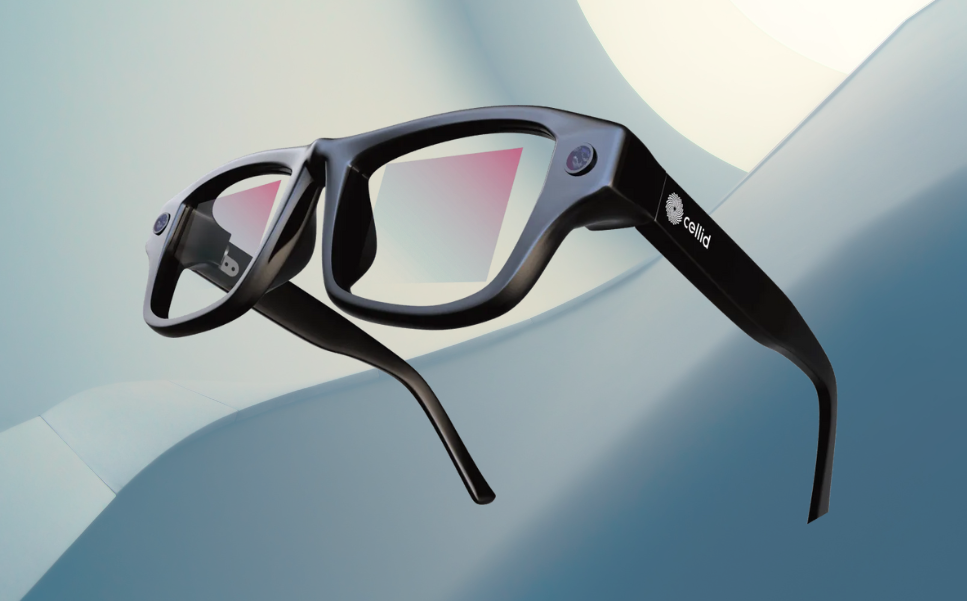
- New reference designs pair in-house plastic and glass waveguides with compact AR form factors.
- Both models include micro-LED displays, cameras, and wireless tech for everyday and industrial use.
Cellid, a developer of waveguides and spatial technologies, has introduced two AR glasses reference designs. The wireless and lightweight designs demonstrate the company's latest waveguide and display systems, developed through a mix of internal R&D and partner collaboration.

Cellid presents two sides of its optical technology with its latest reference designs. The first model features a green monochrome display powered by a plastic waveguide, which the company says it has mass-produced for the first time. It pairs with an Alif E7 chip and a 5MP camera. The second offers full-color visuals using a glass waveguide, Qualcomm’s AR1 platform, and a 12MP camera. Both use binocular micro-LED projectors with a 30-degree field of view and peak brightness of 3000 nits, designed for visibility across a range of lighting conditions.
Cellid manufactures both plastic and glass waveguides in-house, giving it tighter control over optical quality, design, and scalability. Paired with its spatial recognition technology and full-stack development across hardware and software, the company is building AR systems designed for real-world deployment. It is also continuing R&D efforts focused on power efficiency, display performance, and developing applications across a range of industries.
🌀 Tom’s Take:
Plastic has big advantages over glass. It's lighter, cheaper, and more durable, but scaling it without losing image quality has been a challenge. Cellid's ability to mass-produce its plastic waveguide could be a real step toward making AR glasses more practical and scalable.
Source: PR Newswire / Cellid