When Your Robot Does the Laundry, What Will You Do?

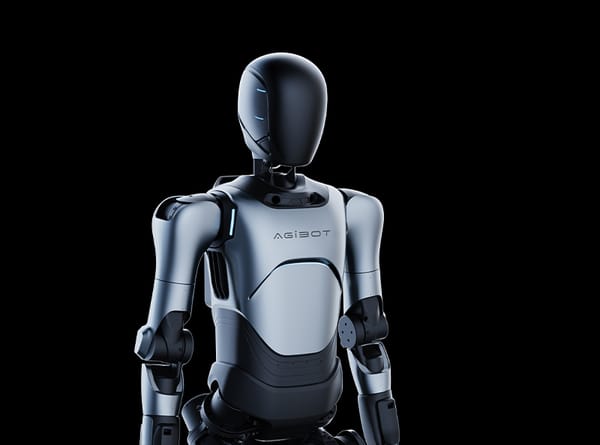
- Humanoid robots from Tesla, Figure, 1X Technologies, and Agibot are getting ready to enter our homes, using AI “brains” that can be trained for a wide range of tasks.
- Surveys show demand for robots to handle cleaning, laundry, and cooking, but caution remains on handing over intimate tasks such as caring for kids and elders.
Humanoid robots are on the horizon. Companies like Figure, 1X Technologies, Tesla, and Agibot are building machines that embody AI, enabling them to move, understand, and take action in our physical space.
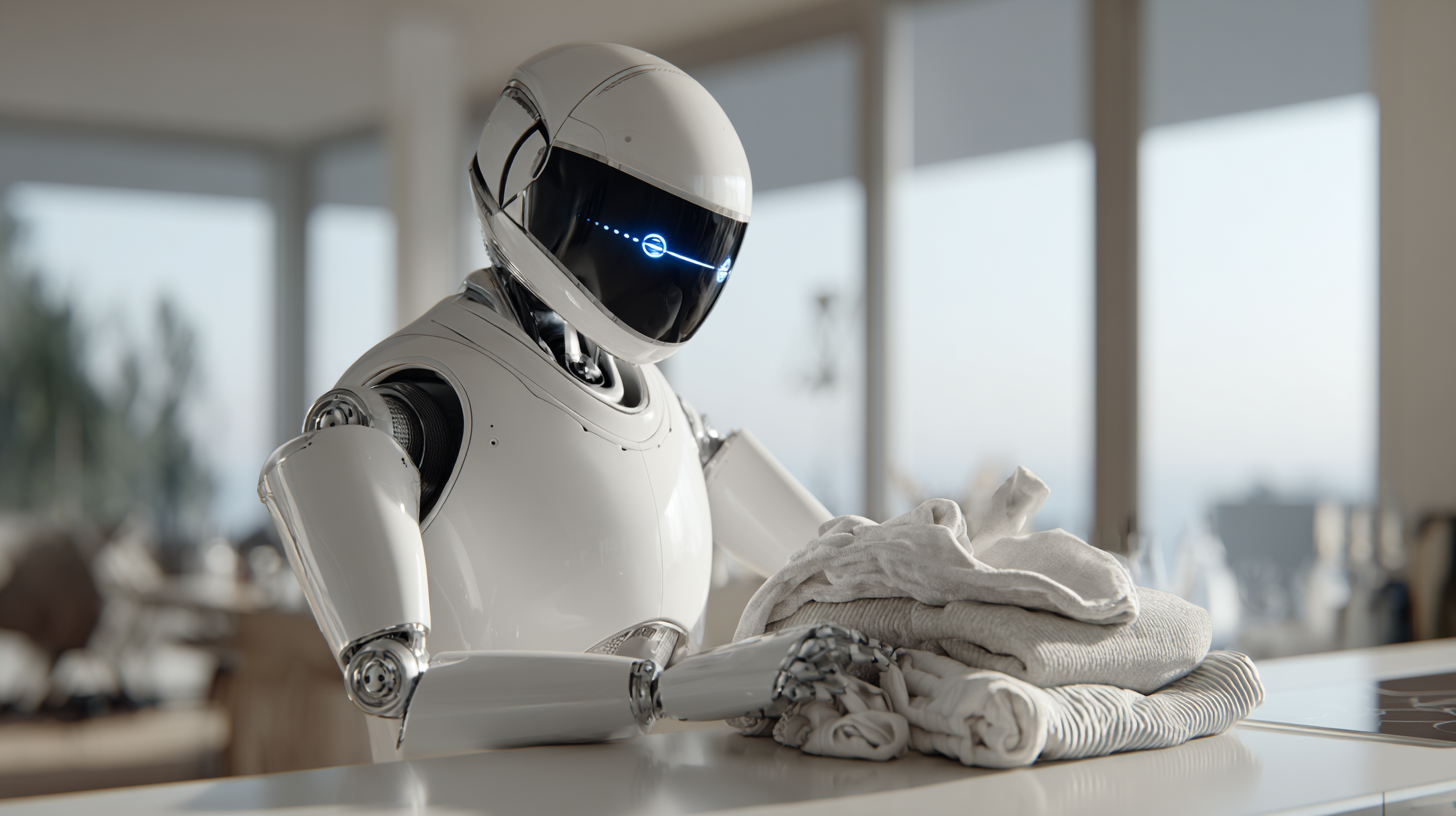
Many are already beyond concept. Figure’s F.02 robot recently went viral after grabbing garments from a laundry basket and loading them into a washing machine in the CEO’s home. As many as a few thousand NEO Gamma robots from 1X are slated for in-home trials to learn from daily interactions by the end of 2025. And Agibot’s Yuanzheng A2 has been shown doing chores like cleaning and displaying fine dexterity, threading a needle. These robots have moved beyond research prototypes and are headed into real environments.
Science fiction has long held humanoid robots as a defining technological threshold. From The Jetsons to C-3PO, we’ve pictured mechanical companions doing our work, anticipating our needs, and being the ultimate companion. The hardware and AI are finally aligning, making what was once fiction become fact. What’s emerging is a teachable robot, not a fixed-purpose appliance, but an adaptable machine with a “brain.”
This is a marked difference from the robots we have had living amongst us thus far. Vacuum robots, robots that clean your pool, and lawn-mowing robots all work more like appliances than intelligent machines. You bought them for one purpose, and that purpose didn’t change. The next generation uses AI to learn. You can show a robot how to wash dishes, and later how to mow the lawn, walk the dog, or fold laundry. The skill set isn’t fixed. It expands.
If you could train your robot to do anything first, what would you choose?
Would you hand over the chores you dread, such as vacuuming, scrubbing floors, and making the bed? Would you ask for help with meal prep, grocery runs, or organizing the garage? Or would you prefer something more personal, such as tutoring your kids, helping with a hobby, or supporting an elderly parent?
According to a 2025 YouGov report, 38% of Americans say they would be interested in having a robot help with household chores, a figure that jumps to more than half among adults aged 18 to 34. The same survey found that the most requested jobs are the ones that quietly take up most of our time each week, such as cleaning floors (93%), washing dishes (87%), doing laundry (86%), and organizing the home (86%).
Researchers from Oxford University and the University of Oulu estimate that up to 40% of household chores could be automated within the next decade. Their projection, published by MIT Sloan, credits advances in generative AI that make training robots faster, more efficient, and adaptable to a broader range of tasks. If that prediction holds, we’re looking at a near future where machines take on a significant share of the domestic load at home, if we’re ready to let them.
When it comes to more personal roles, however, such as assisting with childcare or eldercare, interest drops to 55%. This might suggest that while people are open to robots in their homes, they are still pretty unsure about handing over intimate tasks such as caregiving. Research from the Brookings Institution found that only about 20% of Americans said they were interested in having a robot handle chores, and just 9% were interested in a robot providing care for a child or elderly person. This reluctance highlights how emotional comfort and trust will influence adoption, even as the technology matures.
While this new generation of robots may be capable of almost anything, adoption will hinge on price. According to the YouGov survey, 32% of people would only spend under $500 on a household robot, 20% would pay up to $1,000, and about a quarter would consider $1,000 to $5,000. That’s still far from where the market is today. Unitree’s R1 made headlines as one of the most affordable humanoids at $5,900, yet its capabilities fall well short of autonomous models from Figure, 1X, and others.
But cost isn’t the only barrier to consumer adoption. In the same YouGov survey, nearly half of respondents cited reliability (49%) and data privacy (48%) as top concerns, and 43% worried about physical safety. All of these concerns point to whether a robot can be trusted in our most intimate environment, our home. If a machine fails, mishandles personal information, or poses even a small risk of harm, the convenience it offers can quickly be outweighed by the discomfort of having it in your living space.
These results point to something deeper. Beyond the tasks robots can perform, their presence in our homes becomes extremely emotional. This is where robotics moves from being just tech to redefining culture. Our days are filled with routine chores, including cooking, cleaning, maintenance, and work. If robots take on those tasks, we don’t just gain convenience. We gain something even more valuable, time.
As we get free time, our relationship with these intelligent machines will most likely shift. Researchers studying human–robot interaction (HRI), including observational studies documented in the National Library of Medicine, have found that people often form emotional bonds with home robots. Across human–robot interaction research, people have named their robots, treated them as if they have intentions, and even changed their daily routines around them.
Forming bonds with robots will inevitably change how we see them and the role that they play in our lives. A robot that folds your laundry might start as a tool, but over time, it could become part of your family. A familiar presence you talk to, rely on, and even miss when it’s not around. This shift blurs the line between machine and companion, making design, behavior, and trust even more important than just a technical capability.
Humanoid robots mark a technical breakthrough. But the real milestone will be a cultural one. They challenge our notions of productivity, purpose, and presence.
So, when you get your trainable humanoid robot, what task would you teach it first? And once it’s doing that for you, how will you spend all the free time you have?