When We Start Editing Reality, Are Ads the First to Go?

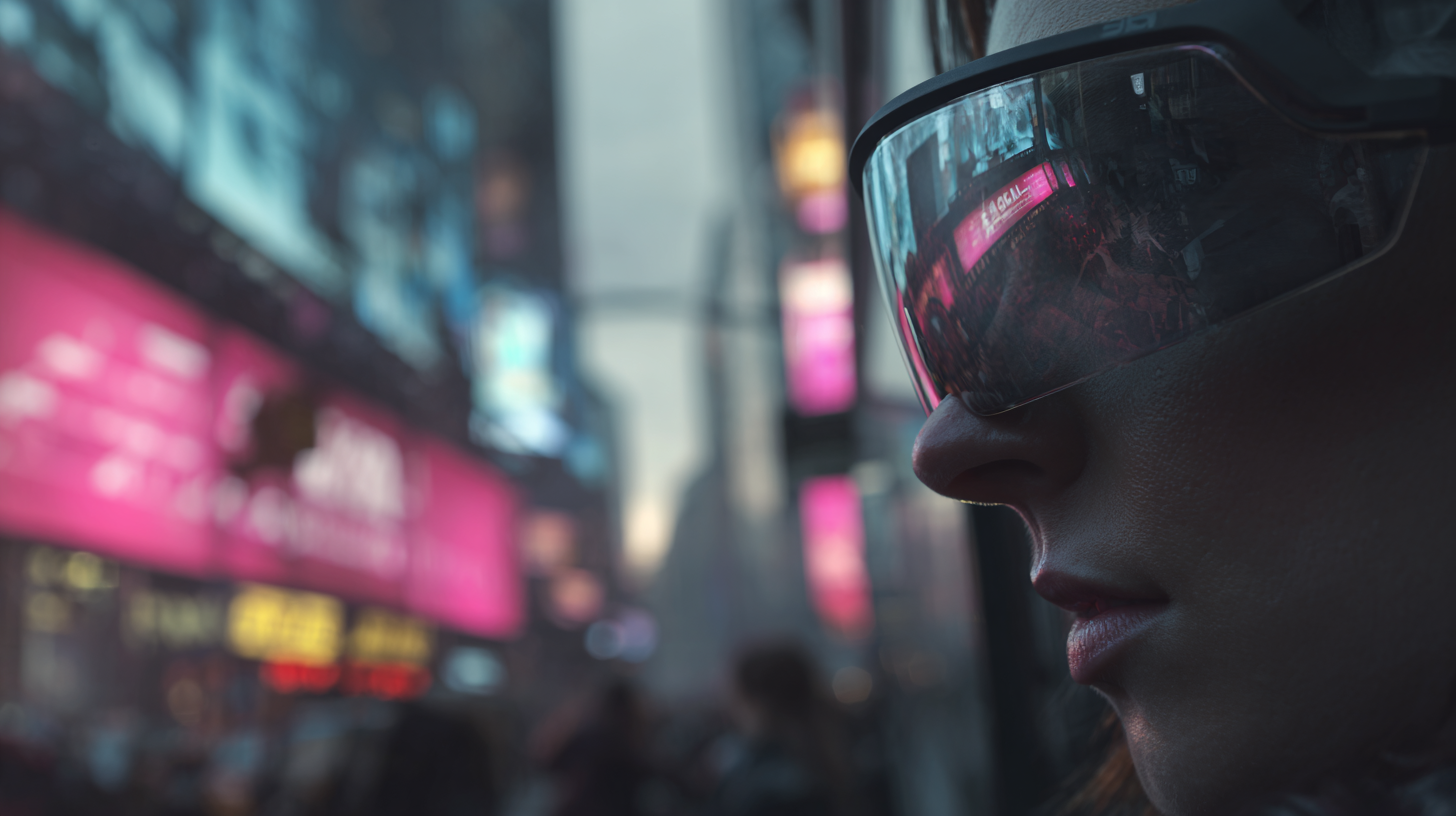
One of augmented reality's most overlooked powers isn’t what it lets us see; it’s what it lets us stop seeing.
Recently, Stijn Spanhove, an engineer and AR innovator, captured the Internet's attention with a clever hack using Snap Spectacles and Gemini. He programmed the AR glasses to detect real-world advertisements—billboards, posters, products—and then block them out with a digital overlay. It sent a clear message that in spatial computing, we don’t have to accept the world as it is. We can edit it. And the first thing to go...ads!
This idea isn’t new, but it’s resurfacing now that smartglasses are finally within reach as the next consumer device. Glasses like Snap's Spectacles and Xreal's One are already in developers’ hands to explore and play, and major tech players are expected to bring consumer AR glasses to market in the near future. With this momentum, developers are once again experimenting with diminished reality, using AR not just to enhance what we see, but to remove what we don’t want to.
Back in 2015, a scrappy team of developers at the student-run hackathon, PennApps, created a project called Brand Killer. Like Spanhove's Spectacles app, it struck a cultural nerve. The app, paired with a homemade HMD, used computer vision to recognize brand logos in the environment and blur them out, essentially creating a real-life ad blocker powered by OpenCV and a database of known advertisements.
Source: YouTube/Jonathan Dubin
Brand Killer brought to life a marketing stunt AdBlock Plus performed back in 2013. The web ad-blocking solution tweeted out that it had partnered with Google Glass to block ads in Times Square, NYC, using the wearable computer. Although this was just an idea, it seemed that Google itself was cautious about ads on AR glasses. Its Mirror API for Google Glass famously prohibited advertising in Glassware apps at launch, reflecting an early awareness of how people might react to ads floating at eye-level.
Three years later, designer and filmmaker Keiichi Matsuda released his now-iconic short film Hyper-Reality, a dystopian vision of the near future where the physical world is saturated with gamified overlays, algorithmic avatars, and endless branded intrusions. It’s a chaotic, jarring experience that, like these developer experiments, serves as a stark warning of what could happen if brands took control of our eyespace.
Source: Vimeo/Keiichi Matsuda
Fast forward to 2019, and people were burning ads, literally, with their smartphones. Burger King Brazil’s “Burn That Ad” campaign, created by agency David SP, utilized mobile AR to enable users to point their phones at competitors’ billboards, which would ignite virtual flames and reveal a Burger King offer underneath. It was a playful twist on diminished reality, turning ad removal into an act of brand engagement.
Source: YouTube/Burger King BR
And while today's Vision Pro newly launched widgets in visionOS 26 don't yet support ads, we’re already seeing spatial posters popping up in creator demos. Brands will be watching closely.
We’re entering a moment where editing the real world isn’t just possible, it’s desirable. And enemy number one seems to be ads. This isn’t a new instinct. It’s a recurring theme that has surfaced again and again over the past decade. It reveals something deeper, a growing desire to take control of our perception, and a lingering fear that brands will get there first.
Ad fatigue moves from screen to space
People are increasingly burned out on ads, especially those that are interruptive. We've spent the last two decades developing mental filters for screens, ignoring banners, skipping pre-rolls, and scrolling past sponsored posts. Now, that exhaustion is bleeding into the real world. From QR codes on sidewalks to AR-activated murals and 3D billboards, the line between digital and physical advertising is already blurring, and we have yet to reach our AR eyewear era.
AR glasses don’t just bring the internet into your field of view. They bring their business model too. And if we’re not careful, that model is one of constant interruption. This is exactly the red flag in Matsuda's Hyper-Reality.
Perhaps this is why AR ad-blocking concepts, such as Spanhove's Spectacles app and Brand Killer, resonate so strongly. Like flat screens, we want control of our digital experience, and AR could give us the tools to say no to ads in our actual environment and our digital feeds. As people become more fluent in how their data is used and more aware of how attention is traded, they're also becoming more selective about what gets to occupy their world, virtual or otherwise.
The '90s web is a warning, not a blueprint
In the early Internet era, websites were a chaotic mess of pop-ups, flashing banners, and auto-playing videos. It wasn’t innovation, it was noise. We learned, over time and with pushback, that more doesn’t always mean better. The worry is that AR could face the same temptation to fill the user’s vision with whatever can be sold.
But hindsight is 20/20. We’ve seen how over-monetization degrades trust, user experience, and brand equity. This will hopefully make it less likely to give in to the temptation to maximize our visual surface area with ads in AR, avoiding turning windows, walls, sidewalks, and even people into ad space.
One of the core lessons from Web 2.0 was that intrusion without value backfires. Attention was treated as a resource to extract, not a relationship to earn. Now, as we enter the experience age of marketing, that dynamic is shifting toward interactions that are immersive, meaningful, and mutually beneficial. Marketers are already responding by designing campaigns that prioritize participation, presence, and emotional connection over passive exposure. This shift is arriving just in time, as headworn wearables position themselves as the next consumer device.
Hyperpersonalization by default
One of the defining tensions in AR will be between relevance and revenue. Users don’t want to be generic targets in a probabilistic system. If content is branded, it better be meaningful, useful, or emotionally resonant.
With AR glasses, we have the opportunity to rethink what “advertising” even means. Maybe it’s not a poster or banner at all. Maybe it’s a layer users choose to turn on. A new sneaker drop that only appears when you walk past a certain store. An immersive experience that overlays a park bench only if you sit on it for a certain period of time. Or an interactive art installation sponsored by a brand that gives you credits when you opt-in with your gaze.
But beyond the medium, the content itself needs to evolve from interruption to invitation, from messaging to meaning. And to do that, it needs to be personal.
AR is intrinsically personal. It depends on your space and everything in it, including you and the objects around you. Without space, there is no AR. As a result, every experience is unique, shaped by the person and the place where it happens. Embracing this hyperpersonalization could be the key to unlocking a new level of value in brand experiences.
Control as a core feature
AR is often celebrated for what it adds, such as holograms in your room, live translations in your line of sight, and digital characters sharing your space. But what we remove is just as important.
Diminished reality is about subtraction. It’s about making the physical world feel less overwhelming, more intentional, and more yours. With AR glasses, diminished reality becomes a real, everyday tool. This is about shaping your surroundings to match your needs, in the moment. And that changes the role of AR. It’s no longer just a window to new content. It becomes a lens for personal agency.
When reality becomes programmable, the most powerful feature is control. Control over what we see, what we block, and what we engage with.
As developers and companies building in spatial computing, the decisions we make now will define the next decade of digital interaction. If we want a future that’s respectful and human-centered, we can’t design for endless input and constant interruption. We have to build in space and give users the agency they desire over their perspective of the world around them.
This might mean supporting diminished reality by default. It might mean rejecting ad-first business models. And it might mean shifting our creative ambition, not just toward what we can layer on, but toward what we empower people to leave out.
Across a decade of prototypes, provocations, and pranks, it is clear that when it comes to AR glasses, people want more say in what reaches their eyes. Whether it’s burning ads with a smartphone or blurring logos with a headset, we crave more control over our experience of reality.
AR isn’t just another screen in front of your face. It alters how we interact with the world around us and shapes our perception of it. As spatial computing moves into the mainstream, the stakes become real. We can build an immersive world without being overwhelmed. But that’s not going to happen by accident. It’s going to take intention and a clear sense of what kind of reality we actually want to live in.