What I Learned Wearing a Camera — and Why It Matters for OpenAI’s Next Move

Shortly after officially announcing OpenAI's acquisition of Jony Ive’s hardware company, io, for $6.5 billion, the WSJ reported that OpenAI was working on a "family of devices". According to the WSJ, “The product will be capable of being fully aware of a user’s surroundings and life, will be unobtrusive, able to rest in one’s pocket or on one’s desk, and will be a third core device a person would put on a desk after a MacBook Pro and an iPhone.”
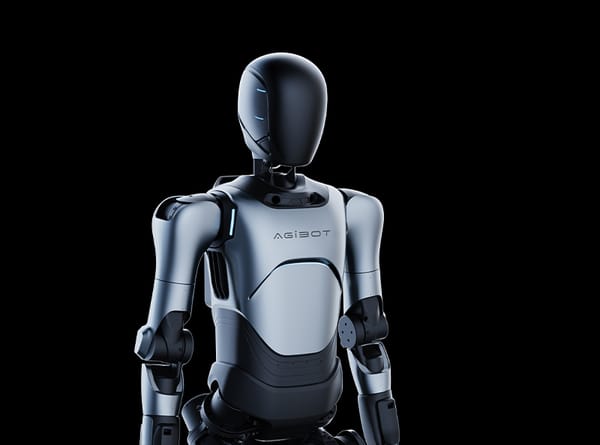
Fueled by excitement and the intrigue of the unknown, the internet turned to Photoshop and GenAI to imagine what this device could be. Many looked for inspiration from Humane's AI pin, the movie “Her,” and other always-on wearable necklaces like Pendant and Friend.
The most viral concept was from Tech Enthusiast and Content Creator Ben Geskin, who envisioned the device as a camera the size of an iPod shuffle.
WSJ on Jony Ive and Sam Altman’s OpenAI device:
— Ben Geskin (@BenGeskin) May 22, 2025
• The product will be capable of being fully aware of a user's surroundings and life, will be unobtrusive, able to rest in one's pocket or on one's desk, and will be a third core device a person would put on a desk after a MacBook… pic.twitter.com/96q3YtM7Mu
I personally enjoyed this high-end Cartier-inspired concept from designer Leighton McDonald as a camera-enabled bracelet.
Nearly 10 years ago, I wore a wearable camera called Narrative Clip on a regular basis for about a year. The OpenAI news instantly brought me back to my time with this lifelogging device. Narrative first started as a Kickstarter campaign in 2012 as Memoto and raised 10x its original goal, surpassing $500,000. Rebranded as Narrative, the company began to ship its product, the Narrative Clip, in 2014.
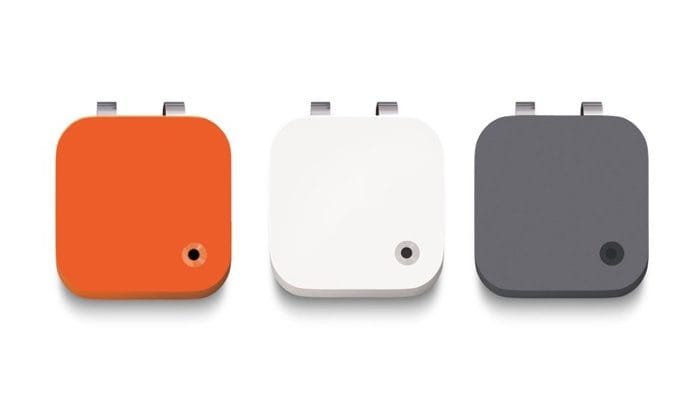
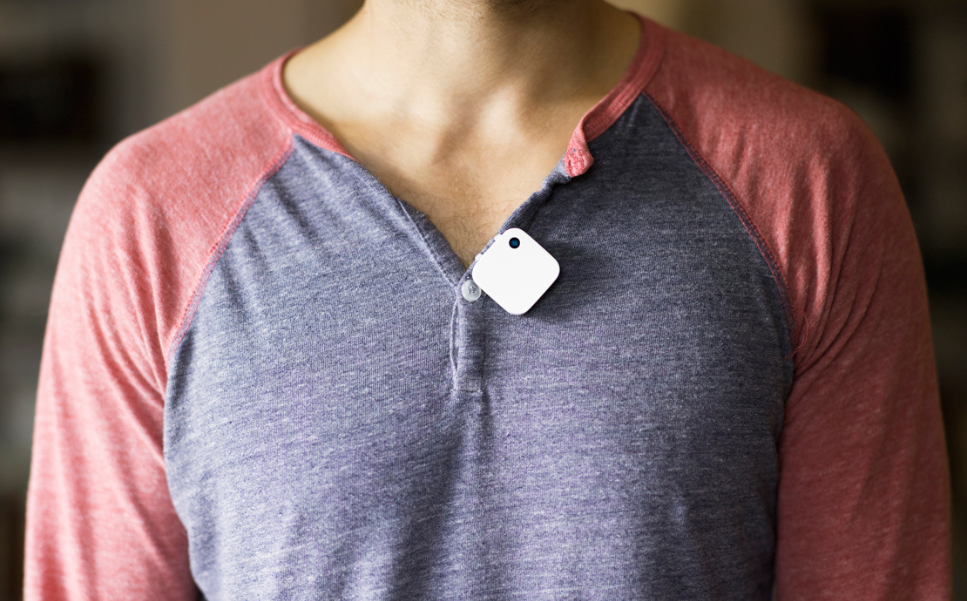
The Narrative Clip 1 featured a 5-megapixel fixed-focus sensor with a 70-degree field of view, offering a natural perspective without wide-angle distortion. It came with 8 GB of internal flash storage, holding around 4,000 photos. Designed for passive use, the battery lasted approximately two days, capturing about 2,000 photos per day. There were no physical buttons. Instead users could manually trigger a photo by simply double-tapping the device or tap on the device to check out its battery life. It had a lightweight clip which was meant to clip on a shirt, bag strap, or other clothing easy, enabling hands-free lifelogging throughout the day.
With OpenAI’s device rumored to be small and collect information about the world around it, I thought I would take some time to jot down the insights I gained from my experience wearing Narrative Clip and what it could inform us about our post-smartphone future.
Lesson 1: Wearing your tech must become habit-forming.
Wearing a camera isn't something we already do and so one of the biggest things I needed to do when I got my Narrative Clip was to form this habit. It took conscious effort in the beginning and there were many days when I forgot to put it on, but eventually it became part of my morning routine: socks, shirt, and Narrative Clip.
Habits start by you choosing to do something but they are formed through rewards. I originally wore Narrative out of curiosity and my passion for wearable tech, but that evolved into a desire to use it regularly to capture my life. Narrative’s app employed lightweight AI to filter out blurry photos and group them by GPS, making the device's output more meaningful. It became exciting to see what was captured by the end of the day and this is what got me hooked.
Battery life can be a significant barrier to the adoption of any device. Nothing is worse than putting on your wearable tech only to realize you forgot to charge it. Just one day of leaving it on the charger rather than having it on your body can greatly affect the muscle memory you’ve built in forming a habit of wearing it.
Fortunately, Narrative’s battery could last up to two days, a notable advantage over wearables that require daily recharging. But a longer battery life can create its own challenges. When charging isn’t part of a daily habit, it’s easier to forget, increasing the odds the device won’t be ready when you need it. To avoid this, I made it a habit to charge the device each night when I took it off, ensuring it was always ready to go the next day.
The takeaway: Routine is a necessary ingredient for the success of wearable devices, and battery life and user benefits play a huge role. If the reward is higher than the effort, its a winning equation.
Lesson 2: Good or bad, your wearable becomes a fashion accessory.
Since Narrative was a clip, it needed to be attached to something. This allowed it the flexibility to be worn in various places: on your shirt pocket, attached to a necklace, or on the side of your purse. I started wearing it on my shirt, either clipped to my chest pocket or eventually like a bowtie, clipped to the top of my shirt between my lapels (I used to think it looked like a bolo without the strings).
No matter where you place it, it becomes part of your daily fashion. The device measured 36x36x9 mm, similar in size to the face of a small smartwatch, and was available in several colors: white, gray, and orange. The first two colors are more neutral and classic, making them easier to match. I decided to go with the orange which ended up being a good choice as regardless of the color the device was noticeable on your outfit and at least with the orange it became a statement rather than trying to blend in.
The fact was that it didn't go with everything. It wasn't something you would expect to wear with formal wear, for example. And this is the issue with tech that you wear that doesn't give you more than one option as a look.
Another key challenge was that the device weighed 20 grams (0.7 oz), making it somewhat difficult to wear. For instance, T-shirts posed a challenge, as clipping them to the top of your shirt would cause the device to droop and pull your collar down. It was by no means heavy to wear but on lighter textiles it didn't do so well. I found that wearing it on collared shifts was best and the place it stayed on the longest was up near the collar mainly because it had less of a chance of me waiving my hands around and knocking it off.
The takeaway: Making tech a part of your style means you have to appreciate its appearance on its own and with various outfits for different occasions. This can be outweighed by the value it brings but you'll always crave for more choices to help compliment your daily style. Considering who your user is and what they wear is key to designing a wearable as it will be part of an assemble.
Lesson 3: Where you wear your tech affects the device's capabilities.
Narrative's ability to be worn in various locations offered flexibility. But because you could wear it anywhere meant you had varied results. Wearing it like a bowtie showed numerous pictures of my chin, which wasn’t great for my confidence. Alternatively, placing the Clip on the neck of a t-shirt, where the device struggled to stay upright, led to many more photos of the floor. The Narrative Clip featured a wide-angle camera lens with a 70-degree field of view, which is slightly broader than the perspective of a smartphone, which gave it a somewhat higher chance of capturing something meaningful but it couldn't fight against poor placement on the body.
The beauty of the Narrative Clip, however, is that it allows you to see the world from different angles and perspectives. As the device captured a picture every 30 seconds, you end your day with some surprising shots. Many may not be worth your time, but there are usually one or two gems that were artistic in their own right, almost as if the machine itself was expressing its experience of your day.
The downside of having only one camera and being at the mercy of where the user chooses to wear the device is that the machine had limited sight. If you were to use the data captured by the Clip to gain insights and context about your day through it would be extremely limited. It just didn't see enough.
The takeaway: A wearable designed to give computers eyes will need more sensors on board in order to capture more of what your life is about. In addition, the various ways it can be worn must be considered as placement is key to its ability to perform. To set the device up for success, a device should suggest the best way to wear it, such as a watch, earrings, or necklace.
Lesson 4: Documenting your life can lead to embarrassments and insights.
As a lifelogging device, Narrative’s main goal was to capture my life in 30-second increments. We are used to snapping a pic or video when we feel inspired or motivated in our everyday lives, but the difference with Narrative is its systematic approach to recording. Its constant automation allowed it to capture moments I wouldn’t have considered important enough to pull out my phone to record. In doing so, there were some interesting and sometimes embarrassing shots among a sea of throwaway media.
The narrative captured a lot of me eating, waving my hands around while talking, and holding my phone. In fact, it did this so well and so often that it provided insight into my own behavior from a perspective I had not seen before. I became quite aware of how often my hands would fly around while talking to someone or how much time it seemed I was spending looking at my phone rather than the scenery beyond it in the Narrative photos. Awareness is the first step to change.
Reviewing the photos from Narrative also helped me realize how often, or not often enough, I saw people. There were many times when I was going through the app and thought that I should visit someone because I hadn’t seen them in my feed in a while. The photo feed also became a stark reminder of how much time I spent indoors or on my phone, as photos of trees, grass, and flowers were few and far between. Like the people, this inspired me to go out more. Narrative didn't just help me make changes it verified it. I could tell a change was happening in my everyday patterns when a different makeup of subject matter in the photo feed would occur.
These insights were all manual but Narrative was definitely early in wanting to use image and facial recognition to surface these up easier. In 2016, with the launch of Clip 2 and just before the company dissolved, Narrative hosted a hackathon encouraging developers to showcase how AI could enhance lifelogging. This included the use of image detection for faces and food, as well as improvements in photo filtering. It was undoubtedly ahead of its time and highlighted how wearable technology will enable computers to perceive the world around them.
The takeaway: Despite the awkward photos, the machine's ability to control when to take a photo and what to include became an art form in itself. This also led to my surprise at the day's events. However, the true power of a wearable camera lies not in the media itself but in its potential as valuable data for AI, which can derive insights and provide context about your life. This, in turn, can enrich your experiences by offering you valuable feedback and perspectives.
Lesson 5: People are less afraid of a camera on your chest than they are on your face
One of the things I was really interested in as an early adopter of wearable cameras was the public reaction to wearing a device like this. I remembered when feature phones started to have cameras back in 2008 and the backlash that occurred with the banning of these connected capture devices in locker rooms, movie theaters, and even restaurants. I suspected that these new devices would potentially trigger a similar reaction.
While I was wearing the Narrative Clip, I was also using Google Glass. Glass was more recognized than Clip in the realm of wearables at the time, largely due to the “Glasshole” stories in the news that portrayed a new surveillance state emerging from these early face computers. Both Glass and Clip could take pictures. The key difference was that the Clip operated automatically and was more discreet in its size and placement on my body, while Glass was literally on our faces but required me to initiate a photo using my voice or a touch gesture.
While wearing Google Glass and the Narrative Clip at the same time, I found that no one paid much attention to the Clip I was wearing as a bowtie. All eyes were on Google Glass. I remember conducting an experiment where I walked into a coffee shop with three devices very visible - Glass on my face, the Clip as a bowtie, and my iPhone in my pocket with the camera pointed out to the world. The café team member only commented on Glass. “Are you recording me?” she said as she pointed at the device on my face. I told her that my Google Glass was not, but this little Clip was taking pictures every 30 seconds. She seemed relieved and shrugged at the fact that Narrative was doing its job, and we went on with our day.
I rarely received pushback or questions about Narrative as I did with Glass. This led me to wonder if it was due to the position of the Clip on my body. It wasn’t on my face at eye level, sharing the same perspective as my sight, but was rather lower and on my body. Did a device on one’s face feel more intrusive because it is so personal? I’m not sure, but it was something that lingered with me.
It didn’t always feel comfortable to wear Narrative. To be polite, I often took the device off at work to avoid documenting meetings, notes, documents, presentations, and building layouts. I would also remove it during intimate moments like the bathroom. And, of course, in the rare instances when it made someone uncomfortable, the Clip would go in my pocket.
The takeaway: Wearing a camera can sometimes make people, including the wearer, uncomfortable. New social contracts and norms must be established for a device that is always on and records our every move. In my experience, the placement of the camera on the body plays a significant role in how it is perceived and accepted.
It has yet to be determined what this new device from OpenAI will be. However, if my experience with Narrative Clip taught me anything, wearing a device with always-on sensors can be extremely powerful, especially when paired with AI. Several design and social challenges need to be considered for it to be successful. I look forward to learning more about this device and whether OpenAI has addressed these.