Teradar Claims Terahertz Sensor Could Prevent 150,000 Road Deaths Annually

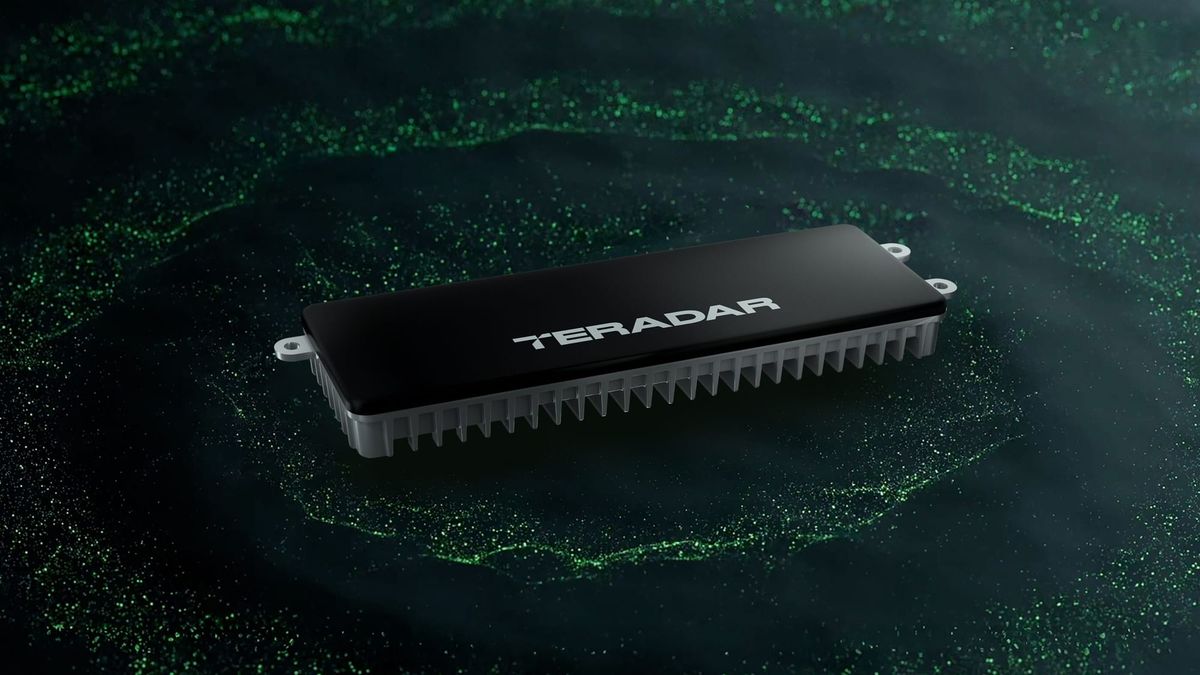
- Teradar introduced Summit, a long-range sensor designed to outperform radar and lidar in all conditions.
- The company plans to begin production bids in 2026, aiming for vehicle integration by 2028.
Teradar debuted its flagship sensor, Summit, at CES 2026, in what it says is the first use of terahertz vision technology in advanced driver assistance systems (ADAS) and autonomous driving. Teradar says its terahertz sensor is a critical advancement in vehicle perception, addressing visibility gaps that legacy radar and lidar systems struggle to overcome in poor weather or low-light environments.
"As extreme weather makes low-visibility crashes more common and more deadly, the need for reliable all-condition automotive vision has never been more urgent," says Matt Carey, CEO and Co-Founder of Teradar, in a press release. "By delivering visibility through fog, rain, snow, and sun glare, Teradar's terahertz sensors could help prevent up to roughly 150,000 road deaths every year worldwide. We're opening a sensing domain that simply hasn't existed in automotive before, giving vehicles the ability to see in conditions where today's systems break down."
Summit is a fully solid-state sensor that uses terahertz waves to give vehicles a clear, detailed view of their surroundings, even in poor weather. It’s built on Teradar’s custom chip platform, which combines signal transmission, reception, and processing in one system. Summit can detect objects up to 300 meters away and produces 3D data that includes distance, position, and how fast objects are moving. It's designed for use in everything from assisted driving to fully autonomous vehicles, and works reliably in fog, rain, snow, glare, and other conditions that can block traditional sensors.
Source: YouTube / Teradar
Teradar says it is currently engaged in eight development partnerships across the U.S. and Germany. The company will begin bidding on high-volume production programs in 2026, targeting a 2028 production start.
🌀 Tom’s Take:
ADAS and autonomous systems only work if vehicles can see clearly in all conditions. Teradar’s terahertz sensor is a step toward solving that, offering consistent, high-resolution vision where radar and lidar often fall short.
Source: PR Newswire /Teradar