Piper ZY on Being a Spatial Creator, Futurist & AI Skeptic

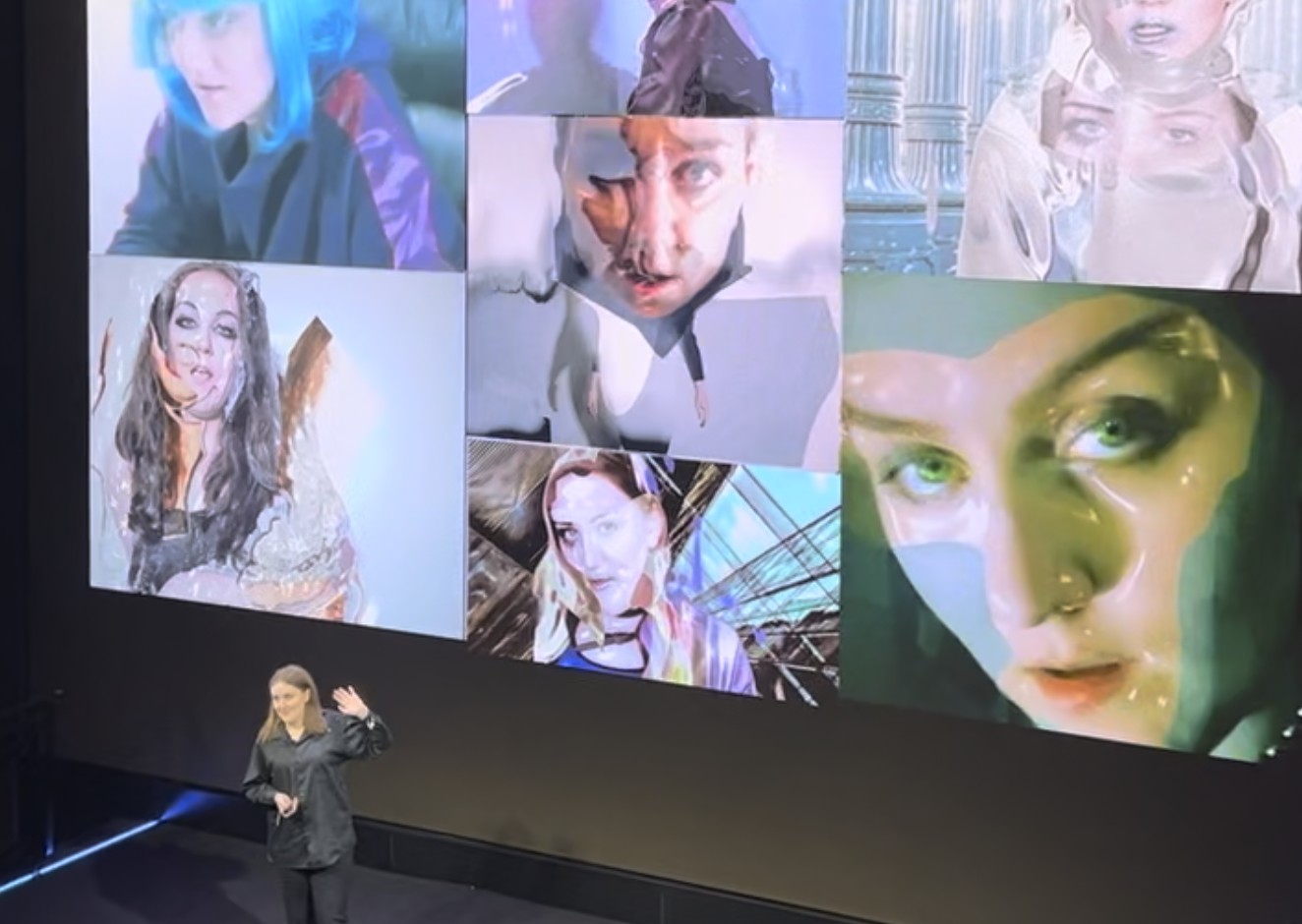
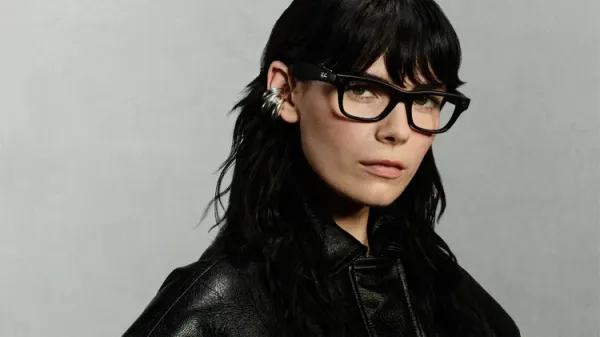
As an artist, musician, and spatial creator, Piper Zy’s superpower is part trendspotting and part business translation. First, she pushes the limits of XR tools to uncover the invisible threads that bring science fiction ideas, emergent technologies, and people together. Then she uses this one-of-a-kind approach to guide brands in using these new tools in ways that fit into daily life and culture.
Nearly a decade into her journey as a spatial creator (or whatever label you try to pin on her: XR futurist, AR filter maker, immersive prototyper, social media influencer, time-based artist), and Piper still finds daily inspiration and excitement working on the cutting edge of imagination for brands like Dr. Martens, Coachella, Lego, and Samsung.
Don’t read Piper’s passion for interactive 3D effects as blind devotion to “tech for tech’s sake.” She’s an artist first, which means her values, curiosity, and vision for the future all come before any allegiance to one set of tools or technology.
In this duality of early adopter and early skeptic, Piper’s work shines as both a beacon of what’s possible and what moves the needle for innovative brands.
Source: YouTube / Awesome Futures
Building a world and personal style around target tracking
Early on, Piper had a vision for where she wanted to take her work, but she didn’t have the words or tools to describe it. ”I just felt like it didn't exist yet. I wanted to do ‘this kind of digital layer, like sci-fi.’ And I just felt like it wasn’t the time yet,” Piper explains.
Frustrated by animating video layers one frame at a time to get the right effect, she serendipitously discovered a new medium and personal brand in augmented reality.
“I was playing with futuristic concepts, digital fashion, fashion film... Then I had a project where I wished I could track a face. I looked up ‘free face tracking software,’ and the filter software came up. That night, I spent so many hours in the software, thinking ‘wow, this is opening up a whole new world.’”
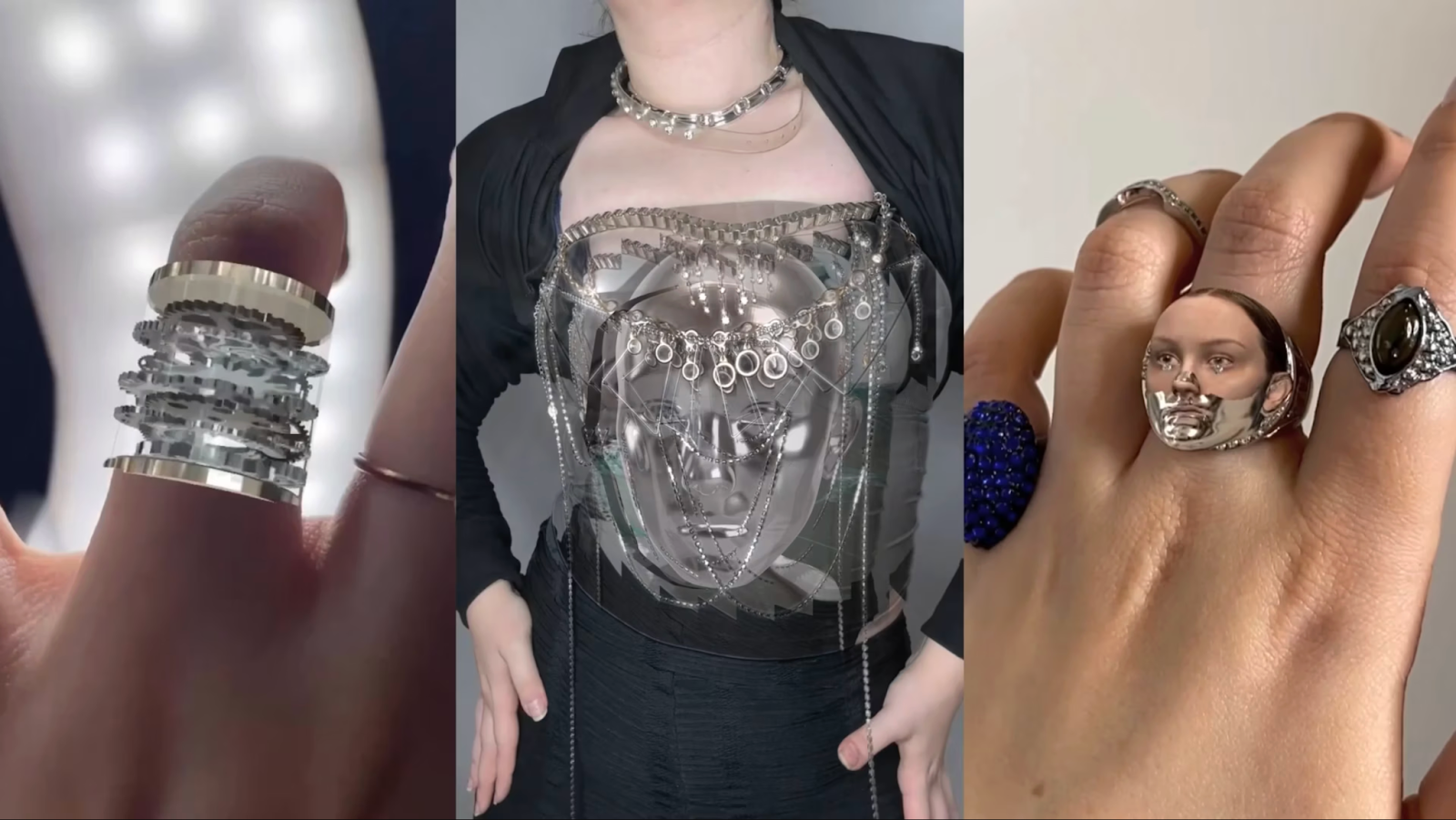
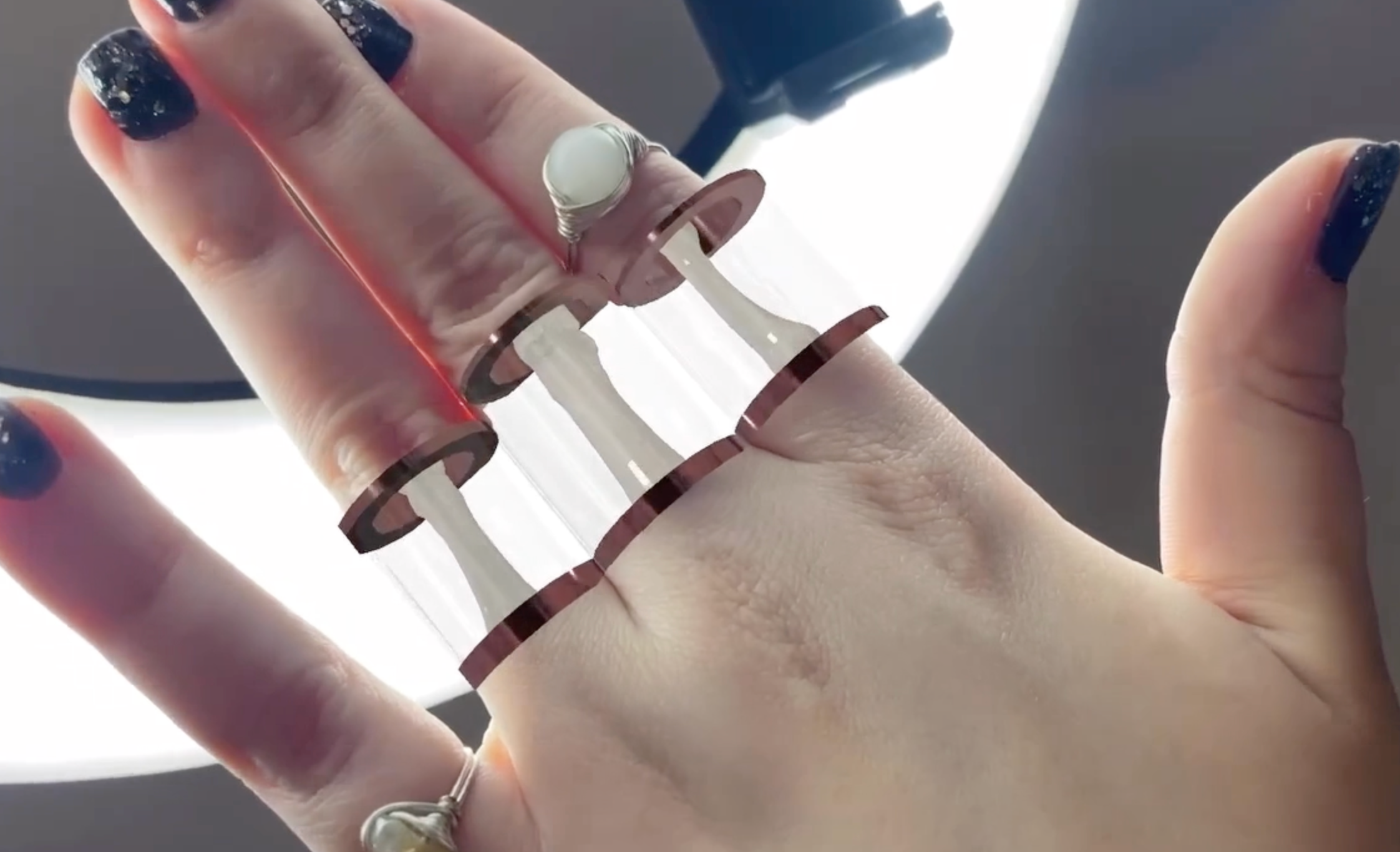
Piper’s transparent AR rings are some of her most iconic, impossible fashions that anchor to, and sometimes challenge the limits of, the body. In some rings, high-polish clockworks and gears spin in a see-through finger segment, magically floating in the gap. In other rings, Piper accentuates the visceral nature of body modification and reveals bones floating inside the fingers.
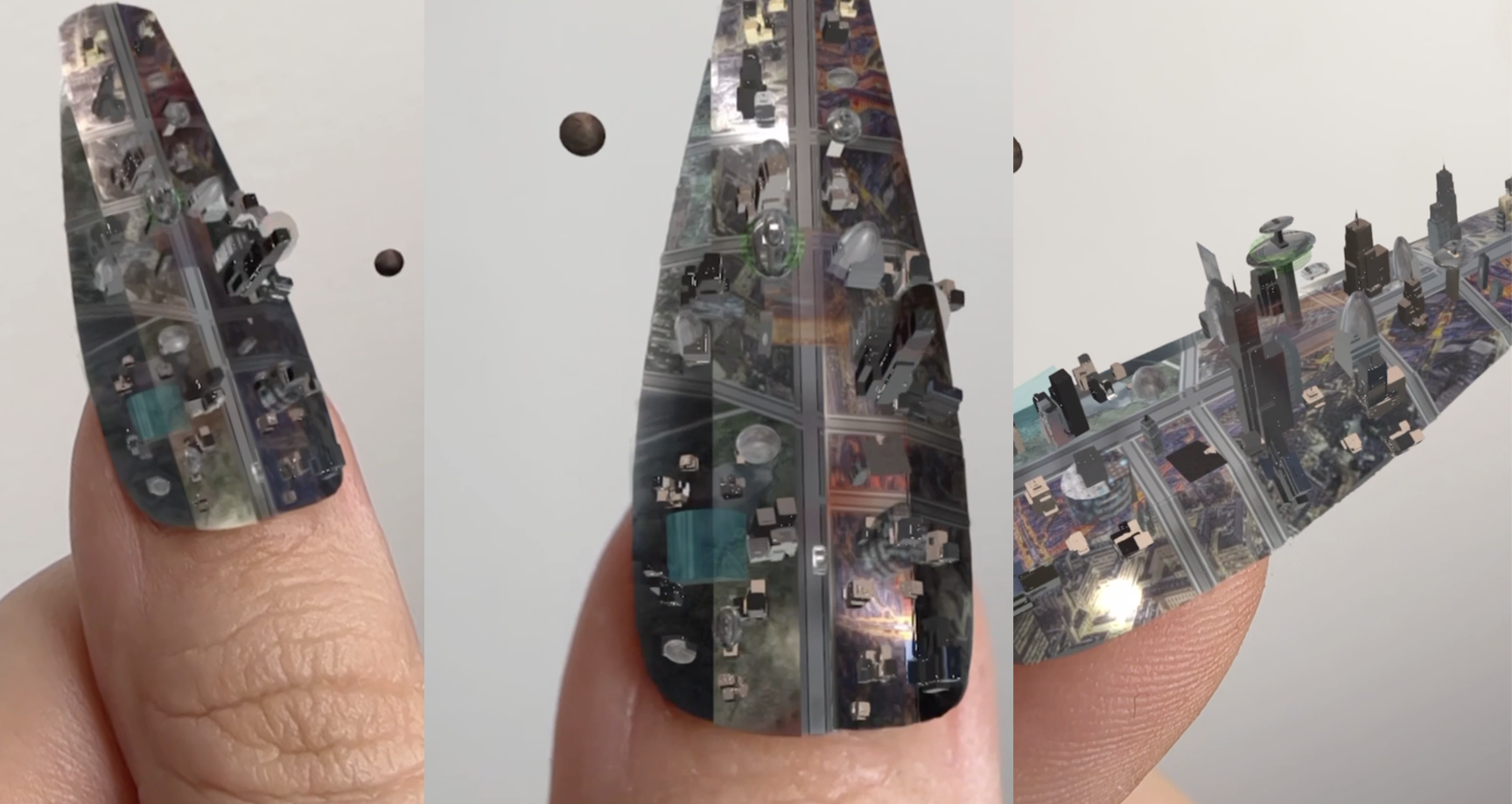
Another impossible XR creation anchors a lively city map, complete with skyscrapers and orbiting drones, to Piper’s manicure, hinting at new models for accessing information with holographic smartglasses.
This foundational motif of wild, sci-fi animations anchored to the body and other pieces of the real world took very rudimentary tech and exploited it to wonderful effect, and it still drives her work and thousands of views to Piper’s video channels today.
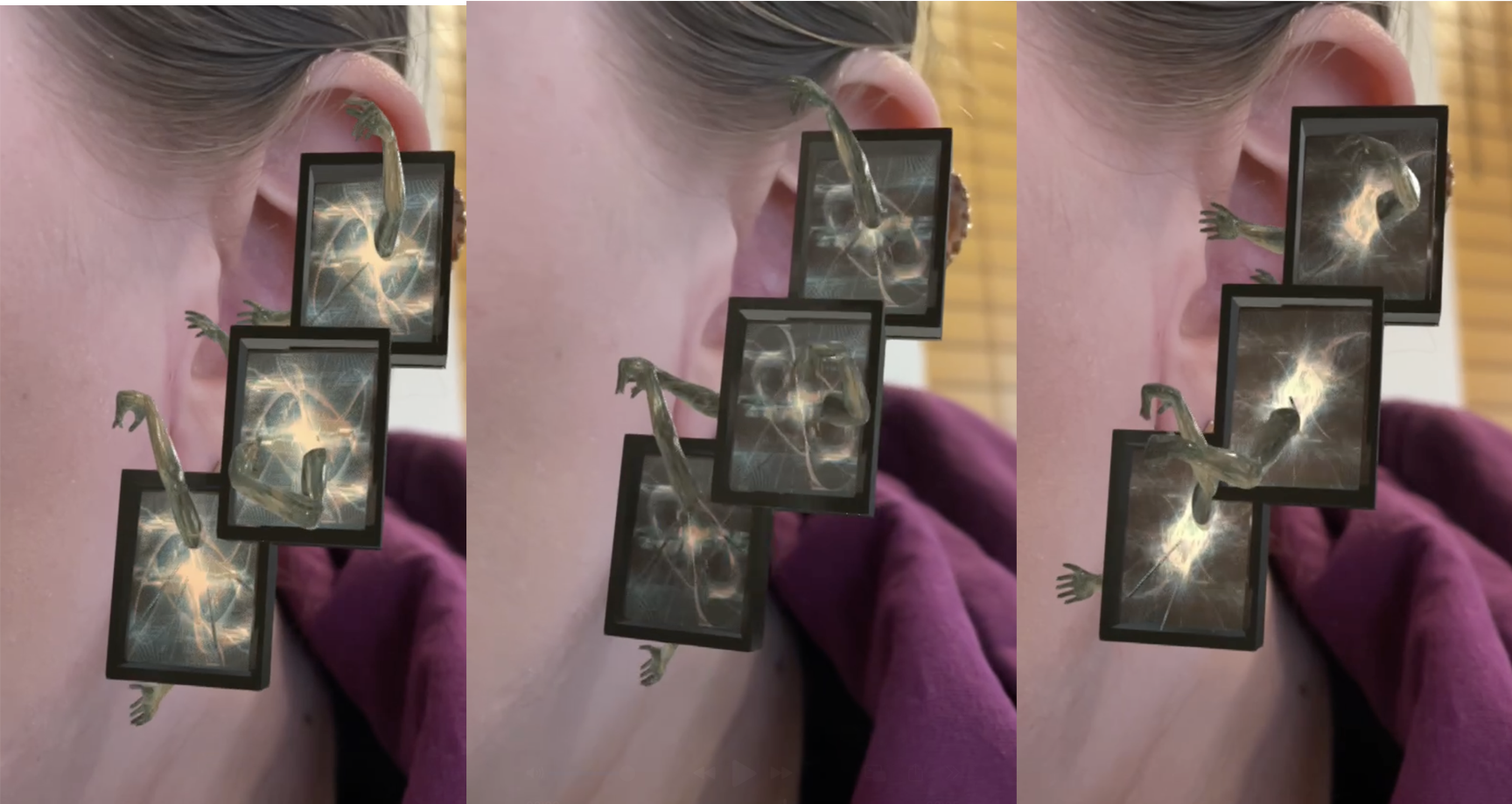
She gained early traction by committing to a 100-day TikTok challenge to build her platform. Piper now has over 160K followers on TikTok and 170K+ on Instagram, where she regularly posts about new concepts, futuristic fashion prototypes, and cultural analysis.
Defining a new AR medium, with brand collaborations
As brands started to pick up on the hype around XR and the metaverse, her online audience made Piper’s groundbreaking designs some of the first widely visible and sharable AR filters. Seemingly overnight, brands started seeking her out to help them understand, prototype, and push the boundaries of what this new experience channel could deliver.
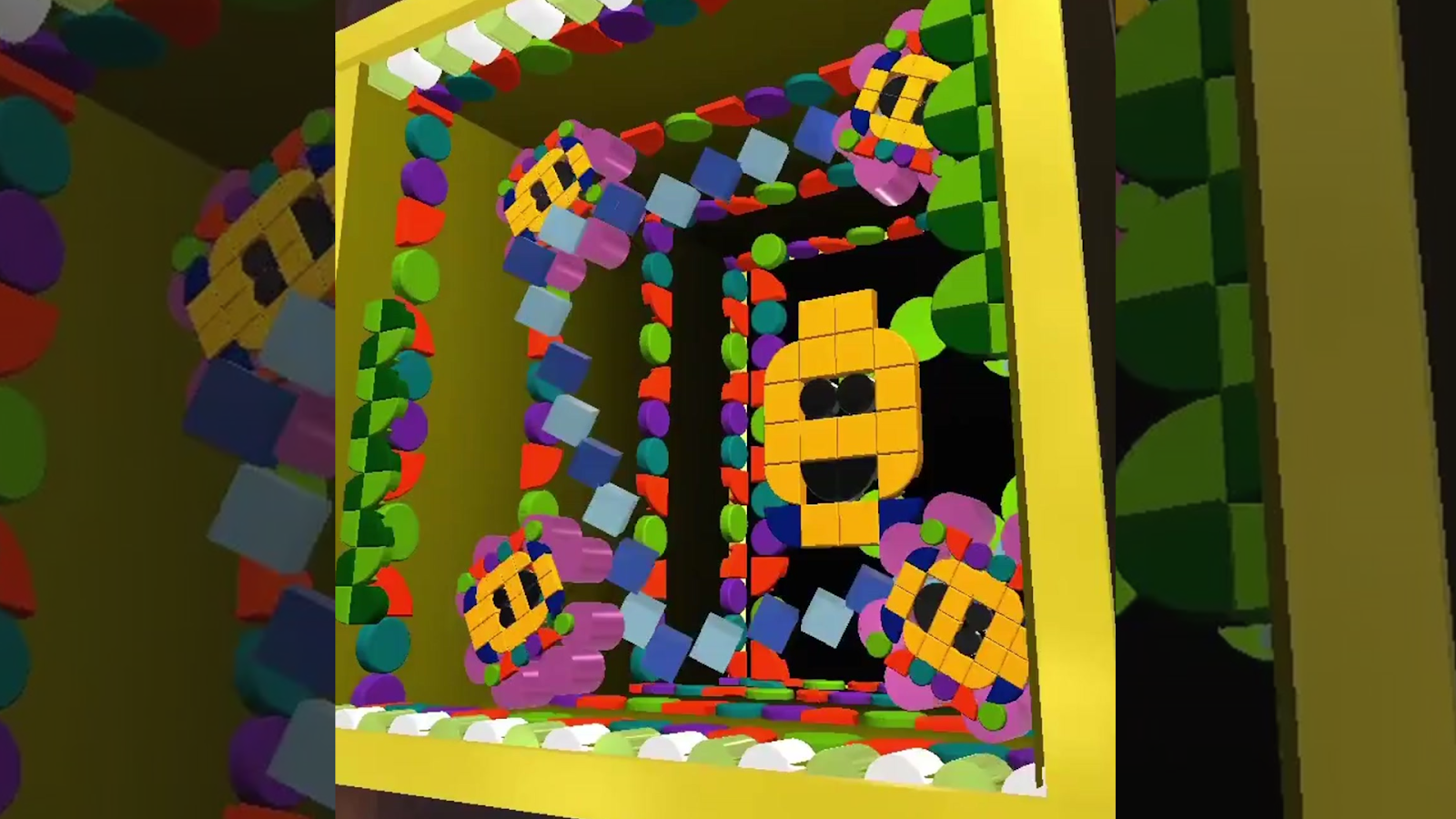
Often they would have more questions about what was possible than concrete ideas they wanted to try.
”The brands really seemed to be getting interested in [AR], and my background was in marketing, so I really felt equipped once there was this huge demand for filters, and there were already a lot of creators doing it and working with brands.”
With the brands on board, Piper’s creative impulses had the last ingredient she needed to make stand-out experiences: a brand goal to give AR filters a new reason for being. Brands saw the allure of the tech, but still needed help aligning it to their voice and audience.
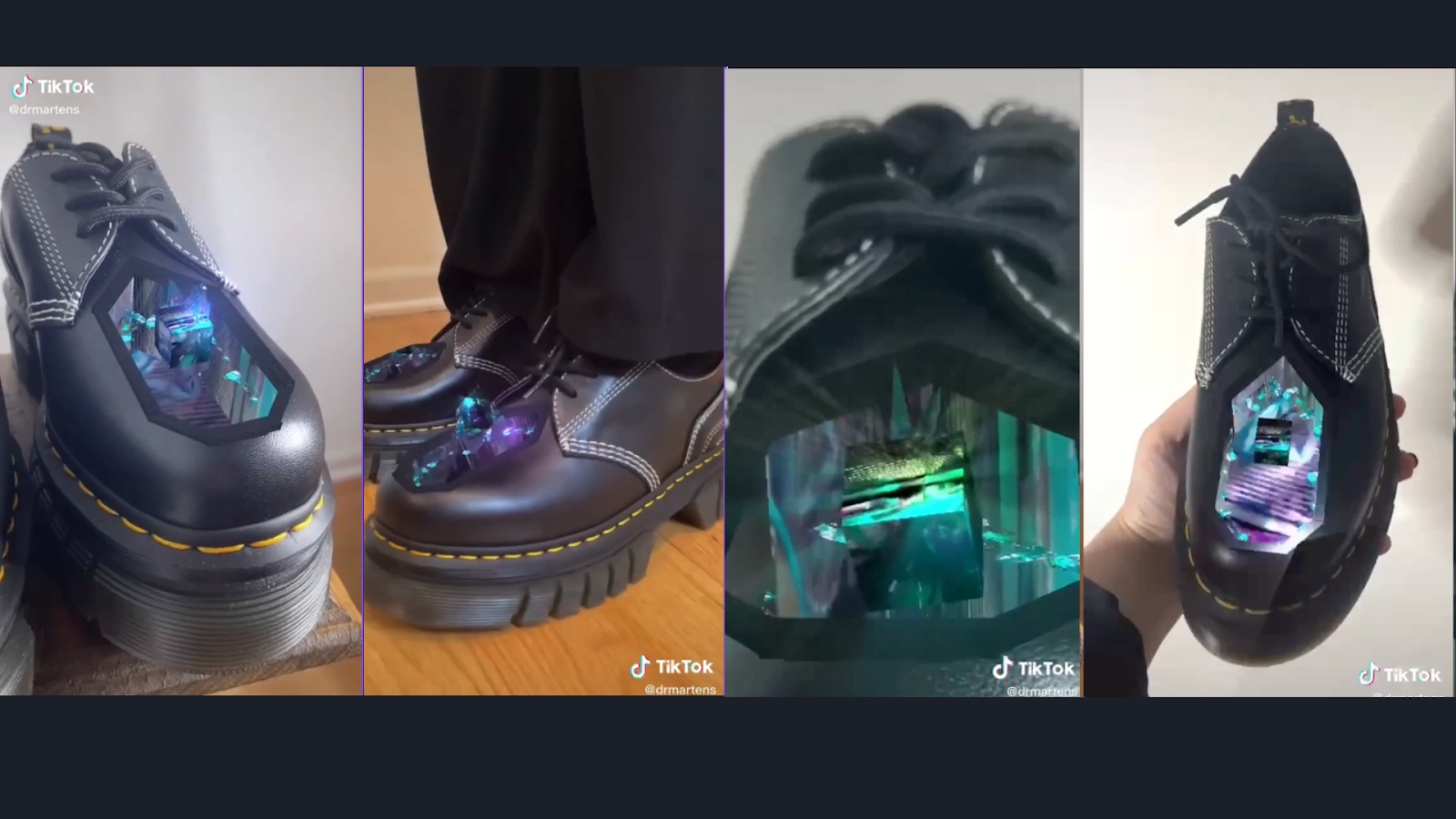
A notable project from iconic shoe brand Dr. Martens leveraged the iconic depth and impossible transparency of Piper’s earlier works, adding them to a chunky shoe design. This new concept hints that the shoes contain more than British craftsmanship, like a glowing tesseract, adding more power to your step.
The early 2020s upswell of XR excitement happened at a time when other social trends were just taking off, including the rise of social media “influencers” as media professionals, doom scrolling vertical video (TikTok), and brands testing new content types (like casual games) to reach consumers who were locked in after the COVID-19 pandemic.
“It's interesting to see those trends and what happens next, because when things happen on social media, it has a moment and then the masses move on to something else,” Piper shares.
Adapting as audiences learn and shift
While brands are attracted to the flash of technology, this creator prioritizes connection over trend hopping.
“But I think there's still so much to be explored in the XR space, and that's why I'm still excited about it. I feel like it's just a matter of time before that can reemerge in another way.…But it has to be grounded in the physical things that people are really interested in. They have to be substantial because we're already fighting against people scrolling on feeds and all the other distractions of daily life.”
“Back in 2021, if I posted something AR (to social media), people were just trying to understand what it was. People would say: ‘What is this? Is this real?’
I went from saying, ‘This is AR, it is a digital layer on top of the physical,’ like hundreds of times. Now everybody is saying, ‘This is augmented reality.’ So, it is moving in the direction of adoption.”
Looking forward to the current XR obsession about smart glasses, Piper noted, “I prefer the idea of a head-mounted device to the phone. If we are going to be so integrated with technology, I'd rather be looking through my own eyes. I do think (the impact of phones) is detrimental in many ways.”
I wish people understood that the clunkier stepping stones are important because these new technologies are genuinely so cool, but so new.”
Thoughts on AI in XR art
Despite her role as a futurist, Piper's opinions about AI may surprise the reader. While AI is one of those sci-fi tools she’s been dreaming of using for years, she doesn’t want to be a part of the corporate policies and economics of today's major AI players.
“I don’t use Generative AI in my process at all (from concepts to final work) this is to contrast my excitement about it in theory because it’s been a huge point of confusion about my work, with people often assuming that some of the process includes Gen AI.”
”For me, it's bittersweet because in a vacuum, I would love to generate my ideas… but in the greater context of the world, we're at this fork in the road. Like, literally 10 years ago, I wrote science fiction. It was about an AR brain implant that is AI-powered. It's taking our thoughts and fully generating them into AI to someone else's device and into someone else's brain. I was so excited about it. But now, when I see that moving towards that, I start to ask, “Who's in charge of this? Do I like their philosophy?’ And a lot of times the answer is ‘no.’ I see the real impact on the world, and I think especially for creators, it becomes very imperative that we look at the practical implications of things we support or don't support.”
Looking ahead at the next wave of XR
Despite pressures of waning trends and the shifting focus of corporate XR platforms, Piper is still all in on XR.
“I am still excited about [being a spatial creator] because it's back to that same essence of trying to bring something into a new space. And I'm sure there are a lot of viewers who will see something and say, Oh, I remember seeing this a few years ago when this kind of, these trends were happening.’ But for me, there's so much that's undone.”
“The lack of restraints (makes spatial exciting). Like physics itself, it just doesn't exist, and that opens up so many design possibilities that just were not on the horizon. There are so many ways to explore that, and when the right person steps into the space, they're going to open something up that's so incredible that nobody's ever thought of. And I think it is true of so many creators, and it's just so exciting to see!”
“I hope that as we're all online and creating more, we'll all connect together more and be able to share those resources and ideas, and that'll help us be visible to brands and the audience and the consumer too.”
And if you’re reading this, I bet Piper would agree, the spatial and AI brands of tomorrow need your curiosity, creativity, and playful perspective.
Each day, new expressive tools come online, and it is the spatial creators and tinkerers, like you, who will help us decipher what is possible and what is ethical to make with them.