Inside the $5 Trillion Race to Build Humanoid Robots

- Humanoid robots could become a $5 trillion market by 2050, according to Morgan Stanley, setting the stage for a global race in scale and influence.
- China is on track to deploy over 300 million humanoid robots, nearly four times the projected total in the US, driven by its manufacturing base, supply-chain depth, and expanding AI ecosystem.
The race to build humanoid robots is a contest about who controls a $5 trillion market. Right now, China is pulling ahead in scale and deployment.
In late November, Elon Musk shared a viral video on X depicting a world where Tesla's Optimus robots perform virtually any human task, fully integrated into daily life. The montage, which garnered over 60 million views, shows Optimus as an "everyman" capable of nearly everything; walking down streets, working construction sites, providing emergency aid, to joining police patrols, and sparring in judo matches.
— Elon Musk (@elonmusk) November 21, 2025
Source: X / Elon Musk
At a U.S.–Saudi Investment conference later that week, Musk proclaimed that advanced AI and robotics will produce goods and services so efficiently that scarcity will disappear, making traditional employment unnecessary. Musk said work could become “optional” within the next 10 to 20 years and predicted that money would eventually become irrelevant, according to reporting from Fortune.
Before we press the panic button or start planning early retirement, let’s examine how far along the humanoid market has developed and who is leading the way.
The Rise of Embodied AI
In its report, “The Humanoid 100: Mapping the Humanoid Robot Value Chain”, Morgan Stanley values the long-term total addressable market for humanoid robotics and related ecosystems at around $60 trillion. The revolution is due to what they proclaim as the physical embodiment of AI, or the logical evolution of AI in the broader internet of things. For decades, industrial robots were used mainly for repetitive, simple, and structured work. Now, humanoid robots are emerging with “brains” powered by artificial intelligence.
Morgan Stanley projects the market will reach $5 trillion by 2050, with up to 1 billion robots that "resemble and act like humans" deployed by then. They forecast 10% of U.S. households will own a humanoid robot by 2050, with higher adoption among affluent families, or one in three households earning above $200,000 annually.
Adam Jonas, Morgan Stanley’s Head of Global Autos and Shared Mobility Research, adds that “adoption should be relatively slow until the mid-2030s, accelerating in the late 2030s and 2040s.”
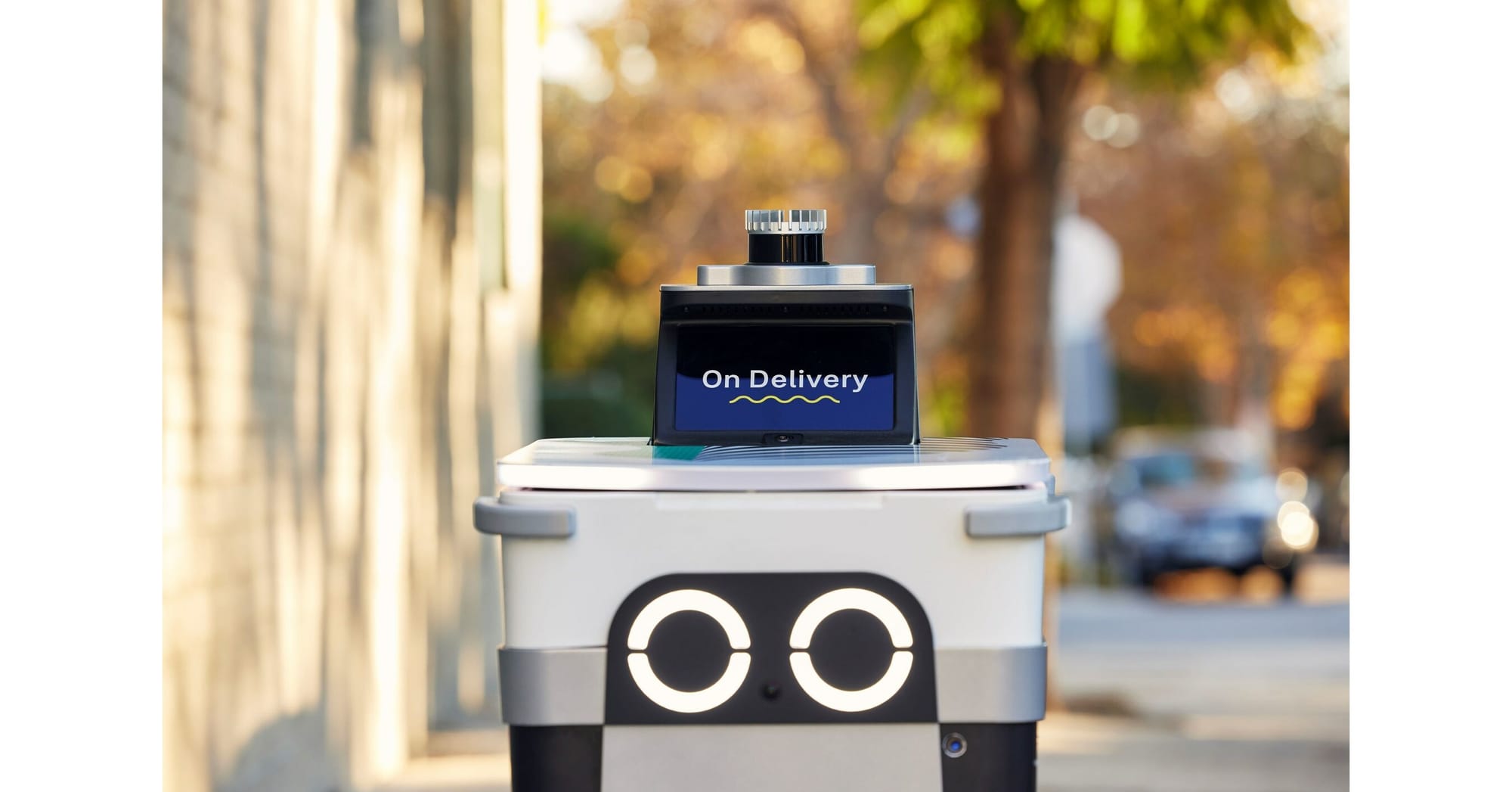
In Los Angeles, where self-driving cars and delivery robots are already commonplace, a Tesla drive-through now features Optimus humanoid robots serving popcorn, likely with some teleoperation. Despite this modest start, at Tesla's November 2024 shareholder meeting Musk opined that "Optimus will actually eliminate poverty."
Musk's vision of "sustainable abundance," powered by robotics and AI, is positioned as the central force shaping the global economy's future. On X, he recently predicted humanoid robots will improve lives exponentially, delivering everything from "superhuman medical care" to "far more fun games."
Much of the public conversation focuses on how robots will change the world. What’s often missing is where this transformation is already taking shape at scale. That country is China.
China's Lead
Some outlets, including a recent Los Angeles Times piece, portray the U.S. as clearly ahead in AI and robotics. The Times argued that American companies lead in technological sophistication and AI capability while China leads in deployment and volume. That framing understates the shifts emerging on the ground.
A joint industry report cited by China Daily shows Chinese companies are expected to produce more than 10,000 humanoid robots in 2025, accounting for more than half of global humanoid robot production.
Leading robotics manufacturer UBTECH, based in Shenzhen, where I live, began shipping hundreds of humanoids to Chinese automakers and logistics companies in late 2025. This is seen as one of the earliest large-scale industrial deployments of full-size humanoid robots. American firms, despite substantial venture funding, have yet to report comparable production velocity. Morgan Stanley projects China alone will account for roughly 302 million humanoid robots by 2050, about 30% of the global total, underscoring the scale of China's manufacturing base and its growing influence across the robotics value chain.
Morgan Stanley Analysts Sheng Zhong and Chelsea Wang go further in their whitepaper, arguing that not only is China the world's largest robotics market but arguably “the world's innovation hub," producing humanoid robots at a fraction of Western costs while filing more AI patents than any other nation.
Since the early 2020s, China has channeled massive capital into AI and robotics, building an industrial ecosystem where robots manufacture robots. This government backing allows robotics companies to tap into the country's existing strengths in AI training, sensors, and control systems, fusing advanced software with hardware to accelerate humanoid development.
"Just imagine that one day in our own robot factory, our robots are assembling themselves," said Yao Maoqing, a partner at AgiBot, Reuters reports.
Last March, Beijing announced the launch of a state venture capital guidance fund designed to mobilize up to 1 trillion yuan ($138 billion) over 20 years from local governments and the private sector, targeting AI, robotics, and quantum technology.
Like capital, China's technological advantage compounds: deploying more robots generates more real-world data, which trains better AI systems, which enables further deployment. While the U.S. still excels at AI software, China has built complete robotics supply chains and innovation ecosystems, positioning itself as the emerging leader in physical AI. That advantage is beginning to extend beyond hardware and deployment and into the software layer as well.
Martin Casado, a partner at a16z, told The Economist that among US AI startups using open-source models, “there’s an 80% chance they’re using a Chinese open-source model,” he says, a pattern that could reshape which country sets technical standards.
Terracotta Army to Robots
In a small village outside of Xi’an, the great Terracotta Army of Qin Shi Huang stands in eternal formation, thousands of life-size clay soldiers, each bearing distinct human features, arranged in perfect rows as though poised to march against ancient enemies.
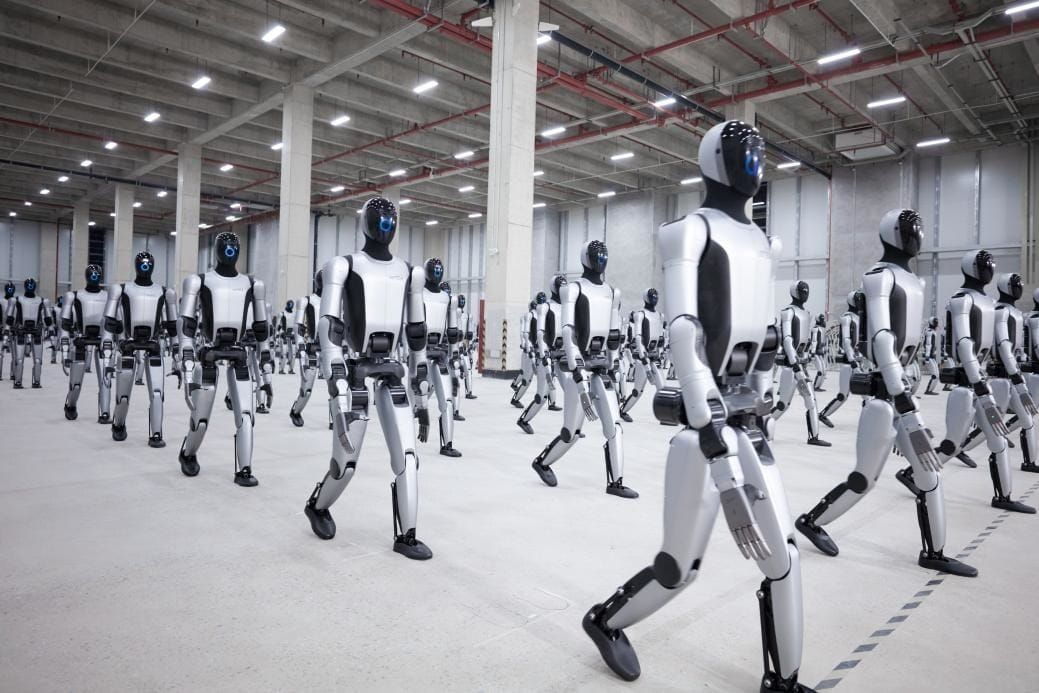
In November 2025, Shenzhen-based robotics firm UBTech released video footage reminiscent of that ancient army: hundreds of white Walker S2 humanoid robots stood in rigid formation inside a vast warehouse, their polished metal bodies moving in perfect sync. At an unseen signal, they turned their heads, pivoted together in a sharp 90 degree turn, before marching single-file into waiting shipping containers.
Source: YouTube / UBTECH
The highly precise synchronization left experts divided over whether it was real or staged. "Look at the reflections on this bot, then compare them to the ones behind it,” Brett Adcock, the founder and CEO of Figure, a leading robotics company in the US, wrote on X. “The bot in front is real - everything behind it is fake. If you see a head unit reflecting a bunch of ceiling lights, that’s a giveaway it’s CGI."
In response to Adcock’s post, UBTech informed the Global Times that "…it is 100 percent real footage shot on-site.” The company swiftly released a video response of a “behind the scenes” look, complete with raw audio, inviting skeptics to witness the robot's movements in unedited footage. The video description stated, “They said it looked too perfect to be real. But perfection isn't fabricated — it's delicately engineered.” The company urged critics to "come to China, see the booming development of the humanoid-robotics industry with their own eyes, and get involved in the supply chain themselves."
Policy Contradictions, Market Casualties
At Boston Dynamics' Waltham, Massachusetts headquarters, company prototypes range from one-armed production bots to four-legged surveillance dogs, reflecting the company's mission to "make robots useful in our everyday lives." The U.S.-based robotics leader was acquired in 2021 by South Korean automaker Hyundai Motor Group, which operates international production facilities across the U.S., India, and China.
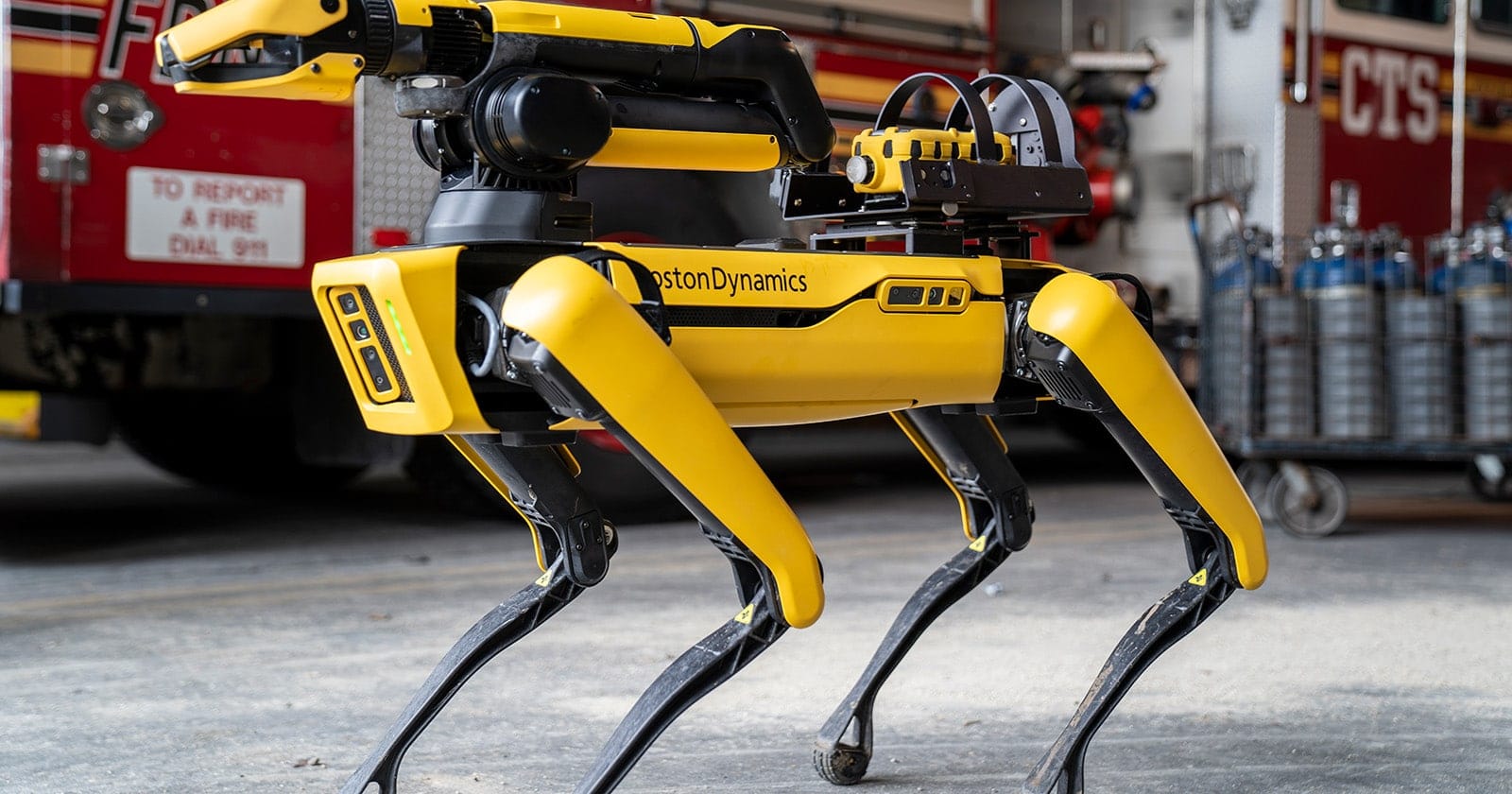
Washington publicly supports partnerships like Boston Dynamics’ acquisition by Hyundai, whose global manufacturing footprint includes China. This underscores a policy tension between supply-chain realities and the U.S. government’s efforts to restrict technology ties with China.
U.S. firms are navigating conflicting pressures. Over the past several years, the U.S. government has tightened export controls on advanced semiconductors and expanded restrictions on technology tied to advanced manufacturing. U.S. policymakers have largely framed export controls as a way to slow China’s development in AI and other cutting-edge technologies, a strategy whose effect on China’s broader robotics innovation remains untested.
The tension is already surfacing in company performance. iRobot filed for Chapter 11 bankruptcy protection in December 2025 after roughly 35 years in business, despite holding about 42% of the U.S. robotic vacuum market, according to Reuters. The company struggled to compete with lower-priced rivals amid sustained losses and shrinking margins, while new U.S. tariffs on imports from Vietnam added roughly $23 million in costs this year, Reuters reported, citing court filings.
The Cost of China Restrictions
From a portfolio perspective, iRobot's bankruptcy highlights the risks of hardware-centric bets amid policy pressures and competitive shifts.
Humanoid robots depend not only on advanced chips, but heavily on cheap components, iterative manufacturing, and vast real-world data to train AI systems. China has built strong advantages across all three. U.S. restrictions represent a significant trade-off that may slow domestic progress by raising costs and limiting the essential testing needed to close the gap. So far, those measures do not appear to have materially slowed China’s momentum while simultaneously increasing costs and limiting data access for U.S. firms.
Some venture funds avoiding Chinese limited partners may face a similar blind spot, missing supply chain intelligence that fuels breakthroughs. These are areas where China's advantages appear strongest and where U.S. firms face the greatest competitive pressure.
2026: The Race Ahead
As the $5 trillion humanoid robot market takes shape on factory floors, robots are assembling products, gathering operational data, and learning from millions of real-world interactions. China has built the infrastructure to support this at scale, including integrated supply chains, government-backed capital, and an industrial ecosystem designed for rapid iteration.
It is this ecosystem, along with the natural minerals and chips, that enables further deployment, creating a virtuous cycle of manufacturing capacity, regulatory support, and access to diverse real-world environments. China has aligned all three at once.
The U.S., meanwhile, sees private sector firms pursuing vertical integration strategies, with each building proprietary stacks from actuators to AI, rather than leveraging shared supply chains. Export restrictions may protect certain capabilities in the short term, but they also limit access to the supply chain intelligence and deployment data that deliver long-term progress. The iRobot bankruptcy illustrates how trade restrictions can push already strained companies closer to the edge.
It’s worth noting that early leadership doesn't guarantee permanent dominance. Yet as the humanoid robot industry matures over the coming decades, China’s structural advantages in manufacturing scale, deployment velocity, and ecosystem integration remain substantial and continue to expand.