How This Next Wave of Computing Will Upgrade You


I still remember the sound in the basement of my parents' house in Kitchener-Waterloo, Canada. It sounded as though the phone lines were being tortured to do something they weren't meant to do. Of course, this was the 90s, and that was the sound of dial-up internet. And at that time, that was the sound of the future. That sound marked the beginning of the information age, the moment we stepped onto the web.
If you listen closely, you can hear a new shift is upon us. This time, our digital experience is moving out from behind the screen. The era of spatial computing is upon us, and it is set to reshape our lives even more than the previous waves of computing. But this time, it isn’t just about information. It’s about experience, presence, and making technology feel more human.
The Separation Gap
We are 3D beings living in a 3D world, yet our digital experience has been flat; it's been 2D. As vast and powerful as the digital universe is, it has been trapped behind a pane of glass, just always out of reach. As a result, this causes a separation gap between us and technology. In turn, this gap poses a couple of challenges.
The first is that computing doesn't know what is happening in the real physical world unless we tell it. Vlogs, blogs, Wikipedia pages, and social media content are all ways in which we help computers understand the goings-on of our world. In fact, we have done this now so regularly that I would argue that we have taken on a new part-time job, feeding the machine. And this takes up quite a bit of our modern day time.
The struggle is that we have other things to do, including living our lives. This introduces the second challenge: the information we provide to computing is incomplete. We are only providing it with the information we care about or have time to input. This causes computing to have gaps in its understanding of the physical real world, lacking nuance and context of what is happening here. Ultimately, this makes our digital experience less rich and more powerful than it could be.
As the digital experience lies beyond a pane of glass, whether a monitor or a smartphone screen, it causes us to use artificial interactions. Taps, swipes on the screen, or clicks on a keyboard or mouse are ways in which we can connect with the digital world. This lacks tangibility and often leaves the digital experience feeling cold and emotionless.
But the biggest challenge resulting from this separation gap between us and technology is that we have become quite distracted. We want to focus our attention on the digital world to connect with people from around the globe, while also trying to live our lives and spend time with the people in our physical reality. We cannot be in two places at once, which causes us to toggle between the digital and the physical continually.
Computing Enters Our World
But this is all changing, and it is happening now. Spatial computing breaks computing free from the screen, which has been behind for decades. It blends the digital with the physical, allowing us to co-exist in the same dimension.
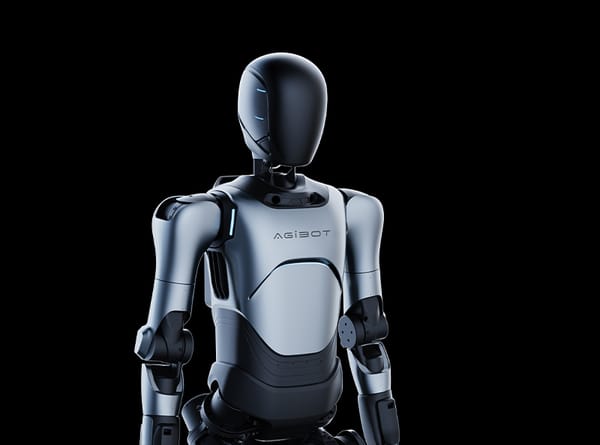
Spatial computing enables technology to understand, interact with, and navigate physical space. In some cases, this will be quite literal. Autonomous vehicles, delivery robots, and drones now exist with us on the streets, in our homes, and in our places of work. With the pane of glass removed between us and technology, we can now completely step into the digital world, thanks to virtual reality. Or we can watch as the digital universe spills into our own, which is the magic of augmented reality.
Reality becomes a shared layer, both seen and shaped by technology.
Machines Are Waking Up
At the core of spatial computing is a fundamental awakening. We’re giving our machines the gifts of presence and perception.
Sensors provide presence, allowing computers to collect information about the physical world without being explicitly told what’s happening. This allows computing to sense the world around it. GPS, cameras, LiDAR, and microphones are just a few ways it can now watch and listen in on our world.
However, collecting data is only half of the equation. Using this data with AI and machine learning unlocks perception. Perception systems such as computer vision, SLAM, and semantic spatial understanding enable systems to make sense of the world by spotting patterns and responding intelligently. This moves from seeing to recognizing and from hearing to understanding.
This results in computers that no longer rely on our constant input and can see, understand, and act in context. They are not just observers, but participants.
3D Is the New Digital Canvas
To operate in this new dimension, we need a new creative language. Spatial computing requires a 3D foundation, from simulated environments and 3D models to spatial audio and animation.
Simulated worlds are essential for everything from training robots to providing content for virtual and augmented reality experiences. However, creating 3D content demands a new skill set and tools. This includes game engines for developing computer-generated environments that you can explore in VR, as well as new techniques like Gaussian Splatting to replicate our world as a digital twin, facilitating simulation and development.
In addition to using 3D for content, our interactions with technology will also become spatial. Gone are the artificial interactions of taps and clicks. Instead, they will be replaced by much more natural interactions that rely on our bodies, utilizing our eyes, voices, and hands to engage with the digital experiences surrounding us in our space.
Our Post-Smartphone Future
Every computing wave comes with new hardware, and this one is no exception. We’re already seeing the rise of Physical AI (robots, drones, autonomous vehicles) and Immersive Interfaces (smartglasses, mixed reality headsets, and mobile AR).
The hero device in our lives for the past decade has been the smartphone. In the spatial computing era, it will be wearable technology. While we should expect to wear a constellation of devices that will enable computing to gain more access to all of our bodies and senses to fully immerse us, the standout in this category will be headworn devices.
In the consumer sphere, we are already observing two distinct tracks emerging within the headworn wearable category: mixed reality headsets and smartglasses.
Mixed reality headsets, also known as spatial computers, are powerful devices that enable both VR and AR experiences. The Apple Vision Pro and the Meta Quest 3 are notable examples in this category. These devices feel reminiscent of the early PC era in that they can deliver value, particularly in gaming, entertainment, and productivity. However, like early PCs, they can be somewhat clunky, often anchored to an office or a home, and are generally not expected to leave the house. There's typically only one per household, assuming it's affordable.
Smartglasses, conversely, are more portable but not as powerful as today's mixed reality headsets—at least not the ones gaining the most traction with consumers. This category of connected eyewear includes players like Meta Ray-Ban and the upcoming AI-enabled glasses developed by Google in partnership with Warby Parker and Gentle Monster. These devices resemble the early feature phones in that they are portable and excel at performing a few tasks, specifically audio, media capture, and connecting to AI. However, they are not yet full computers that we can easily carry with us every day like our smartphones.
Both of these categories will continue to evolve. They will become smaller, more wearable, more powerful, and more accessible. Mixed reality headsets may soon feel more like laptops, allowing you to take them out of the house to use in places like cafes and parks, while smart glasses will gradually resemble smartphones, capable of doing much more than they can today. Both of these devices are set to replace the very devices I use to describe them as they gain better adoption.
You, Upgraded
Spatial computing isn’t just about machines. It’s about you. You are no longer a passive user. You are the input. You are the interface. You are the command. You are the agent.
Spatial computing requires space, including you and what you do in it, to work—understanding your context, including where you are, what you’re doing, and who is with you. This input into the system allows computing to be in a shared reality with us.
In this next wave of computing, you become the interface. Wearable devices let you control systems with your gaze, hands, and voice.
You are also the agent. You give tasks to robots. You explore digital realms on your terms. In return, you get superpowers: flying in VR, seeing through walls in AR, and collaborating across space and time.
You, the Human+
This shift changes not just how we use technology but also how we connect. Spatial computing lets us be more present. It deepens reality rather than distracts from it.
We gain perceptual depth, the ability to walk in someone else’s shoes, to see the world through the eyes of another person (or even through the eyes of the machine). We gain emotional depth as AR and VR become tools for storytelling, empathy, and shared experience. And we gain experiential freedom, the ability to create new memories together, regardless of where we are.
You, the Consumer+
The shopping experience is evolving, too. E-commerce becomes more physical through virtual try-ons. Brick-and-mortar stores become more digital with interactive AR layers. Brands like Dior, LEGO, Barbie, and Gucci are already leading here, merging marketing, storytelling, and utility in personalized, immersive, and effective ways.
AR isn't just another channel. It’s a personal one. Your space. Your face. Your control. And the results speak for themselves: higher conversion rates, deeper engagement, and a collapsed marketing funnel that puts the user in charge.
You, the Professional+
Spatial computing is also transforming how we work.
Robots are becoming teammates, coordinating, collaborating, and even coding. VR is enabling powerful training simulations and remote control of physical environments. AR is showing up in warehousing, manufacturing, and logistics, enhancing situational awareness and operational precision.
Pioneers like Lowe’s and Porsche already leverage spatial tools for efficiency, training, and transformation. And this is just the beginning.
We are standing at the edge of something big, something human. Like every major tech shift, this moment will create new leaders, standards, and possibilities.
Spatial computing isn’t coming. It’s here. The question is: Are you ready to step into the next dimension?