Google Confirms Screen and Screenless AI Glasses, Gives First Look at Wired AR Glasses at Android Event

- Google confirmed it is working on two types of AI glasses with partners, one with a screen and the other without.
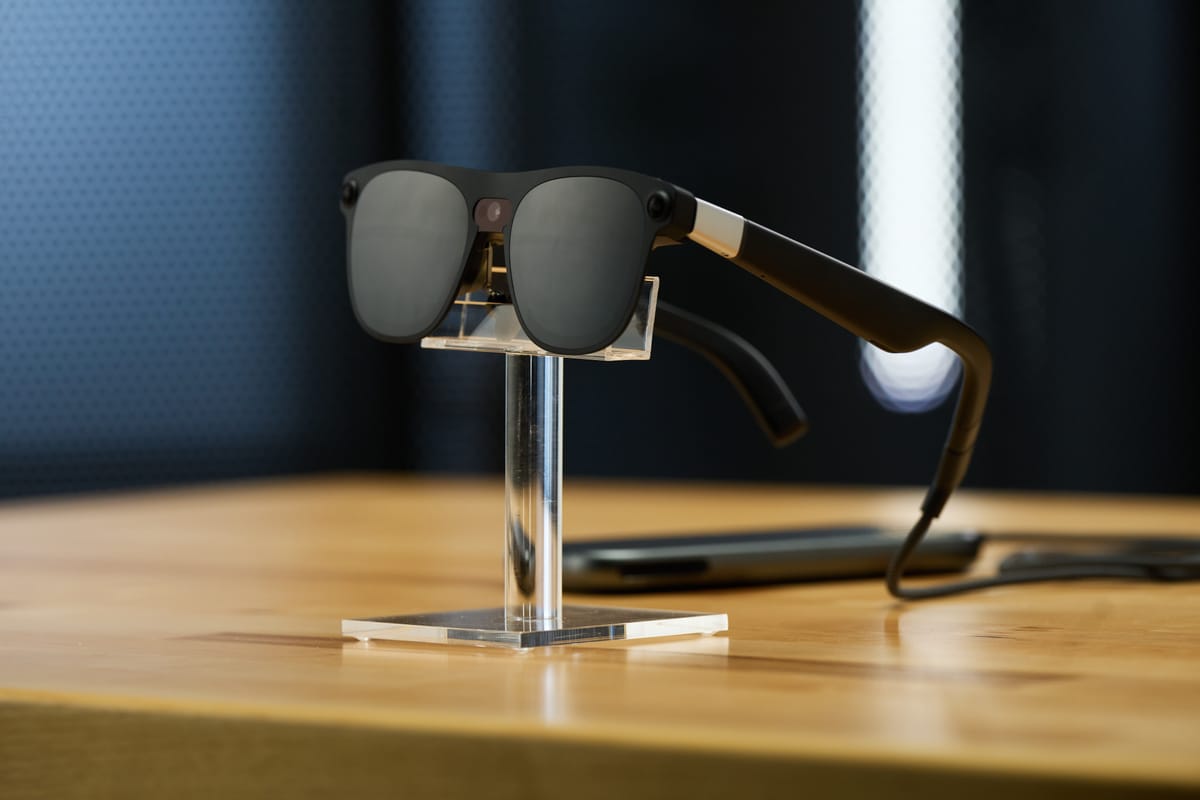
- The Android team gave a first look at Project Aura, the wired XREAL AR glasses which are powered by Android XR.
It was one year ago when Google debuted its plans for its Android XR ecosystem built around a new family of XR devices powered by its operating system and Gemini AI. Samsung then introduced the first of these, the Galaxy XR mixed reality headset, at its October event. Today, the Android team shared new updates on its XR roadmap, including fresh details on its smartglasses and new features for the Galaxy XR headset.
At the showcase, we got a first look at the anticipated Project Aura glasses from XREAL. Aura is the first pair of AR glasses powered by Android XR. They feature a 70-degree field-of-view and optical see-through display, which lets you either layer digital content on the real world or access content on a large screen that doesn't fully occlude your surroundings. The glasses feature a dual chip design, XREAL's X1S chip in the glasses and a Qualcomm Snapdragon in the companion puck, which is tethered to the glasses with a wire. Google shared a sneak peek at the device, which, outside of the cameras and wires, looks pretty much like sunglasses. But we will have to wait for next year for more details, including a confirmed launch date.
Source: YouTube / Android
Google also confirmed that it is working with partners, Gentle Monster and Warby Parker, on two pairs of AI glasses. One with a small screen that displays information, and another without. Both will feature a built-in speaker, microphone, and camera, which is typical for AI glasses. They will also make use of Google's Gemini as an AI assistant. Google has confirmed that the first pair of glasses will arrive next year.
Source: Google
To ensure that its AI glasses have content when they are released, Google has launched Developer Preview 3 of the Android XR SDK, which gives developers the tools and APIs to build for these smartglasses. This update also includes new functionalities for headsets and wired XR glasses, which Google says are designed to help developers build even richer immersive content.
Finally, Google made some significant updates to the Galaxy XR headset to increase its use in a variety of scenarios. This includes the ability to extend your Windows PC to the headset with a new capability called PC Connect, now in Beta, and a travel mode, which makes it easier to use the headset in cramped spaces and while in motion. Google is also launching "Likeness," its avatar platform, which creates a digital representation of you using your smartphone, which you can then use for video calls on the headset. All of these capabilities are staples on other headsets, and so these features help Galaxy XR achieve feature parity with what is out there.
Source: Google
🌀 Tom’s Take:
It's clear that Google believes that success in XR is not achieved by one device alone. Today's update reiterates its plans across a variety of wearable devices, wired, wireless, glasses, and headsets. Sitting at the center of all of these is its operating system, Android XR, and AI, Gemini.
Source: Google