From Highways to Skyways: Personal Aviation Takes Flight

- Personal flying machines, from ultralight eVTOLs to roadable aircraft, are beginning limited commercial sales and pre-orders under emerging FAA frameworks.
- Companies such as Volonaut, AeroMobil, Jetson, and XPENG are developing high-speed, partially automated aircraft, each taking a different approach to personal air mobility.
Picture this. You're running late for a board meeting across town. Traffic is gridlocked. So you walk to your garage, climb into what looks like a sleek sports car, and three minutes later, you're soaring 500 feet above the jam-packed highways below, cruising at 100 mph toward your destination. Think this is science fiction? Not anymore.
Right now, in 2025, you can walk into a showroom (or more likely, place an order online) and buy a flying car, a Star Wars-style speeder bike, or an autonomous air cab. These aren't prototypes or concept vehicles gathering dust in some tech billionaire's garage. These vehicles are being sold and flown today under FAA ultralight or experimental rules, while larger models are still working toward full certification.
This deep dive takes a look at the personal aerial transportation reshaping how we move through the world, powered by advanced materials, aerospace engineering, and AI-powered navigation systems that make flying as simple as driving.
Speeder Bikes: Star Wars Made Real
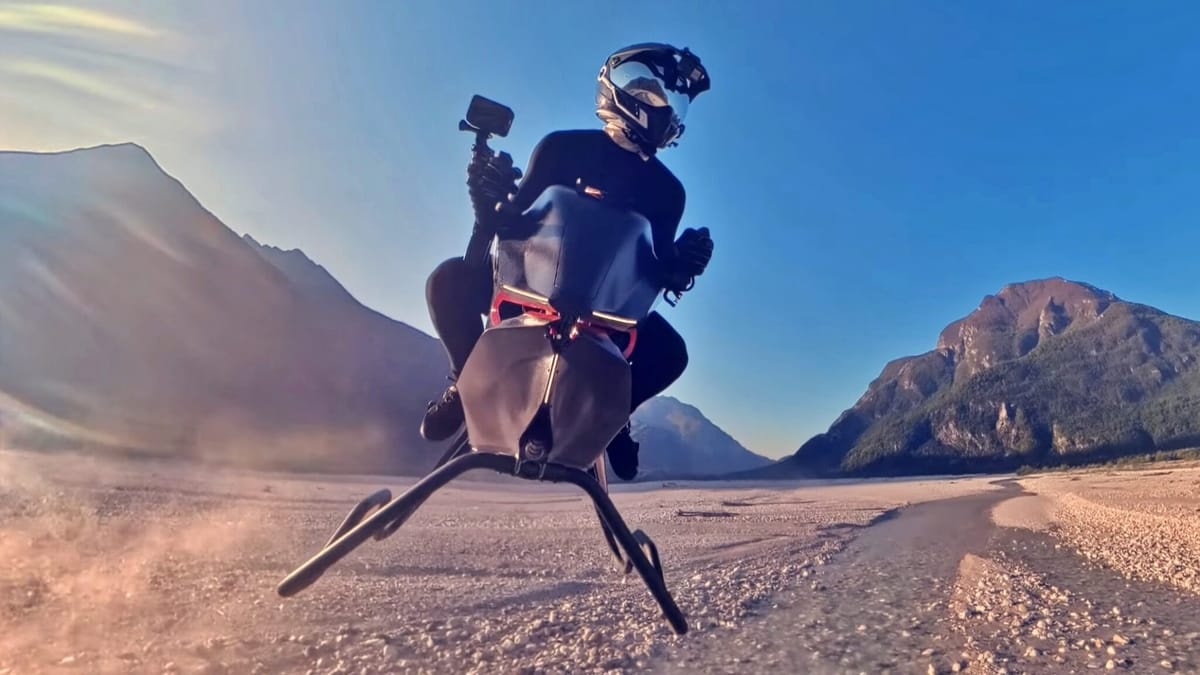
One of the most striking breakthroughs comes from companies that have turned the Star Wars speeder bike into reality. The Volonaut Airbike is a single-rider hoverbike that looks and handles like Luke Skywalker’s ride through the forests of Endor. Powered by jet turbines instead of spinning rotors, it provides a smooth, 360-degree view and that eerily familiar sci-fi silhouette.
Source: YouTube / Volonaut
The Volonaut can hit speeds up to 124 mph, though the commercial ultralight version is capped at 63 mph to comply with aviation regulations. The bike was initially targeted at recreational and luxury markets. But its potential for rapid response transport in difficult terrains, such as search and rescue, medical emergencies, or military applications, is game-changing.
The Flying Supercar: Road to Sky in Minutes
The AeroMobil represents the ultimate fusion of supercar performance and private aviation. Part car, part aircraft, the company boasts it was "inspired by the mythical winged horse Pegasus, equally at home on the road or in the sky."
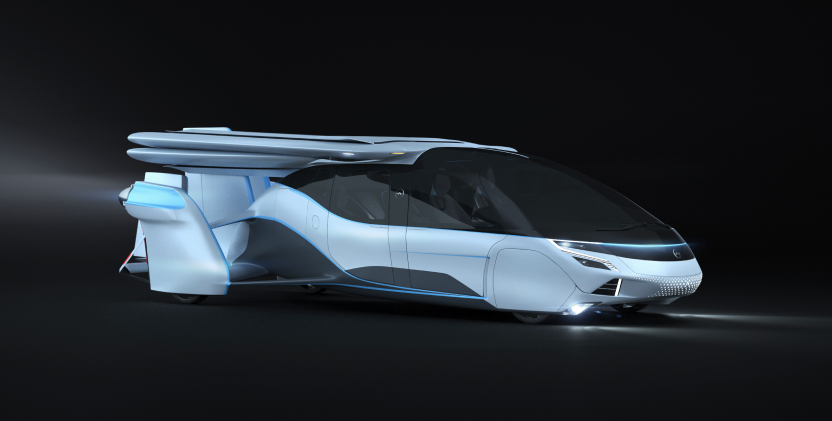
With retractable wings and cutting-edge lightweight materials, the AeroMobil offers approximately 320 miles of driving range and 320-460 miles of flying range, depending on occupancy, and can reach altitudes of up to 10,000 ft. It's powered by a hybrid system combining a turbocharged internal combustion engine with electric motors. Priced at about $1.6 million depending on specifications, it's both a futuristic racing car and an airplane, or, as their website boasts, “It’s like nothing you have, and everything you always wanted.” This isn't just a luxury toy for the elite but rather points toward a world where your daily commute seamlessly blends driving and flying, completely bypassing urban congestion, and, in some ways, reality itself.
Air Cabs: Your Personal Sky Taxi
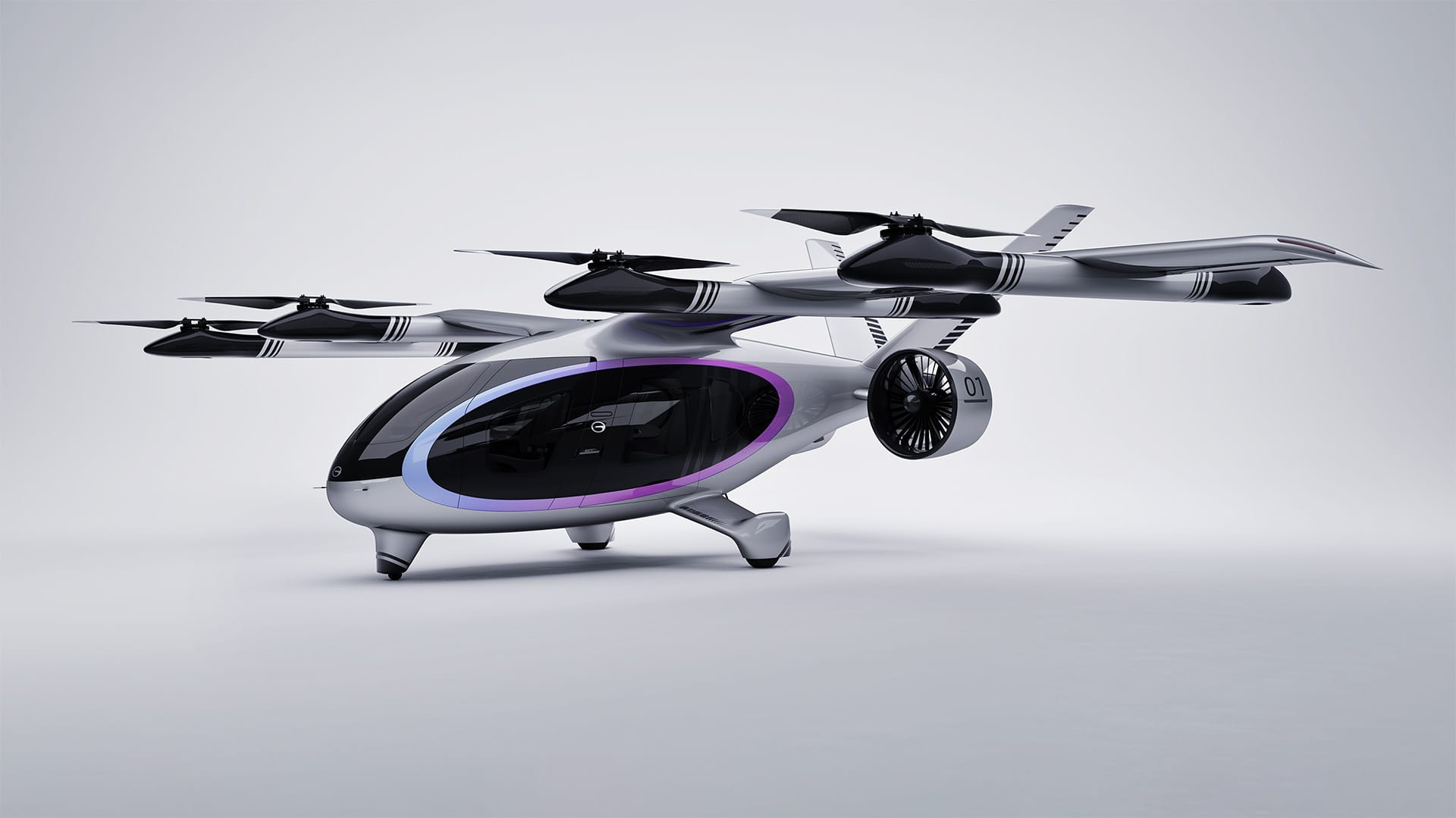
Air cabs might look like mini-helicopters, but they're technically vertical take-off and landing (VTOL) aircraft that can launch and land without runways. Unlike traditional planes, it uses multiple rotors or tilt-jet systems to rise straight into the air, more like a helicopter than a jet. Today’s electric versions (eVTOLs) promise quieter, cleaner, and more accessible urban flight for short distances.
GAC's Govy Air cab, priced at $250,000, rivals luxury supercars with one crucial difference: it can fly. Designed specifically for urban travel, it promises to eliminate traffic jams by moving passengers through three-dimensional space, like an Uber that operates in the sky.
Jetson ONE takes a different approach. This $120,000 "Formula One racing car for the sky" delivers 20 minutes of flight time at speeds up to 63 mph, with batteries that recharge in just one hour. The company's entire 2025 and 2026 production runs are already sold out, and it has attracted celebrity investors, including will.i.am, as part of a $15 million funding round.
Source: YouTube / Jetson
At just 190 pounds with an 88kW power output, the Jetson ONE can carry a 210-pound pilot over 20 miles in a single flight -imagine hopping from Manhattan to JFK Airport in 15 minutes, landing directly on the terminal roof.
The Getaway Car: Mothership and Drone
For those planning their escape plan, Chinese automaker XPENG offers its AeroHT "Land Aircraft Carrier," which looks like it rolled straight out of the next Bond film. Priced around $280,000, this Cybertruck-like beast carries a folding two-seater VTOL aircraft in its cargo bay and doubles as a charging station for the drone, offering over 620 miles of driving range.
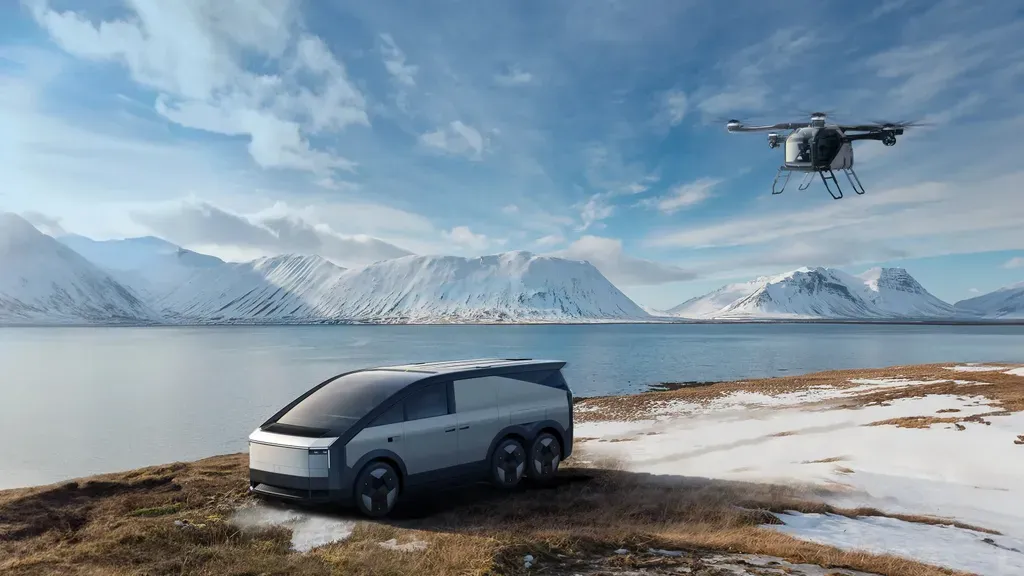
XPENG predicts flying cars will capture 20% of the global automotive market within two decades. Whether you're escaping a natural disaster, conducting search and rescue operations, or simply need to avoid your in-laws at the family reunion, this modular system represents the ultimate in go-anywhere mobility, because sometimes the only way out is up.
Source: YouTube / ARIDGE
The LEO: Art and Velocity
You'd be forgiven if Urban eVTOL's LEO Coupe reminds you of a UFO. With sleek futuristic curves and satin-steel bodywork, this two-seat hybrid promises to race nearly as fast in the air as supercars do on the ground, with speeds of up to 250 mph. While it takes off and lands like a helicopter, the LEO was built for speed, cruising at around 115 mph with an impressive 300-mile range that puts conventional aircraft to shame.
Source: YouTube / LEO Flight
For lucky LEO owners, the trip from London to Rome will shrink from 2.5 hours to a mere 30 minutes. The LEO Flight is currently raising funds for its first production prototype, which is expected to cost $460,000, about the same as a Lamborghini, except this vehicle flies.
What's Next?
These technologies signal humanity's transition from two-dimensional transportation to a dynamic, multi-level mobility ecosystem.
While regulatory frameworks and air traffic management systems are still catching up, the momentum is unstoppable. In just a few years, seeing speeder bikes zip over highways, flying cars merging seamlessly between suburban roads and skyways, and autonomous air cabs hovering above cityscapes could become as commonplace as spotting a Tesla today.
This transformation will fundamentally reshape our relationship with distance and space. Formerly remote communities will suddenly be minutes away from urban centers, compressing hour-long commutes into brief flights. But this aerial revolution also raises profound questions about equity, environment, and governance.
Who will own the air rights above our cities? Will we see a new form of social stratification literally written in the sky? One where the wealthy soar through pristine air above, the middle class is stuck in ground-level traffic jams, while the poor descend into increasingly neglected transit systems? This vertical divide could become the starkest physical manifestation of economic inequality we've ever seen.
And what about the environmental impact? While these vehicles promise cleaner electric propulsion? Will thousands of personal aircraft actually reduce emissions? Or will they simply move pollution from roads to airways?
As regulations evolve and technology advances, we're witnessing the birth of flying cars and the emergence of an entirely new dimension of human mobility that will redefine what it means to travel from point A to point B. It's clear from these models that the future of travel isn't about choosing between ground and air. It is seamlessly integrating both dimensions into a mobility ecosystem that finally gives us the freedom to move through space the way we've always dreamed.